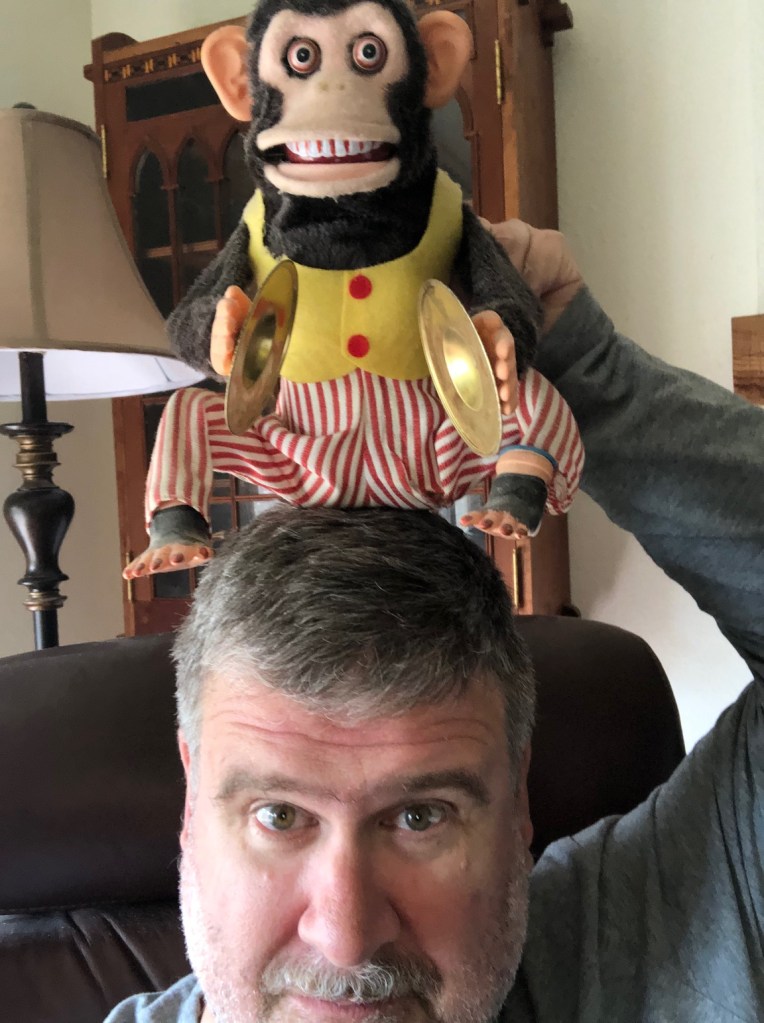
One thing about being a bona-fide Space Alien is that, an any given time, I can hop on the Close-to-Light spaceship and see what’s going to happen in the future. If I could fix my FTL drive, I’d just get off this rock. But this is actually less fun than it may seem, because what it also means is I can’t get those years back (time dilation only works in the forward direction, which is why the original Planet of the Apes movie was such a bummer!) and it ages my brain.
Thus it is with the coronavirus, which is declining pretty dramatically across Europe, and in most of the early infected places in the U.S., following a similar pattern. Yep — functionally off-the-beaten track places in the U.S. will continue to see rises, but you’ve heard it here first. I’m giving solid odds that there will be no vaunted Second Wave, and while COVID-19 will function at some endemic level in our population, it will fade as a political driver. If I’m wrong, well, I’ll be shown to be wrong pretty soon — the mass demonstrations across the world for Black Lives Matter certainly had potential for super-spreader status, considering that combo of crowds and jail cells.
What we’re also going to start to see in the next couple of weeks is a crescendo in conflict between scientists, who enlightened folks are telling us we should believe. “Believe science!” is the battle cry, and as a scientist myself, I am supportive. Believing science, even at its most rudimentary, is more appealing than believing astrology, and for those that follow this blog for any length of time know, I am not into magical thinking of any stripe, other than understanding it as narrative scaffolding for how we live our lives. For that, if you need to believe “don’t mess up the environment because the Mountain God will whoop on you!” I’m down. But for using Magical Thinking problem-solving complex scenarios in the near-term, eh, not so much.
The problem is that I’ve also spent an entire career in the Science Sausage Factory, and after that, well, like any sausage factory, you’d be a little less sanguine about consuming the prospect. Lots of stuff goes into “science” from all the different knowledge structures, and I’ve written about this here, among other places. Short version, empirical measurement-based science does great when you can draw a hard boundary around the problem, and set up controlled experiments. That fits perfectly within the context of the Legalistic/Authority-Driven Relatively Rigid Hierarchy that such science functions under. When you match methods (complicated algorithmic processes for data collection and transformation) with the social structure (a closed hierarchy, which scientists are always beating on you to recognize as the only source of knowing!) you’re creating knowledge in, you can be sure the results are as coherent as they can be. And if you’re collecting data from the real world, there is a natural validity/grounding that also occurs. Short version — the data is reliably collected, the problem is closed, the scientists are trained, and IMPORTANTLY — the phenomena has already happened.
And here is the thing. For those circumstances, none of the higher thought processes of empathy are really required. You aren’t required to link outside of discipline, no agency for the researcher collecting the data on a small scale is required, no judgment calls, no synthesis with other fields, or lay audiences, and heaven forbid any reflection. That’s not going to make it through peer review. We even have a name for this in the Sausage-Making business — “turning the crank.” Which is exactly what you do when you make real sausages.

I think it might be useful to lay out that last paragraph as a quick list with the different Knowledge Structure Levels here so you can see how useful some of that work is. Kinda “it’s my blog, and I’ll cry if I want to!” NOTE — this is for closed systems!!!
- No link outside of discipline (driven by Authority value set)
- Collect that data properly and follow the rules! (driven by the Legalistic/Absolutistic value set)
- No agency for the researcher (no Performance/Goal-Based thinking values)
- No synthesis with lay folks or other disciplines (no Communitarian value set!)
- No reflection (Yellow- Systemic thinking value set!)
Short version — you’re trying to know something that you can know, within the context of the structural memetic system you’ve set up. Perfect!
But here’s the rub. It gives you poor predictive ability if the exact same closed system, albeit with different parameters, isn’t what you’re trying to figure out the next time. Which is EXACTLY what COVID-19 is. And to make matters worse, if you’re an epidemiologist, you’re stuck in an open system. And THAT open system is continually changing. Big time. To the point where even history (like the Spanish Flu) is a very poor guide to how these things work. Last time I checked, there were no Boeing 777s criss-crossing the globe in 1918. Short version — you’re stuck in a closed social system (they don’t call it the Ivory Tower for nothing!) that’s poorly equipped to give you projective ability for larger, open system problems.
But scientists, organized in those Legalistic (at best)/Authority-driven (typical) hierarchies DO manage to converge to the truth. But it takes a while. It usually happens, in happier times, through a process of subdivision micro-specialization, and endless bickering (some folks call it ‘peer review’,) which is how those hierarchies create knowledge. The ladder of subdivision goes down, and down (think about those particle physicists, blasting apart atoms with higher and higher energy!) until finally synergy is reached through overlap. We lock smaller and smaller hunks of stuff inside colliders until our need for seemingly infinite precision yields a God Particle. Or something.
For those, though, that can’t blast, they create models using mathematics. I wrote a longish Twitter thread on this — how scientists create models, which are what they do when faced with a real world that can’t be captured and measured. Now we start seeing problems. Scientists get trapped outside of their Ivory Tower, uh, I mean v-Meme, uh, I mean social structure. You get the picture. And as I’ve alluded before, some do it better than other. Now their discipline requires metacognition — knowing what they don’t know — which is what their social structure absolutely sucks at. For those that doubt me (almost always academics) stand up in your next faculty meeting and watch what happens to your status when you tell your colleagues you don’t know. Not pretty. (Yes, I’ve gained tons of insight into social systems in faculty meetings!)
How those models come into existence now matters a lot. They, too, are based on given Knowledge Structures, and dependent on the social structure that creates them, they map. There’s a ton to write on this, but the short version is the list below:
- Deterministic models based on fundamental principles. These are what we use, for example, to figure out asteroids running into the Earth, or stress concentrations in airplane wings. Same meta-class. We know the physics well, and can model the physics using various numerical techniques, and simulate on a computer
- Semi-deterministic models based on parametric estimation (usually from some data set out there that ostensibly describes the phenomenon.) Basically all the epidemiological models fall into this category. There’s some physical assumption about how the virus is spread and how fast (this is the whole R0 thing you hear about) and then people take data sets, and estimate parameters. Various people receive chops for fads, like using Machine Learning (Artificial Intelligence has to be more intelligent!) and the circus continues.
- Monte-Carlo simulations based on running probabilistically generated trials for various scenarios. These are often done for looking at performance efficacy of a given system — I used to do this back when I helped hunt submarines and pioneer new radar detectors.
One of the interesting things about my career as a bona-fide aerospace engineer is that I’ve used all three of these things. The first involved the basic research I did for my Ph.D. The second was an extension I used of my Ph.D. work that led me into attenuating helicopter noise using signal processing techniques called wavelets. And the final was my Master’s degree work on signal detection theory (radar and sonar) that gave me a toolkit to combine all these things into looking at wavefront modeling of forest fires.
It was arguably the first that taught me the limits of the other two. As one of the folks working some 35 years ago to understand how chaotic dynamics worked, I got taught early on the power of metacognition — knowing what you didn’t know, and realizing what you couldn’t likely know. How? You’d run a given simulation one way, and get an answer. Then you’d change one thing one teensy-tiny bit, and the answer that would come out would be totally different. This phenomenon (short version for the scientifically adept — sensitivity to initial conditions) was poorly understood at the time. For me, wanting to finish my Ph.D., it became a stern master in my fundamental ignorance. If anything, it taught me that Yellow v-Meme Reflection thing. Alone in the lab, running simulations (remember, this was 35 years ago, and we didn’t have iPhones that could do this stuff in their sleep!) I was forced to ponder my deep inadequacy in completing the work I had promised my advisor, who was (and is) an awesome human whom I did not want to disappoint.
Fast forward to understanding how the street-fighters, uh, I mean ‘respectable scientists’ are lining up regarding the COVID-19 predictions, and how, and importantly when, the pandemic is supposed to end. On the one side you have the standard immunological/epidemiological established community (“Believe science!”) crowd who originally, with their models (some mix of all 3 archetypes, but heavily weighted toward #2) lined up and broadcast 10x-100x greater fatalities/spread/whatever than actually occurred.
As time has passed, their models have gotten more precise as far as predicting things like death totals. No question. But that’s also mostly because when you’re doing Type 2 modeling, you’re really working on principles of interpolation, which ALSO really means you’re forcing the model to be more like a closed system. So of course, more data would lead to better paradigmatic estimation. The curve would fit tighter.
But you’d still be stuck in your Legalistic social structure, and your v-Meme. Which would mean two big things.
- Because life as an Authoritarian/Legalist means that everything ought to be perfectly predictable, your sense of consequentiality would still be shit. You wouldn’t be able to predict what things might come along to mess up your model. And you wouldn’t be particularly happy to see that happen, either, since the accuracy of your model isn’t tied to the Guiding Principles (still evolving) of the pandemic. It would be tied to increasingly accurate schemes of parametric estimation. And here’s the rub — you’d be super-comfortable with that, since you’d be satisfying that “way your brain is programmed Legalistic v-Meme itch” in how your psyche works. “Extensive testing is proving me right!” you’d holler! Well, yeah — because extensive testing is finally feeding your parametric estimations so your model doesn’t look totally awful.
- You would be openly hostile to anyone from any other discipline giving insight, especially at a higher level, on why your model is wrong. You’d argue that you’re the REAL scientist, operating only on what the known information (that awful COVID-19 data) is. And because you’re stuck inside a social structure that whomps you on the head if you say you don’t know, you’re far less likely to stand up and entertain that there are “Invisibilia” — factors that you just don’t understand — are screwing up the highly refined model you’ve just staked your reputation on. Trust me that all those Ph.D. students who helped you build it aren’t gonna utter a peep. They want to graduate.
#2 is the reason far too many scientists are stuck on what I call Intellectual Flatland. And the COVID-19 pandemic is a great exemplar of how that works. From a virus perspective, without a vaccine (which is a tool for building uniform herd immunity, FWIW) we are stuck with naturally generated “herd immunity” like it or not. And because our Legalistically organized hierarchical epidemiologists are stuck with the brains they have, there’s only one way that can manifest (that’s that whole dichotomous thinking thing that comes out of the social structure) and that’s with measurable antibody counts. Either you’ve got ’em or you don’t — and if you don’t, because all we’ve got is hindsight, and the awful data, well, the virus must not have continued to spread, because those seropositive antibody counts have to be up about 60-70% of the population in order to really have it.
Never mind the observable phenomenon that even in places like Lombardy, Italy, or New York City, places so obviously saturated with COVID-19, are displaying antibody counts around 20-25% of the population (that are detectable.) There aren’t any other options, according to this community, and that’s that. Because they’re the experts. Never mind the fact that they were wrong last week. T-cell immunity? What’s being now called ‘Denatured/Barriered, or Innate/Cleared’ (from Ivor Cummins podcast) which basically means you make so much snot than the virus can’t get through, or the second, your immune system is so bad-ass the virus doesn’t even cause a ripple — doesn’t exist. As well as the obvious hypothesis testing ‘False Negative/Miss’ flaw. Mistakes, even small ones? They’ve got those under control.
And here’s the critical thing — we are SO conditioned to believing that independent subject matter must all be processed through different parts of our brains, there simply can’t be overlap — we can’t believe that our brains would use the same circuits, using domain-independent knowledge in similar ways. We CAN’T believe that whole ‘As we relate, so we think’ thing this blog harps on constantly. THAT messes us up with understanding this pandemic. Because, well, it’s not just my personal affectation. It’s true.
How does this manifest itself with our Legalistic/Authoritarian epidemiology friends, who now have major reputation stakes riding on being right? They’re going to start insisting on actions that flow naturally out of the v-Meme were ALSO major factors in stopping the spread of the virus.
What actions map out of the Legalistic/Absolutistic v-Memes? First off, they have to be low-agency, meaning individuals only help the situation if they listen to the boss, or follow the rules. Individual health or immune response really can’t come into play. And because these folks know what they’re doing, those might be the reason the virus finally dies out. Certainly not factors that they don’t understand. And true to the dominance of Externally Defined Relationships in the social structure, only Externally Defined Factors can really make a dent in this virus.
How this manifests is fascinating. Here are some examples.
- The coronavirus is receding because increased sunlight in the Northern Hemisphere is KILLING more coronavirus. (External) This as opposed to people’s individual immune systems are being strengthened by Vitamin D levels increasing because of their own ability to strengthen their immune systems in the summer.
- Lockdowns HAD to work, as opposed to social distancing. There’s no more powerful command and control than having everyone stay in their houses. Being courteous and not coughing in other people’s faces is NOT something the Value Set trusts you to do.
- Asymptomatic cases are perilous (Authorities operate out of a limbic, fear-based perspective,) because they can unwittingly contaminate other people with the virus and cause them to die (empathetic, agency-based relational contact is not something the social system tolerates at all!) as opposed to entertaining what I’ve promoted — a dose-dependent understanding of spread that says appropriately managed asymptomaticity is actually what is building immunity across a population.
Of course, there is nuance to all of these, and the larger picture is assembled by understanding the larger guiding principles, and weaving together a tapestry of how the virus functions across the entire planet. Lockdowns may indeed have been effective, as I have argued, linked with asymptomatic spread, because it shunned people who were coughing (high dosage spreaders) from going out for any reason. Sunshine may indeed kill more coronavirus — remember, we started this pandemic with the belief that the virus was an invincible killer, virus- wise (something that also would lock into the fear-based modes of Authority-driven systems) — but we’re still not around to the point of disaggregating populations and understanding the very real effects on dramatically more impacted communities, like African-Americans. We can’t even bring ourselves to address the effect of our obvious metabolic/immune system crisis and how that might affect spread.
But enough about the epidemiologists. What is really interesting is that there are other heavy-hitting scientists that are wading in the fray. The main point here is that these individuals are OUTSIDE the In-Group (the epidemiologists) analyzing this situation.
I’ve written about Michael Levitt here, a Nobel Prizewinning scientist, combing through the data with a much greater humility than the mainstream epidemiology community. His background is in structural biology — far afield, really, from immunology — and the epidemiologists have been screaming for him to stay in his lane. His secret weapon, though is really just a greater metacognition. Yep — he is a thorough scientist, and relies on empiricism. But he also questions modes and mechanisms, and is searching for alternate mechanisms to explain immunity. It’s arguably easier to do this when one has a Nobel Prize hanging around one’s neck. No one’s going to call him stupid, and he’s not got the crazy tag that a couple of other Nobel Prizewinners have.
And because this problem is big enough, you also have more far-afield folks wading into the battle. Chief among these most recently is Karl Friston, a famous German neuroscientist, who, with his research team, is apparently doing a more first-principles modeling effort. Not surprisingly, his viewpoints and mine about the modeling efforts (and eventual outcomes) align. This dude is even using my Asymptomaticity as Dark Matter tagline! His quote from the Guardian piece:
How do the models you use differ from the conventional ones epidemiologists rely on to advise governments in this pandemic?
Conventional models essentially fit curves to historical data and then extrapolate those curves into the future. They look at the surface of the phenomenon – the observable part, or data. Our approach, which borrows from physics and in particular the work of Richard Feynman, goes under the bonnet. It attempts to capture the mathematical structure of the phenomenon – in this case, the pandemic – and to understand the causes of what is observed. Since we don’t know all the causes, we have to infer them. But that inference, and implicit uncertainty, is built into the models. That’s why we call them generative models, because they contain everything you need to know to generate the data. As more data comes in, you adjust your beliefs about the causes, until your model simulates the data as accurately and as simply as possible.
I’m absolutely NOT accusing this dude of ripping me off (you can check the dates — I didn’t rip him off either — but my blog has had these concepts out for months.) Rather, there is a convergence of value set that would cause us to generate similar insights, from similar value sets. This is what I talk about in this piece about the value of values. They serve as container sets for generation of similar, more complex information.
What IS interesting is that we now have the scene set for a major structural memetic war. Two camps, set firmly in their representative v-Memes, three v-Memes/value sets apart, at least tool-wise, aren’t going to reconcile any time soon. All three have a large (un?)healthy dose of Authority-driven Red Value Set in them — As a side note, I’ve written multiple Tweets to both Levitt and Bergstrom at the University of Washington, who could fairly be tagged as representing the mainstream epidemiological community. They don’t write back, though they will respond to snipers who are obvious trolls. Classic Authoritarian v-Meme – someone like me is, in their eyes, an unimportant authority. And Friston is utterly unreachable.
What this means — especially when you have Authority-driven personas, using toolkits from different value sets (Guiding Principles/Reflective for Levitt, and Legalistic/Absolutistic-Algorithmic processing for the University of Washington crowd) is you’re going to have both structural memetic conflict as well as a good old fashioned donnybrook.
One thing I can guarantee. Both (or all three) will argue ‘Science!” They will all claim the Holy Quest for Absolute Truth as their driver. But the reality is that it will be the v-Memes that will be doing the talking. We may start out with the Marquess of Queensberry rules. But trust me — this one’s gonna degenerate into Fight Club.
Bring popcorn.











 It's About Empathy - Connection Ties Us Together