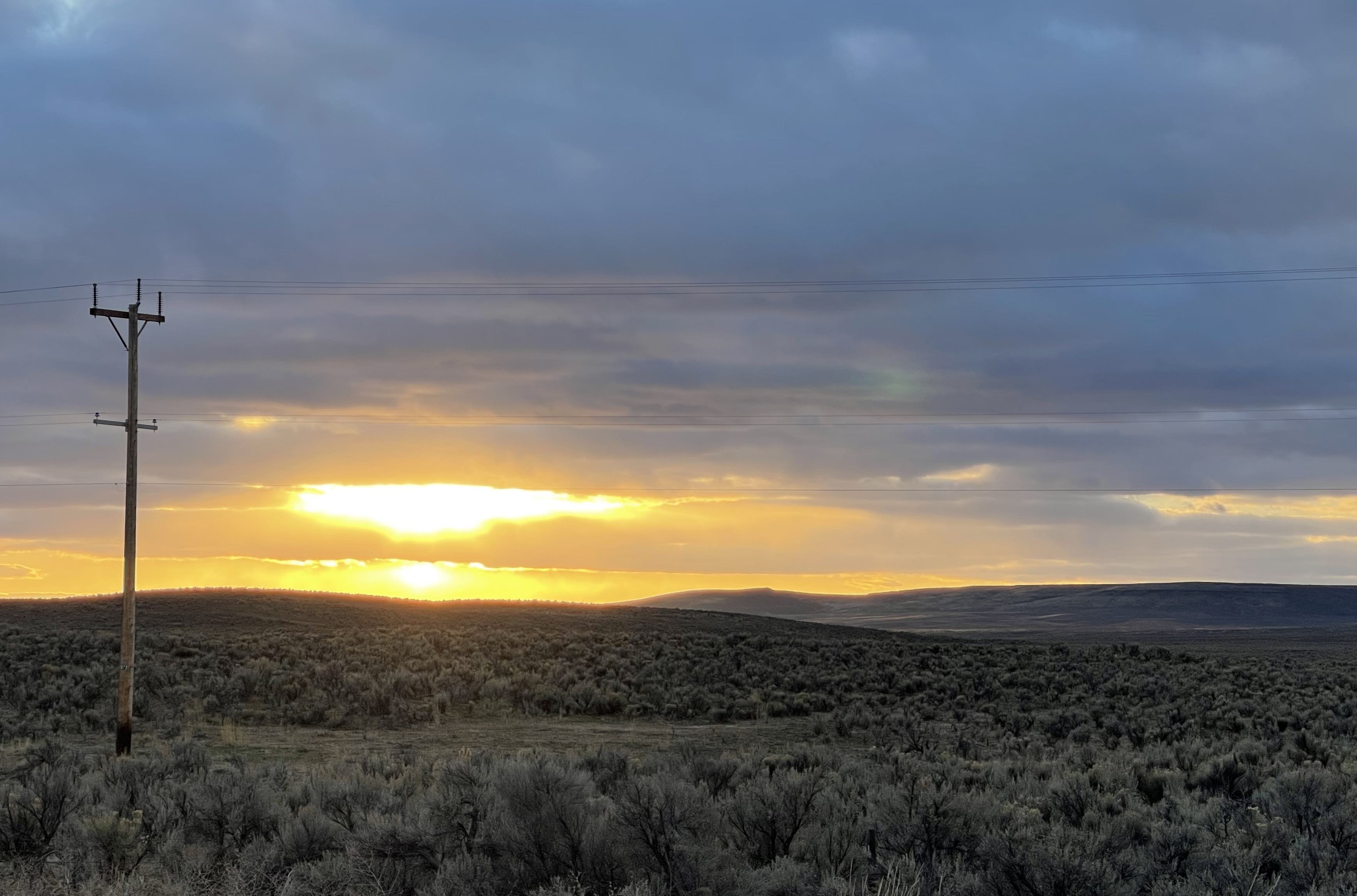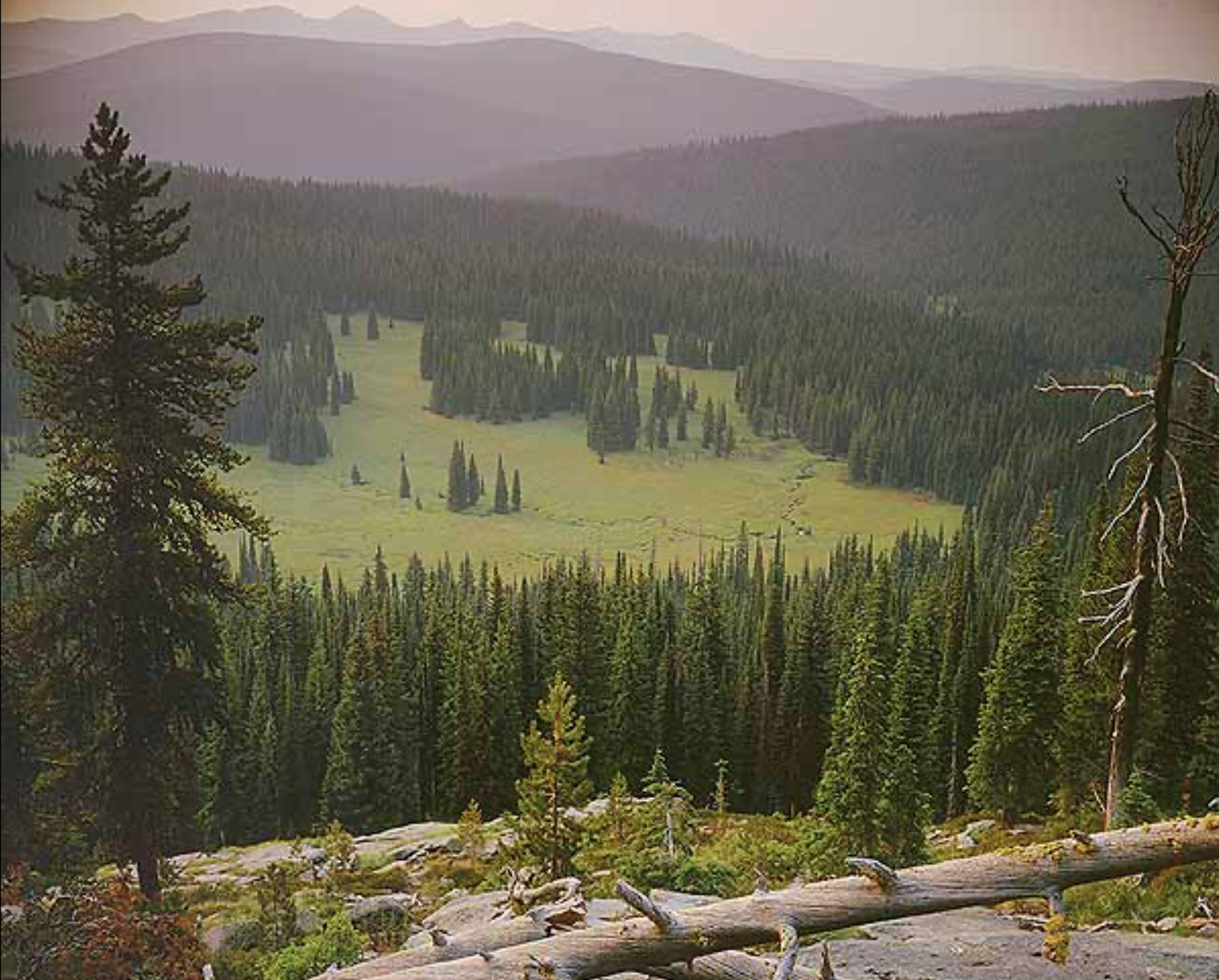
Grave Peak, Selway-Bitterroot Wilderness, North Idaho
One of the most amazing books-on-tape I listened to recently is Denis Johnson’s Train Dreams. Following the story of a life of a literal nobody — this was Johnson’s forte — Robert Grainier, a day laborer in the American West, he writes in unsparing style about Grainier’s life from his perspective. The events that happened, both good and bad, are raw, and unscripted. The basic plot — an orphaned man living in the Inland Northwest, outside of Bonner’s Ferry Idaho — is never broken by much comfort, at least for very long. Living here myself, and sitting here watching the December rain fall outside, it was an act of constant endurance, without a pile jacket or Gore-Tex raincoat in sight. Johnson, besides being an elegiac writer, also embodies Robert Heinlein’s concept of a fair witness. – an unsparing, but non-critical analyst of a situation.
The book reading is stunning, and if you have time, I highly recommend you listen to it. It is disorienting in a strange, immersive way, and showcases Johnson as one of the premier writers of the last 50 years, at least. Johnson doesn’t attempt any intentional emotional manipulation of the reader. Instead, there is just the narrator telling his ghost story from his point of view. The story centers around losing his wife and child in a fire, and I won’t say more than that.
At the same time I had the book recommended to me by an X pal (Amanda Fortini, also a writer, and wife of yet another X pal, Walter Kirn) a movie made from the plot of the book was also released. While the movie is not terrible — the cinematography is evocative, and if you’re familiar with the landscape, as I am (I live adjacent) they do a fine job of capturing what it means to be set in the wild landscapes of the Inland Northwest — an area crossing over from eastern Washington to Northern Idaho.
But instead of scrupulously adhering to Johnson’s book, the movie struck me as a psy-op designed to manipulate the viewer on the issues of our day – not the issues of the 1920s. In the book, for example, a Chinaman caught stealing from the company store is attempted to be executed by a mob, but manages to escape. In the movie, he commits no crime (of course) but is summarily executed, and becomes a ghost that haunts Robert. And Grainier, after the fire, instead of being befriended by a drunk Indian with a bad habit of laying on railroad tracks, as happened in the books, is instead lifted up by a prosperous local native merchant. Magic realism is one thing. But this is so preposterous as to defy belief, especially when one considers the dominant time period being set in the early 1920s. Finally, Grainier isn’t even allowed the elevation of his enlightenment through meditation. Instead, he is lifted up by a woman. White men really cannot save themselves.
I actually enjoyed the movie as much as I’ve enjoyed any movie made in the last five years. And I find myself pondering whether I’m hallucinating these things. But that’s the thing about a good psy-op, especially one aimed at sophisticated audiences. When they had a black vigilante kill a white preacher in the movie, an absolute plot insertion with no match in the book, I was pretty sure I was being had. But the scenery was nice — I love my backyard, having dedicated an enormous amount of my life to saving it from destruction, and the movie turned into at least a watchable movie.
Maybe that has to pass for “good enough” in a time period with a collapsing film industry. But it’s still a shame. Ordinary people — even drunk Indians — can walk through life with a certain dignity that does not ascribe to Hollywood’s current morality plays. And people deserve to understand exactly how difficult life was for all the actors on the last frontier of the lower 48 states.
Where’s a cinematic fair witness when you need one?
Son Conor wrapping up his first ultra-marathon — the 50 mile Bryce Canyon Ultra.
One of the more pathologically interesting facets of institutional evolution is how institutions who are behind, stay behind. Business analysts toss around the word ‘culture’ constantly. But what is Laggard culture? And how, if we inherit such an institution, do we do a meaningful turn-around?
In order to understand where to start, you have to understand what are the primary characteristics of a Laggard organization. A Laggard organization is one that consistently falls behind its peers, and seemingly is inured to meaningful change that would alter its status-based relationships with its peers. What this means that, especially in its upper-level administrative ranks, decisions are only made after other, more intellectually progressive orgs. have moved on from past historical patterns that may have provided success. It’s only when those other leaders have established a pattern of accomplishment that laggard organizations will then move in behind the leaders and adopt the ostensibly new successful patterns of operation.
There is no better place to observe this pattern of behavior than in academic institutions in the new milieu established by Donald Trump. With a series of Executive Orders, the Trump administration established, under no uncertain terms that the vast Diversity, Equity and Inclusion apparatuses built up to enshrine Woke Doctrine across all aspects of university life was to be dismantled, or lose all federal funding. This was actually affirmed, pre-Trump 2, by the Supreme Court in 2023, with the case Students for Fair Admissions vs. Harvard.
But the universities “fought back” — some kind of idiot euphemism that they weren’t going to dismantle their various DEI kingdoms, and “somehow” the public was going to rise up to defend the various machinations the universities had developed in the name of the various terms over the years. Academics screamed “academic freedom!” as well. But academic freedom, for the unwashed, means the ability to pursue intellectual paths inside the university, as long as it was a.) scholarly, and b.) somewhat defensible as far as being related to one’s focus of the home department, or related to a collaborative effort across the university, in pursuit of knowledge. Being one of the few that has actually exercised academic freedom (this blog is just the latest instantiation) I can tell you that most academics never come up against any boundaries where one would need to play that card.
At any rate, many of the leading universities soon settled with the feds (Columbia, Brown, Cornell, Virginia) seeing the handwriting on the wall really NOT that early, but enough to be in front of a pack of very slow donkeys. Many of the others reacted almost immediately with shock — basically changing title names to conform with federal grant applications. But they mostly regrouped, except now those same bureaucracies were doing even less than they were doing before the EOs. If you do some comparison of before/after org charts in most universities, you’ll see all the usual suspects.
This is actually a key identifying element of Laggard institutions — the obvious inability to change in the face of larger societal forces, while turning the entire apparatus of sophistication present in the organization into justifying the status quo. Inevitably, it’s wrapped in some kind of Communitarian v-Meme banner (“we CARE about our people.”). But the reality is it is a deeply tribal response that more maps to the Tribal/Authoritarian v-Meme structures most universities operate under.
What does this mean in terms of information flow and memetics? Laggard institutions exist, with both their members and their chieftains, in a closed information ecosystem. The minute that an institution enters that state, it becomes very difficult to even get leadership to develop larger-scale consequential thinking. Prior change, often due to arbitrary whims of fashion, could easily be managed as long as that information did not provide disruption for the dominant org. chart. And once some paradigmatic comet outside streaked across the sky, while it may have startled at least some of the denizens, everyone immediately put their heads back down and started chomping away. Dinosaurs have to eat.
The other problem with closed information structures, especially when manifested at the Tribal/Authoritarian v-Meme level, is that there is little information exchanged in terms of rational argument, or predictive models. Information discussed is primarily represented as long time myths. And those long-time myths are very prone to institutional parthenogenesis — the analogous process to where bacteria, unable to find other bacteria with which to conjugate, start self-replicating off their original pattern. This would be fine if the old Second Law of Thermodynamics — the tendency of entropy to create increased disorder — wasn’t in play. But trust me — there’s no better place to witness this than in anyone’s faculty meeting. Inevitably, the same memetic restructuring will be brought up again to be debated — again. And instead of new data (or any data) adding to most of the decision making, there will be some tweaking of dominant myths, which further reinforces the notion that fundamental change is not necessary.
If one considers the various developmental stages of universities, much as one might human societies, it’s easy to see that while ALL universities are slow donkeys, at least some have ingratiated outreach and faculty borrowing and lending to modestly prevent the natural tendencies of the social structures they all functionally operate under. For example, MIT doesn’t feel constrained to always follow the pack, and while they are still in thrall to many of the vicissitudes of the entire academic structure, if they want to try something different, there’s no one in the wings saying “well, XXX university hasn’t done that yet.” As part of their fundamental ethos, they’re SUPPOSED to try new things.
That’s not true for any laggard institution. In these, the dominant information transfer always has to be mirroring of whom the institution perceives is in front of it. And while the superficial take is indeed problematic, what’s even worse is that decay in consequential thinking that also happens in the context of the thinking of their leadership. In the case of universities, any change often takes something like 3-4 years to be implemented. Once even a relevant curriculum change might be proposed inside a department, the timescales mean that it won’t end up as a permanent change, an incorporation into the official university catalog for at least two years. Extremely problematic in a world where the major news cycle churns weekly.
All laggard institutions, and universities, with no exception, were hit memetically very hard during COVID. If one believes the memetic principles laid out in this blog, aggregate collective intelligence is very dependent not just on social structure of a given institution, but the frequency and velocity of relational transactions between agents in that system. And there’s no question — high trust societies and businesses maintain their ability to have high information coherence through face-to-face interactions. By sending everyone home to “work from home”, especially with laggard institutions, a new, low baseline of performance was established. Most people simply do not possess the discipline to “work from home.” They require both the encouragement as well as the policing that comes from co-location with other humans. Being who I am and having the ability to talk across Pacific Northwest industry with my former students, my guess is that north of 60-70% of people really are incapable of the self-motivation necessary to do so.
The problem was exacerbated in Laggard institutions because there was a memetic sorting mechanism that also occurred. Those who were actually able to maintain a reasonable work output during the isolation proved that their job talents were NOT tied to geography. And progressive institutions further up on the developmental scale could then scoop up these performers and add them to their staff. They didn’t have to move, and they would get paid more money.
That further separated workforces in Laggard institutions to people who were now testing the bottom of the work output pile. People actively were finding out how little they had to do to keep their job. And with the inherent social fragmentation imposed when entire institutions went home, there were no lateral feedbacks in the social structure. There was no one beating the drum on the slave ship, and worse — you were locked into the oars with no one. Many just quit rowing. Or rather, rediscovered gardening – and I’m not talking figuratively.
And to add even more difficulty to the problem, laggard institutions tend to index their performance relative to “close” peers. The dominant myth assumes stasis of position. And if you’re second rate, that’s where you’re going to stay. And then that turns into a major status myth that impedes any improvement in performance. “Well, we’re just not that good” turns into a self-fulfilling prophecy.
Not surprisingly, especially when there are umbrella excuses like COVID lockdowns, any break from low performance, and return to a high performance mindset, is not greeted well by the broader members of the parthenogenic community. Now moral rackets come into play (“she has Long COVID, and you’re making her look bad!”) as well as negative targeting of higher performance individuals. There’s a natural regression downward in all institutions, from Performance-based Communities, back down into complicated Tribalism. High performing institutions, not surprisingly, attempt to have some mechanisms for rewarding innovation. Moderately performing institutions end up having praise mechanisms for the hierarchy itself, which inevitably involves praise for the non-involved. You can’t disrupt the narcissistic supply a normal hierarchy typically has for ranked actors.
But Laggard institutions are the worst of all, in that any activity outside the memetic box the institution has drawn for a given department becomes a threat to the institution itself. This is enshrined in the famous, but apocryphal “Five Monkeys and a banana” story, where a reward (a banana) is hung on a string below a ladder, and one of the monkeys attempts to get the banana, while the others are sprayed with ice cold water by the supervising researcher. Needless to say, it doesn’t take too many rounds of the experiment for all the monkeys to either a.) figure out such behavior is going to result in punishment, or b.) they better do whatever the other monkeys are doing or they’re gonna get the living daylights beat out of them as well.
The key takeaway is that once a given performance level is lowered and found permissible, and is coupled with absence from larger social forcing (as in work-from-home situations) one sinks into a very deep well that is difficult to recover. Even a visionary leader is going to have a difficult time fixing such an organization, primarily because the circumstances that caused them to assume a visionary perspective in the first place probably didn’t involve layoffs or lots of coercive Survival v-Meme thinking. The integration of an entirely different v-Meme set (“we take care of our people, no matter what!”) based along Tribal values makes it almost impossible. The moral racket turns into the Perfect Racket.
But the problem with being a Laggard organization is that you’re still the last zebra in the herd. And while herds offer substantial protection, when the going gets tough and the lion finally shows up, he’s not going to pick off the one in the front.
I shouldn’t have to state this, but Laggard institutions thrive on “work from home” or “remote work.” End it.
What can be done?
The key to fixing Laggard organizations is to realize where they are in the information space. Typically, they are grounded only weakly to organizations around them, and often not grounded to any reality at all. While all organizations operate in some public context, that does not mean that the appropriate signals actively being generated trigger any behavior modification — especially if people at the top of the organization don’t see anything like reduction in pay, or a lack of raises. One of the classic lines in Laggard organizations in decline is “we’re just not getting our message out,” or “they simply don’t understand our situation.” This is classic low empathy drumbeating — focus on one’s own victimhood, instead of doing any kind of real reflection on how the circumstances causing pain arose in the first place. And forget that connection and processing the views of the larger community. Those Deplorables have no right to judge us. They are deplorable, after all.
There are a couple of primary strategies, though, that can be executed. First and foremost is to make hard targets matter. If someone says they are going to increase enrollment by 50%, then NOT hitting enrollment should result in some physical penalty that is not just passed down the authority structure chain, but hits at the top level. Gaslighting is heavily rewarded in Laggard institutions, and rarely felt by those at the top. Readjustment strategies for targets can rapidly eliminate inflated estimates, without catastrophic measures like “if you don’t hit your target, you’re fired.” Cross-institutional transparency helps as well. Make it clear that failures will be publicized.
One of the most effective strategies for leadership for moving Laggard institutions off the dime once they’ve been told they have to move is to force yet another numbers-oriented version of “what are the deliberate, measurable steps you intend to take in order to do that?” The goal is to ground every piece of the process in reality, so that people cannot wiggle off the hook.
Since Laggard institutions work primarily on mirroring as a learning tool, setting up opportunities to visit known institutional leaders can also help. When someone is also actually doing something difficult, the excuses can vanish. Leadership has to also prepare for the inevitable “we could never do that here!” line of reasoning. Demanding some numerical number of changes after an aggregate set of visits would be a way to ground that process.
Finally, leaders in Laggard institutions must realize that they must lead from the front, with example. This is not easy in a large organization — but can be very meaningful. Volunteering budget reallocations and some number of experiments at the top sends a loud message to the rank and file that there will be no business as usual around here. Remember that mirroring matters. You are not going to evolve people to be data-driven, consequence estimators overnight.
And never forget it is authentic relationships that drive internal growth. When people are connected to other people in real ways, larger loci of responsibilities follow. The number of solutions to be generated for any problem will always be related to the interconnectedness of the social topology of your organization. That one is just the law — because it’s in the memetics.
Sometimes, I wonder how I’ve managed to get myself into so much interesting misery in my life. I wouldn’t change a thing, just FYI — but there are days when I gotta wonder. My real activism career started when I met Leroy Lee, the architect of the Phantom Forest scandal of the early ’90s, who decided I was worthy of training. That led me to one of my primary mentors, famous Combat Biologist Al Espinosa, a fisheries biologist on the Clearwater National Forest, who was famously run out of the organization for chronically refusing to lie about the impact of timber sales on water quality in one of the places in the world most known for clear water. Hence the name.
That carried me forward into the orbit of other friends, like Steve Kallick, famous Alaska activist, lawyer, and one of the primary authors of the Tongass Timber Reform Act.
It goes on from there. But what happens when you start building a (non-paying) career around social/environmental change, is that you learn things that are simply impossible to learn anywhere else. There is no book on how to sue to stop a federal timber sale. And no one’s written the comprehensive book on how people inside agencies rig things for their own interests. You gotta figure these things out on yourself — or preferably with the help of a great mentor. One of the most recent silly things has been the “No Kings” protests, populated by oldsters, possessed with Trump Derangement Syndrome, and screaming about issues they know precious little about. Don’t believe? With any activist movement, one of the smartest things you can do is show up with a clipboard, a list of SIMPLE terms, and start asking people in a flat monotone voice about their actual familiarity with those terms. You’ll quickly learn most people running have NO idea how anything works.
Why? Most current issues are above the complexity limits for most people’s understanding. Not only do they not know, they CAN’T know. Their brains won’t process it. Take the current immigration debate. People on the pro side of unfettered immigration will wax on about keeping families together, etc., while at the same time refusing to acknowledge that many women brought their kids to the border during the Biden years, and abandoned them at that border. Naturally, that created a fertile hunting field for cartel predators, who were more than happy to scoop them up and sell them into prostitution. It’s not like this kind of thing has no historical precedent. Read about the Children’s Crusade of the early 13th century. Inspired by religious fervor, thousands of children gathered to march to the cause of liberation of the Holy Land. They, too, were sold into slavery in Tunis. Now which does your brain prefer? Hardworking Mexican families, or a complex supply chain of childhood sex slavery, controlled by cartels, and running through multiple Central American families? Complexity, especially when bracketed by real-world unimaginable cruelty, is always a tough sell.
I’ve already told the story about my friends, Anastassia Makarieva and Andrei Nefiodov, largely responsible for getting me off the bench for the latest moral racket– the Net Zero campaign for CO2 emissions. It makes me dizzy to think about all of it, but the subsequent organization of all this led me to connecting with the Executive Director of the organization, Green Oceans. Green Oceans is fighting the commission of a series of huge wind farms off the Massachusetts and Rhode Island coasts. They’re losing right now, for a variety of reasons that I’m not going to go into. But it was interesting that whoever made their strategy could have used some help more than a couple of years ago.
The problem is not alone that the wind turbines that are in the process of being installed are a blight and an eyesore on the ocean. This has indeed happened in some rich people’s backyard, and so it’s easy to go to the elite’s desire to not have this kind of thing in their backyard. The real problem is that the permitting process necessary (done by the federal government) allows what is known as an “incidental take” of marine species in the context of construction and operation of this wind farm. That means the project gets to damage or kill a certain number of wild animals in the context of making and operating that wind farm. Gotta break some eggs in the Natural World if you’re going to save it. Amirite?
The problem is those numbers associated with this project are mind-boggling and astronomical. 90,000 dolphins are acceptable for Incidental Take, as well as 500 northern right whales. Right whales are already an endangered species, and there are only an estimated 400 of those critters left in the wild. The mind literally reels. Imagine a similar declaration with bald eagles — you get to eliminate all of them, as long as you did it by accident. How would that play?
Plus, the group had a near-impossible time finding legal counsel. No one wants to be on the other side of Big Green and Anthropogenic Global Warming, even if this wind farm will contribute basically nothing against global tallies of CO2. Gotta start somewhere!
There are other projects accelerating in the name of CO2 sequestration and reduction, like bulldozing thousands of acres of Joshua trees for solar farms. We’re on the cusp of going through a major “burning the village to save it” phase in all of the AGW stuff. And the attacks will come from moral rackets from the Left.
As a response to this, pre-emptively, a group of atmospheric scientists and I are launching a campaign centered around what we are calling The Monterey Declaration, named after the location of one of the scientists’ universities. The point of the Monterey Declaration is to get people to agree to not destroy the natural world to save it. You’d think it would be a no-brainer, but it’s more challenging than you might think. But I like the name. It sounds cool. Here it is below.
The Monterey Declaration –
As environmental scientists, physicists, chemists, climate scientists, engineering scientists and applied mathematicians, we are writing this declaration in regards to the issues of Anthropogenic Global Warming (AGW), and human actions proposed to mitigate AGW.
We are deeply troubled by the potential damage on wild and intact ecosystems that may be created by large scale geoengineering mitigation policies being pursued in the name of stopping AGW. Because of our current state of incomplete knowledge of the effects of global warming on weather systems, we strongly believe that we should not destroy the remaining natural ecosystems on the planet in the name of slowing global warming. We believe in preservation with appropriate humilityregarding the actual state of the science, and are advocating for preservation of the remaining wild and relatively untouched ecosystems which are still functioning on our planet.
Life has existed on Earth for at least the past 3.5 billion years. It is also highly likely that plant life formed the atmosphere we breathe today. That natural vegetation has modulated extremes in atmospheric composition as the Earth passed through cataclysmic events, such as the Permian Extinction 252 million years ago, the Cretaceous-Paleogene Extinction Event 66 million years ago, as well as five interspersed Ice Ages, scattered through the geologic record, with the most recent and familiar being the Quaternary Ice Age that we still are in. Throughout these events, the complex system formed by the sun, orbital dynamics, the surface of the Earth, the ocean, the atmosphere and the biota of the Earth has proven especially resilient, rebounding from events, such as the Permian Extinction, that devastated over 90% of life on the planet.
Though much more research is needed to truly understand the interactions of large-scale geological disturbances, as well as the bounce-back of biota on the planet after these events, one thing is clear; The Earth, as a complex system, tends toward climate stability in its natural state. The fact that life on Earth is still here is proof that the climate is not prone to various runaway conditions.
None of the above is reason to dismiss the valid concerns about how humans affect the climate. At the same time, we should increase research on what is actually more immediately important – the weather. Weather is downstream of climate, and more easily disturbed on a local and regional level. Even regional disturbance by humans is poorly understood, and can likely interfere with local stable weather patterns that are important for the thriving of human societies and the biosphere. We endorse more data collection, theoretical modeling, and improved computational methods in this area, precisely because one of the biggest questions, as well as deep historical legacies of the scale humans are likely to affect, is where the rain will fall.
We believe that with appropriate direction and more research, we can resolve both human needs for a stable climate, as well as a deeper understanding of how regional climatic phenomena, such as how forests create ‘biotic pumps’ that bring water inland, can be meshed with the larger planetary climate system. We believe that we have not gone past the point of no return (and the data supports this view) nor seen large-scale changes in weather patterns across the globe. Because of this, we urge immediate and resolute protection of our remaining wild ecosystems, from the Amazon, Congo and Indonesian rainforests, to the boreal forests of Siberia and Canada, as buffers from CO2 emissions. Grand schemes of atmospheric, oceanic or landscape modification by human effort hold the likely and ominous potential for backfiring in unknown, unprecedented, and possibly catastrophic ways. We must remind ourselves of our need for humility regarding how these systems interact with the climate..
We also want to hold all scientists involved in this contentious issue to a Gold Standard of debate – recognizing what is truly known, as well as what is unknown. There are deep scientific disagreements within the scientific community on this issue. We, the undersigned, are calling on the entire community to avoid the perils of political pressure, and work diligently to form a truly systemic view of our planet’s climate. We call on the formation of a Blue Ribbon panel to lay out knowns and unknowns in the state of our science, and urge all parties to strive for a better, globally systemic understanding.
The main point of the Monterey Declaration is this: we must not sacrifice the functioning systems of the natural world in the name of saving the world. As Aldo Leopold said “the first rule of intelligent tinkering is to keep all the parts.” We are at the precipice of deleting some of the most important pieces in the name of saving the world. We strongly encourage all parties to step back from the brink.
_______________________________________________
You’d think all of this would be unnecessary. But it’s not. One of the things people can’t seem to accept about any issue in the public eye is that they all have psychopathic elements, who are more than happy to leverage your emotions regarding an innocent stand-in to get their way. Or cause chaos. And they’re specifically counting on you to not notice incongruence in the details. As well as create a premise that allows them to kill your gods. So much about dealing with them is remembering this one fact. I saw it over and over fighting over the last few groves of old-growth forest. The timber industry would double down on the places most precious to us, regardless of commercial value. They were going to teach us a lesson, not unlike the sacrifice of the Bamiyan Buddhas in Afghanistan ordered by the Taliban in 2001. Psychopaths have no bottom, so if you think you can go low, trust me — they can go lower.
The project is sponsored in part by the Norwegian and Danish governments, and the local rich people are largely in support of it — looking for a path to virtue-signaling redemption. Isolation of local ingrates and malcontents come far too easily in this day and age, and this project is no different. And the saddest part of this — the over 90K take of dolphins and basically extinction of the right whale population, continues a long history of ecological collapse off the coast of Massachusetts.
If I’ve learned anything in the context of working on any issue in the U.S., or even the world, it’s that Wild Nature is always the first thing under the bus. Why? Because people are decalibrated that it even exists.
The Parthenon — One of the interesting things about it is how small it is — Athens, Greece
On a personal note, it’s super-depressing to be writing about the events of the past week on the day before Thanksgiving. Hoping these simply pass means that when you unearth this post a couple of years from now, you won’t know what I’m talking about.
Last week, six Democratic senators decided to make a large-scale announcement on X, telling the troops of the US Military that they didn’t have to obey “illegal” orders. They didn’t give any examples of illegal orders, doing nothing but admonishing the rank-and-file with the implication that Trump has in the past given them illegal orders, and that at a minimum, they need to be insubordinate to these. As I said, there are no examples — just a broad brush telling them of the oath to the Constitution. The Constitution itself is notoriously sparse when it comes to telling the military exactly how to run itself, other than members of the Army and Navy (that’s all there was at the time) should obey the orders of the Commander in Chief, and the Commander in Chief was the President of the United States. I don’t think our Founding Fathers quite anticipated the psychopathic information wars (they were not totally naive to the ways of manipulation, but still) we are encountering today. I kinda think they wouldn’t have imagined senators and congress-critters as using gross stupidity as a defense, or the notion that language should be parsed without any implication.
But here we are — where we’ve had the Democratic Party shrieking that the current President is a fascist (once again, total Humpty Dumpty with this word.). For those that need a Humpty Dumpty refresher, showing psychopathic manipulation was alive and well even during Lewis Carroll’s day, here’s the famous quote from Through the Looking Glass —
“When I use a word,’ Humpty Dumpty said in rather a scornful tone, ‘it means just what I choose it to mean — neither more nor less.’
’The question is,’ said Alice, ‘whether you can make words mean so many different things.’
’The question is,’ said Humpty Dumpty, ‘which is to be master — that’s all.”
What is fascinating, if you follow this blog, is the memetic tricks being played by the various actors — in particular Mark Kelly, D-AZ. While he admonishes the military rank-and-file (he is a decorated veteran and Space Shuttle pilot) in a tone that implies they’re being given illegal orders, he beats feet away from this position in subsequent interviews. He poses his comments as some kind of avuncular reminder to the troops as a post-statement interpretation. It’s totally whack, of course. But decide for yourself. (Youtube has problems embedding in WordPress pages, but the link should work.)
Arguing against the original posting by the Six is a fools errand, and I won’t do it here. But what is fascinating is the Six surf the wave of memetic understanding, arguing that what is obviously a context-laden message, full of insinuation, should be taken literally and completely fragmented, and out of context. The perpetrators use memetic simplicity, along with a follow-on message of assertion of the First Amendment as their escape hatch. They have the right to say anything they want, of course, and they get to pull the Humpty Dumpty.
When Trump responded on X and Truth Social by angrily reminding them that basically what they have done could be considered an act of sedition, punishable by hanging, there’s a cascade of angry pearl-clutching in unison across the entire Left. What’s wild is that they all ran Trump’s statement of fact into “Trump wants to hang all of us.” Well, he might, but Trump didn’t say that at all. They are counting on psychopathic manipulation — clever deletion of a few words, while counting on the Neo-tribal politics I discuss in this piece to hold sway. The Left has spent the last nine or so years demonizing Trump — certainly the public must realize he is an illegitimate President, disposable by violence.
What is wild is that the Left continues to lay ground for what is known as a Color Revolution. And what is a Color Revolution? From ChatGPT –
Large-scale public demonstrations calling for political reform or resignation of leaders.
Unified branding (e.g., a color, flower, or simple symbol on clothing, banners, etc.).
Civil resistance tactics such as marches, strikes, and occupation of public spaces.
Rapid mobilization often sparked by disputed elections, corruption, or economic crises.
Focus on nonviolent action, although violence may occur around the edges.
This Color Revolution is focused on Trump, obviously, in attempts to brand him as a fascist and some kind of ersatz King. Even considering the argument a year into Trump’s Presidency is exhausting. The force of the current Color Revolution derives from endless haranguing using generic terms that the general public really can’t define. If Trump was a real fascist, the various operatives on the Left would at a minimum be in jail, and likely have already been executed. But the drumbeat of social media repetition goes on. The immiseration process never stops.
And the people doing this are pros. One of the Seditious Six, Senator Elissa Slotkin (D-MI) is a former CIA officer. Her bio is incomplete, but it doesn’t take much reading in between the lines that she helped subvert active organizations for a living. The others are trading on their service records in a “how could I possibly want to subvert the government” sleight of hand.
As of tonight, November 26, there have two National Guard members critically injured by an illegal immigrant from Afghanistan. There’s no question that the constant direct emboldening by specific members of the Seditious Six contributed to the atmosphere allowing these killings. Slotkin herself was warning that National Guard members were likely to start shooting US citizens in the various cities that they’ve been deployed to only last week, which translates to legitimacy of various aggrieved parties taking shots of their own. It’s going to be a wild week seeing how this latest development gets spun.
The Little Black Wolf, on the beach outside of Asotin, WA
One of the more recent, fascinating aspects of the societal fight over CO2 and its attribution, solely through modeling, toward Global Warming (if not Anthropogenic Global Warming) is how GW is portrayed in the media. The drumbeat is constant — more hurricanes, more extreme weather events, all killing more and more people, and of course, causing more and more property damage.
The problem with this take is that basically none of it is true. In this piece by Roger Pielke, a professor emeritus from UC-Boulder, in climate science, he very agnostically takes apart the statistics, and the signal therein, regarding potential change in weather from climate change. Short version — some evidence of heat waves, some evidence of increased precipitation, but no flooding. No evidence of really extreme weather events, and hurricanes, etc. Inside the piece is a video that’s well worth watching. Roger is actually pretty milquetoast in his declarations, supporting the impossible-to-support CO2 hypothesis of climate change, while at the same time showing that not much is really going on there with the biblical plague aspect.
By any standards, it’s a reasonable, from an emotional perspective, view, and hard to fault him on it.
One of the things that I and my colleague, Joe Biello, another full professor in mathematics, specializing in atmospheric science, have been working on, though, is the larger question of ‘attribution’. Attribution is the process of assigning a given hurricane to having a root cause of AGW, and CO2, and then arguing for Net Zero or some other CO2 reduction philosophy, that even the true believers attest will make no change until after we are all long dead. But the fear engine must be stoked, and apparently the larger AGW community decided that just global temperature rise wasn’t going to do it. We had to go the biblical plague route to get the peasants to start screaming. And here we are, bombarded with catastrophe after catastrophe, all leading in a straight line to AGW. Even though the basic statistics show this is garbage. That’s attribution.
What’s interesting is when you constantly insist, even AGAINST the scientific consensus that there has been no change in the Atlantic Meridional Ocean Current (AMOC) that Europe is going to freeze, and the world is literally going to end through its reversal, you open up some serious memetic Dark Matter possibilities. Dark Matter, in the physics lexicon, is all that stuff that you can’t see in the universe, that still pulls everything else around. You can’t see it, you don’t know it’s there, and its only evidence is how it affects everything else.
But the core memetic thought here is that Dark Matter is very meta-cognitive-y! Far easier to look at the flood and scream it’s a mental model that everyone is familiar with, and tell them if they don’t listen to you, they’ll be dead. Some serious psychopathic energy you’ve got pumping!
But nothing keeps going without money. Let’s say you’re an insurance company. Your board is bombarded with the message that AGW is going to create extreme weather events. These are in the future, of course — this is insurance. And most of the actuarial information comes from models, that alternately predicted sea level rise of 8′, or no ice at the North Pole by 2014. You sign one of those modelers on as a chief consultant — don’t want to be caught holding the bag.
And then you have seven years of no serious hurricanes. The news doesn’t report the hurricanes, because they basically never happened, even though extreme weather events were supposed to increase — but didn’t. Yet you charged out, through your policies, which were highly supported by the governments, especially in blue states, because of the hysteria. It’s what people believed! And they screamed about The Science – even though the actual science was clear on what was happening.
One of the radical changes in the structure of our society in the USA is the dramatic shift in how generalized populations are supposed to not only address mental illness, through care modalities, but how mental illness is supposed to be mainstreamed into the various operations of our corporations and institutions. No longer is mental illness a condition to be treated and overcome. Rather, now, it must be accommodated in your normative social environment. And if you, as an individual cannot accommodate a given neurodivergent condition, then you face punishment or loss of employment.
Worse, if you are trapped with a severely mentally ill person in your immediate family, the “mainstreaming rehabilitation” mindset is so powerful that if you are dealing with a violent version from a protected class who ALSO has a mental illness, the current systems and institutions supposedly set up to protect society as well as family units collapse. YOU are the bad person for refusing to accept aberrant behavior, and not go along with disordered social service agencies who offer little, if any help.
There can be no more terrible example that the recent arbitrary murder of Iryna Zarutska by DeCarlos Brown on the commuter train in Charlotte, NC. Brown had been convicted and released 14 times for violent crimes, including armed robbery, and his own mother had attempted to have him involuntarily committed. But despite violent schizophrenic outbreaks, this failed, even in light of his extensive criminal history. My suspicion is that had Brown not been African-American, he would have been committed. But our social institutions are so contaminated with the notion that racism must be the root of all evil, even Brown’s own mother’s concerns — she had taken him to a homeless shelter because she could not control his behavior — landed on a tin ear in the justice system. She didn’t persist — and Iryna Zarutzka, a person honestly seeking refuge in this country paid with a violent death, and her life.
When such a crazy, violent event happens, one needs to reflect on what principles are our society structured around. It’s easy to go through some litany of the usual list of the various v-Memes, laying out safety and security at the bottom, moving up to rules to regulate such areas as commerce, or even traffic, and then ending up in the space of opportunity to create new economies, or protect the environment. The list would certainly go on.
But if we were to look at things from a more generalized relational substrate, we might come up with profoundly different answers. From a guiding principles perspective, a society is supposed to lay the groundwork for fundamental coherence of action among its residents. Dependent on the overall psychosocial development of its members, societies should create structured environments that allow members to participate, within reason, in an environment that allows enough predictability for people to join some group action, and have some set of expectations about what the outcomes will be.
The short version is coherence, within the context of development and values of a given society, must be the desired end state. It is one of the hallmarks of Collapse Narratives that they promote other, decidedly more disordered, egocentric outcomes.
When people read that word “coherence” it is very easy, without an understanding of v-Memes, which code how people change and grow over a lifetime, to assume that somehow it means that everyone should be a goose-stepping minion. This is ridiculous. A simple example is in order. In contemporary society, the guiding principle of coherence implies that you ought to be able to get in your car, drive to the local supermarket, and provided you have cash or credit cards in your wallet, buy yourself a six-pack of beer. All those activities rely on a much larger stable system to instantiate this simple action.
And psychopaths know this. So if they want to relationally disrupt the coherence of the system, they have several pathways available to them. One is the obvious, conscious mode of throwing a brick through the grocery store’s window. While that is dramatic, it’s also highly unlikely that brick throwing is going to be mainstreamed as a stated societal value any time soon.
Better to co-opt mental models of virtue that a society might hold dear, that inherently are unstable, and arm different cohorts of society, with these as attack modes to the foundations of a society — which inherently includes coherence — and get people inside the system, functioning on different temporal and spatial scales — to fight. Then the psychopath gets to sit back and quite literally watch the world burn.
Much of this has manifested in the last 30 years. My own mother had a relatively profound personality disorder — she was likely Avoidant/Borderline. She was an absolute fire starter when it came to manipulating people into a constellation where people believed they were justified in starting a fight, especially as she aged. But her demeanor, projected as someone who was introverted, gained her allies across the community, especially in the face of my father’s alcoholism, which was also real. It took me to about 48 years of age to realize that at least part of the reason my father drank was because he was married to my mom.
Yet at the same time, my mother functioned relatively well in society. It was because society had imposed constraints on her behavior. As a doctor’s wife (my father was an obstetrician in good standing in the community) she had a role to play, and she knew it. We were Catholic, and she befriended the local sisterhood, who played no small part in our social lives. They also had problems, but once again, they were constrained by social expectations. There were particular situations where it became obvious my mother had problems. But here’s the key — for the most part, because her role was scripted, and she did have a couple of bright kids, she had little latitude for finding or displaying any deep, disordered feelings.
The key element in her progression through life in the ’60s and ’70s was that she was supposed to be an upstanding citizen, PTA leader, and mother. Any activities straying out of that would have been considered aberrant and anti-social. Her focus of her identity, which was madly scrambled inside her own head, was EXTERNAL to her true self. It is also true she had a brutal childhood, full of poverty and uncertainty, and my own grandmother had multiple husbands that she had. to navigate. But her path was set. And that was a GOOD thing.
Contrast this to any young woman emerging into modern society. As part of the bedrock belief structure of any version of late stage feminism, you get to be, ostensibly, whatever you want. But that means very little if you have a combination of disorders, as well as a lack of family structure. Young men, even though they are an aggrieved and attacked group in modern society, have far more. Bedrock ‘Protect and Provide’, though diluted, still exists. Focusing on the egocentric needs of some women does benefit some — I have some outstanding female colleagues that I wouldn’t trade for anything. But most people have little integral sense of self until they are north of 26. Couple this with the very natural drive to have children, which is then wildly confounded by extant societal messaging, and it’s no wonder we’re in some version of societal crisis. Short version — like every society, we have some percentage of crazy people. We then strip away boundaries for normative behavior, and then additionally arm young women in particular with powerful legal tools to lash out, and we end up with a lethal stew for relational disruption.
The people that suffer most from this are, not surprisingly, healthy young women, who then inherit a hostile relational environment that they are poorly equipped to navigate.
And while there is more to say here from a gendered perspective, the real point is that the de-centering from some version of societal conformity as an expectation for young people, to a re-centering on the poorly developed needs of the self is a recipe for societal chaos. And chaos goes directly against the need inside a society for coherence. The society simply cannot function effectively at the complexity level that it may have evolved to. And so it begins to decline.
Psychopaths love this circumstance of combining what has been called a “moral racket”, combined with my term, “narcissistic shielding.” The more out of it a given person with alternately neurodivergent issues that might have been more manageable in a more constrained environment, or someone who actually suffers from mental illness, the more they show up on the psychopath’s radar as someone who can be co-opted and manipulated against the relational hierarchy in a social setting. In my clinic program, which is somewhat unique in that I send students out into the real world, I noticed a pattern where a more well-formed psychopath would adopt a functional “child” — and then wait for affront from me. It was relatively unconscious, though the impetus for “splitting” by the personality-disordered ‘parent’ was usually a bad grade for work.
Then the bias towards centering the social situation around the person with mental illness or neurodivergence would come into play. It’s well known, for example, that people on the autism spectrum are often literalists, and have a very difficult time with irony or sarcasm. So the student would misunderstand something I said (I use a lot of humor in the classroom, akin to a football coach goading players to higher performance) and then the psychopath would raise the interests of her narcissistic shield in order to gain power and control.
This has happened on systemic levels across society. Academia is well-known to include more than its fair share of mentally ill people (who could study a particularly obscure, minute area for their entire career without the advantage of OCD?) and it’s not surprising, with its development of complex micro-aggressions, often developed by its own psychology and sociology faculty, that there is a rapid relational collapse into externally defined, low empathy, relational modes. The problem with this is that our brains will only do what they practice, and when you end up with entire modern systems that enshrine siloed thinking, exacerbated by a heavily siloed social system, there is a profound decay in the ability to synergize larger solutions that society needs.
As the society plunges ever deeper into the meaning crisis, it exposes even more avenues for psychopaths to use the narcissistic shields of the mentally impaired to focus on ostensibly empathetic solutions for problems — “let’s focus on making people who are severely disordered feel comfortable everywhere.” This creates a wild level of cognitive burden on the rest of society. If a 50 year old man with lipstick wants in your high school daughter’s locker room, she must be accommodated. If the homeless person refuses being housed, and prefers to sleep in the open-air drug market they’ve established at the local park, they must be accommodated! This re-centering causes everyone else to retreat from public spaces, which causes further social degradation, as well as establishing hyper vigilance as the norm for public interaction. Everyone you meet doesn’t mean you well — because they probably don’t. During the recent Palisades Fire in Los Angeles, I brought up on social media the likelihood that homeless people had helped spread the fires. My ultra-virtuous liberal friends immediately went on the attack. How dare I impugn such an obvious source (homeless people in LA often live at the mouths of canyons, and have burn barrels they gather around)!
And it hardly helps the mentally ill, either. I had a memorable adventure once chasing a bipolar schizophrenic through the streets of Vancouver, BC. I don’t know if that sounds like fun — but it wasn’t. He had actually escaped from an institution, but real mental illness is no joke. Mentally ill people need help because they are not normal. And they are often very low functioning. A lack of understanding that differential actually worsens the societal consequences for them. It does not help to pretend.
But for psychopaths, it’s any manipulative virtue/narcissistic shield in a storm. And when your goal is relational chaos, there are multiple paths to get there. Facilitating the crazy is just another tool in the toolbox.
If you think it’s almost designed to make you crazy, or at a minimum, retreat from society, you’d be correct. That’s the key game in the psychopath’s playbook — relational disruption, or make you nuts. And what could be more delicious than using the helpless against society?
One final note — I was in Vietnam looking for venues for international projects, when I happened to encounter a British psychiatrist. We hit it off famously, and ended up having drinks at the Hotel Metropole with another Vietnamese mental health care provider. He had been working in Laos, and I asked him what they did in the villages there. “They build a set of pole cages outside the villages, and when they have someone go on a manic episode, they lock them in the cage.” He went on to tell me that there were only eight psychiatrists in all of Laos, a country of approximately 7.7 million people.
One of the words that has surged in popularity in the last four years is the word “gaslighting”. I think the reason for this is that since the pandemic, the popularity of the technique among politicians has also surged. I can remember working on timber issues back in the mid ’90s, when there was a shift in messaging by the US Forest Service from admitting there were lots of problems with various destructive timber sales, to wholesale denial and lying about the conditions on the ground, were a bellwether. Yet lying — even pathological lying — is not necessarily gaslighting.
The origin of the term comes from the eponymous play, and subsequent remake of a British movie of the same name. In the American version of the movie, Ingrid Bergman is a woman, married to a man, played by Charles Boyer, who, through manipulation of lights in the house (the gas lights) is convinced that she is going insane and cannot trust her own judgment. He does this with the intent of having an affair with the couple’s promiscuous maid. There are plot twists and turns, and if you’re interested, you can go watch the movie.
What is more salient is the concept of the psychopath twisting the information stream, directed at a particular target person, to remove their natural sense of grounding validity– the ability that a person has to assess their temporal and spatial surroundings, and establish their own reference frame. The end game of the psychopath is to make the person subject to the gaslighting to psychopathic control by the abuser. The reality the abuse victim experiences is reconstructed through the mental ground wire of the abuser. This is an important angle of gaslighting — by controlling the functional ground of the person who is the target of the manipulation, they also control their perceptions of their situation.
Gaslighting is often present in chronic battering love relationships, and can be executed by both women and men. In a battering situation, the gaslighter does not construct a negative image of that part of the relational dyad. Rather, the gaslighter manages to, through a combination of isolation and manipulation, a POSITIVE image of themselves, through some combination of dissolution of ego boundaries, and arbitrary rewards (often sexual) in their target’s mind. Most people external to such situations often wonder how someone in a chronic battering relationship can stay. But that’s not the correct view. The real conundrum occurs in how the mental models inside the target’s psyche are constructed by the controlling party. It becomes how can they leave? These memories can linger long after the gaslit party is removed from the abuser. They are deeply limbic, and as such are not easily removed.
Much has been written about cult behavior, and how gaslighting is a primary tool of programming (and subsequent deprogramming) from cults. My experience is that one doesn’t need to go all the way into a cult in order to see various psychopaths executing disorienting strategies toward potential victims. Gaslighting can, and does, happen all around us — especially when the larger cultural zeitgeist promotes it. The recent COVID pandemic, had the public been led by anything other than a group of crazy psychopaths, would have ended in April of 2020. Instead, the psychopaths in charge (various members of the CDC, NIAID and the heads of the federal government) seized upon the chaos to dismantle the public’s ability to ground itself.
One of the best scare tactics used was the promise that hospital availability in general, and Intensive Care Unit rooms in particular, were always in short supply. Yet there was an application developed by MIT where one could look up ICU or regular hospital availability, using crowdsourced data, that showed there was no availability crisis. The mainstream media played a dominant role in this warping of reality, enlisting late night talk show hosts like Jimmy Kimmel, who served as a moral arbiter of the nationwide vaccine campaign, going so far as to say policy development should exclude the unvaccinated from receiving health care.
All of this gaslighting fell under the umbrella of what I called Elite Risk Minimization — a governing philosophy manipulated by elites whereby others outside of elite communities should be deprived of various agency-based health care decisions, if the end result was greater health protections for elites. Elite Risk Minimization is alone not evidence of gaslighting. But when facts and circumstances are directly manipulated in order to place a burden on others outside the elite group, it most certainly is. The worst of the COVID gaslighting was directed at children, with false prophylaxis of forcing young children to wear masks, attend school remotely, and suffer extreme isolation.
The worst of these excesses have not even come to light. Because of complexity issues, especially when dealing with the larger public, there’s a tendency to focus on the top-level intervention — e.g. the actual wearing of masks interfering with children’s speech development. While this was bad enough, what is always ignored is the punitive disciplinary regime necessary to get kids (especially young ones under the age of 10) to even wear masks. This allowed psychopathic teachers, crippled by their own OCD fears, to lash out at children who simply couldn’t comply because of their own neurodivergent problems. And the continuing lack of addressing these issues is psychopathic gaslighting at its finest. Professional societies, like the American Academy of Pediatrics, still refuse to acknowledge pandemic abuses. And what that does is elevate those inside their organization who are more than happy to play yet another gaslighting charade against their membership. Hateful, abusive relational modes start piling up, and move entire professional organizations away from working to regain the public trust, and shifting back into data-driven trust-based relationships.
Instead, they rely on psychopathic assertion of authority. And the end result of that? As I’ve commented elsewhere on this blog, when psychopaths initially show up on the scene, there is a hue and cry for the contamination of the information channel. But over time, societies and social networks shift towards exclusion of these organizations. No one may speak against their ostensible authority. But no one pays attention to their recommendations either. COVID booster shots now run about 10% for kids under 12. Once the ground wire is seized away from psychopathic organizations, it is almost impossible for them to control the debate again.
One of the main things to be aware as a cautionary tale regarding gaslighting is one’s own belief in the potentially conscious or deliberate nature of psychopathic messaging designed to seize control of the victim’s ground wire. If you watch the various psychological thrillers involving individuals gaslighting others for various goals, you might believe that most gaslighting is conscious. But psychopaths often do not operate with conscious strategies — it is very difficult, if not impossible, to predict accurately the outcomes of the psychopathic mind. In a person with fractured, or hopelessly destroyed ego boundaries, strategies are often ad hoc and enacted to stimulate cortisol or other hormonal rewards buried in the limbic system. And psychopaths are different than normal people in that they have extremely poor habituation responses. What that means is just like the hamster hitting the cocaine water repeatedly in the lab experiment, psychopaths can continue to go back to the well over and over. And whether that is a conscious strategy or not is open to fair debate.
One of the key elements of understanding gaslighting strategies is to also understand psychopathic projection. Projection is the phenomenon whereby the psychopath projects onto its victim its own predilections. It appears to be a process of self-justification — “I’m not the only person that wants this bad thing to happen, so I’m going to guess that this other person is thinking this.” Gaslighting supplements this as a strategy, because once the control victim is established, if the psychopath can get the target to also do something bad, what happens next is a self-justification loop built around the victim’s response. Here’s a lighthearted display (I need this about this time writing about gaslighting) of projection and deflection at work, with one of my cinematographic heroes, Pee Wee Herman. “I know you are, but what am I?” indeed.
Finally, one thing the master gaslighter takes advantage of is information complexity. In large-scale, conscious manipulation strategies, the psychopath-in-charge may indeed realize that the issue they’re using to manipulate public opinion has multiple levels of complexity — from the day-to-day effect of the issue, to long-term outcomes that may not be desirable at all to the target. Yet the psychopath basically chops out the nuance of the issue, with the goal that the target has no real way of knowing the detail, and the psychopath can fill that in, in a way beneficial to the psychopath’s control, at a later date. As I write this, the Democrats are attempting to use a canned set of talking points (obviously manufactured from a central source) to disavow the fact that the current government shutdown is a result of their filibuster of the Republican’s offered Continuing Resolution to fund the government at Biden-levels of dollars until a compromise is reached. It’s certainly not like Republicans, placed in disadvantageous positions, haven’t tried similar strategies. But this one will certainly come back with loss of support for Democrats in the long run, mostly in the context of people, once again, moving away from relational disruption in order to get on with their lives.
To sum up — gaslighting is a hallmark of psychopathic actors. It is a control strategy whereby the perpetrator attempts to grab the ground wire, in order to change the perception of the victim and leave them open for abuse. It also is fundamentally relationally disruptive, involving isolating the target from other grounding inputs, such as other people. It also often involves triangulation of external sources into making the isolated victim fill with doubt. We are seeing, for example, a proliferation of Münchausen Syndrome by Proxy cases related to mothers in the trans issue, declaring their 3 year old toddler gender-diverse or other such nonsense, gaslighting the infant through dressing them up in gender-inappropriate clothing, and then leaning heavily in the public sphere on maternal authority to continue to perpetrate the abuse.
If there’s one particularly execrable, gaslighting icon in our journalistic night, it would have to be The Atlantic. Owned basically by Laurene Powell Jobs, Steve Jobs’ widow, it is a textbook piece of narcissistic fabulism — a complex brew of half truths, polemics, and status elevators set in front of a background of a lack of reporting on a variety of issues. It is an amazing example of the manipulation of what I call the “dark matter” of the information space. The Atlantic counts on you NOT being exposed to the other side of the story.
And when this dynamic is combined with structurally sound writing by top professionals — truth be damned — the structural coherence of the prose is very compelling for making and changing narratives inside the brains of the readership. It’s a magazine of perfect, pathological brainworms for the predisposed readership on the Left. Look at the success of write Ed Yong, who ended up winning a Pulitzer Prize for his largely incorrect take on COVID, that contributed to the panic of millions, and destruction of trillions of dollars in economic value.
The latest thing to fly across The Atlantic’s radar is the recent Department of War attacks on Tren de Aragua, the Venezuelan narco-cartel, who are busy importing all the necessary ingredients for fentanyl production into the Unite States. Primarily a problem within the last ten years, fentanyl abuse hits people that no one really cares about in society. As such, the need to take care of their problems are largely sublimated, and then occasionally used as a psychopathic moral racket by the Left. Legal NGO industries around homeless people, who are often fentanyl addicts, have sprung up around supplying needles, homes, substitutes and conditions, all funded through a variety of local and state governments. Why would the Left want to solve the fentanyl crisis? They’re making bank.
In the background of all these efforts has been the cultural drumbeat that source interdiction doesn’t work. That drugs, even if they’re not legal, should be almost legal. And swimming upstream against this notion will get you banned inside an increasingly exclusionary Left.
So in walks Trump, determined to end the potential national gaslighting on this issue. Trump orders his Secretary of War to start sinking the boats bringing the requisite chemicals, or the product itself, into the US. Governments like the Venezuelan government are marginally legal in and of themselves, and the globe is a big place. The idea that, considering the enormous amount of money in the drug trade, there are not going to be quasi-illegal narco states is ridiculous.
So Trump sends the Navy and the US Coast Guard out to just sink the boats – a classic Gordian knot perspective. It’s not very hard to identify them — satellite telemetry show boats filled with barrels, stacked in an orderly fashion, right before their sinking. Some of the boats are really submersibles — they ride just under the surface of the ocean. No one is fishing off these boats.
Venezuelan drug-running submersible, sunk by the USN
Here’s where things get interesting. The problem of fentanyl interdiction has been intractable. At the same time, the US has been fighting a quasi-narco state that has been busy shipping its military-aged men here. The Venezuelan government, through corruption and mismanagement, has created such an internal crisis that its entire professional class has run out of its own country to roughly adjacent states in Central America. The government continues to fund itself, at least in part, with money from cartels. It has continued as well to threaten its more peaceful neighbors like Guyana. Short version — the bad guy chits keep piling up.
But what side does one of the primary writers for The Atlantic line up on? Persistence of current paths of action are a Collapse Narrative. What we’re doing now is definitely not stopping the running of fentanyl and supplies into the US. At the same time, the rule of law to prevent the trafficking has obviously broken down, and brandishing it as a weapon against US military action only serves to further weaken the USA.
And there’s little concern for that consequentiality exhibited by Friedersdorf – just an assertion of a moral racket. The lives of the drug runners are paramount, and the people suffering in the US are incidental. One of the first things that popped into my head is that when Trump sank a couple of these obvious drug runners, the word would spread that this is really a great way, if you’re a local, to be guaranteed to get killed. The gloves are off — Trump is going to defend an appropriate locus of his constituency, and this is a profound sea change in the messaging being spread internationally. In a memetic sense, Trump is forcing the Venezuelan and Colombian drug lords, and especially their minions, down into a Survival v-Meme crisis. But such actions are intolerable to Friedersdorf. Collapse and anarchy is the game, and forcing drug interdiction agents to jump through hoops is the path forward.
It is fair to ask — Does Trump’s strategy work? Look at the ‘intractable’ border crisis. Since Trump was elected, illegal immigration into the US has also collapsed. The dominant Collapse Narrative, that illegal immigration was fundamentally unstoppable, has been proven to be a sham.
I’ve written about how this works from an empathy perspective in this piece on Moral Heat Maps. The reality is, at this point in time, that at least in the Trump administration, the actors are far more grounded and pragmatic in how they get results that the current Lefties, which remain committed to the collapse of the US.
Whether Trump’s strategies will actually work or not remains to be seen. But the way the elites veritably seethe when they declare his philosophies “populist” gives me some hope. And if you want to hedge on all this, buy Yamaha stock. That seems to be the brand for most of the outboards used on the drug boats, now on their way to Davy Jones’ locker.
One of the craziest things that’s happened in the last six or so years is the blatant injection of speech control by the Left in all aspects of what I’ve called Collapse Narratives. What is a Collapse Narrative? It is the story and framing of a “moral racket” to bully others into silence, and that if you follow the narrative thread, your society will collapse. “If you say that, not only are you evil, but we will ostracize you from society AND kill the baby panda. And it will be ALL YOUR OWN FAULT.”
The technique works best when utilizing sexual taboos, which the psychopaths are allowed to discuss in celebration. But if you protest, you are (pick one or all) a bigot, a racist, and so on. And you better shut up.
No better example could be found than when Sam Brinton, former undersecretary in the Department of Energy, in charge of nuclear waste disposal went on various tours promoting his kink, which I can’t quite characterize. It involves being surrounded by other men dressed up in leather dog costumes, complete with butt plug tails inserted into their poopers.
Brinton was later dismissed for a particularly pernicious habit he had of stealing other people’s luggage off airport baggage carousels, then going home and wearing the dresses in public.
But while Brinton was in play, we, the public, were subjected to what I’d call “Walsh’s Progression” (credit to Matt Walsh at the Daily Wire) regarding all this psychopathic nonsense. We were supposed to Tolerate this reprehensible behavior, followed by Accept this as normative, then forced to Celebrate this as somehow adding to the modern cultural zeitgeist, leading to Normalization, and ending, of course, in Coercion and Punishment if you can’t follow the script.
All these types of manipulations depend on the psychopathic entity violating taboos and norms in society, followed by a pronouncement that only they are allowed to discuss this. The only allowable response across society is sycophancy. What they are promoting is usually, by their standards, some ostensibly necessary sexual deviancy. Why does it have to center around that deviancy, in the larger psychosocial picture? Because it mainstreams a channel for sexual abuse, mostly directed at children, who once traumatized, will then increase the odds of them developing a personality disorder and joining the ranks. It’s a combo psychosocial control/memetic reproductive act.
And that’s why it’s necessary to be done in public, especially publics containing children. It simply doesn’t work behind closed doors.
To repeat — psychopaths take taboo subjects, self-identify, demand acceptance and then use these to shut down broader debate. And because these subjects are ALREADY taboo in the larger cultural zeitgeist (call it polite society), it’s not that hard a task.
Let’s take another example — illegal immigration. While LEGAL immigration policy is a debatable good, illegal immigration is truly a consolidated blight on society. They are not the same. Illegal immigration often involves human trafficking. And human trafficking is inordinately profitable, both for the Mexican cartels that pipeline people into the US, as well as the various entities in the US exploiting the labor.
How does this work? Let’s say you are a contractor bidding a federal contract. You must bid this contract at prevailing wage rates, or it will be rejected. But if you fill your workforce with illegal aliens, you can likely pay these people half or less that same wage rate, resulting in a windfall for you. This becomes money that both you and the cartels can pump into the political machine to “look the other way” in whatever regional market you occupy.
Now pour on the psychopathic messaging. “These are hardworking families (growing dope in Ventura County.) “If you don’t support them, you’re a racist!” and so on. One pours on the messaging because there is an extensive web of government support services that are also profiting off the existence of these people, with housing, food and medical assistance, all part of the associated moral racket. “They are only looking for a better life, you monster!” And unless you’re made of sterner stuff (like me) you’re going to wilt.
Folks on the other side can’t even open their mouths regarding the very immediate impact to their own circumstance — especially in adjacent, poor communities. In the Scandinavian countries, rapes increased some 50% from baseline with the importation of migrants from Africa. And heaven forbid if you actually discuss the demographics of the illegal migrants — mostly young men in their 20s and 30s, and the inevitable characteristics of letting in an uneducated army into your country, while housing and feeding them. It’s all booby-trapped with psychopathic taboos designed to make you keep your mouth shut.
It’s even difficult for me, writing in the abstract, to imagine using the very real argument that my friends’ daughters will increase the chance of them being raped by allowing this illegal wave in.
That’s the power of psychopathic taboos.
One can also see the extreme reaction from the Left on this issue against Donald Trump. Tom Homan, Trump’s deportation czar, attacks the psychopaths head on. Instead of deferring to their manipulation of taboos, he confronts them with stories of direct experience. But because the majority of our mainstream media has abandoned their own ethics, or are willingly supporting the psychopaths, there is no amplification.
And, as with all things psychopathic, in the v-Meme space, the psychopaths take any dissent, as well as detail, and shove it down into the macerator of reality. The only “appropriate” response is conformity. And that requires relational disruption and loss of agency — THE key psychopathic identifiers — for all adjacent actors. And so the folks responding to the use of these psychopathic taboos march down into Tribal v-Meme knowledge structures of myths about past immigration. Nuance or reasonable policy is not acceptable.
Do the psychopaths know they’re doing this? I think the ones at the top do. But much of this turns into an emergent cascade — once the masters at the top, interested in some strange brew of anarchy, chaos and low level control, set the tune, the local dynamics of relationships comes into play. Understanding the complex web of both illegal actors, and legal institutions in perpetuation of all this strains the brains of all but a few of us.
Diabolical.
What’s the remedy? The modest thing is resist the psychopath’s efforts to rename pathological behaviors into more palatable forms. Don’t use the language of the psychopath. Call illegal immigration “illegal immigration” — not undocumented workers. Do not use the phrase “children’s gender affirming care.” Call it child castration. You’ll see an immediate revulsion for describing these various things as they are. But if we cannot reclaim the language, we will see the psychopaths carry the day on the field.
One of the most insane parts of the last six or so years has been the rise of the trans movement — to the point where it’s moved off the pages of various freak show publications, to a place of prominence where, at least if you live in anything resembling a college town, you’re confronted with it with some degree of regularity. Whether it’s lining up your pronouns in your e-mail address, or making sure you tell some ugly, middle-aged individual they are something they’re not, you’d better be on point in the gaslighting game of the decade.
And it’s highly relationally disruptive and devolutionary. Instead of YOU (yourself) assessing the most basic aspect of a person’s make-up — their gender — you’re supposed to believe whatever they say that comes out of their mouth. You’re supposed to suspend belief. And until Donald Trump came along, you could be fired, persecuted, or potentially slapped with penalties for not indulging someone’s often auto-erotic fantasy.
I really think that most people knew all this would end, sometime. But note to my community. It hasn’t, and it’s not going to end anytime soon. The respective cat is out of the bag.
The research on what’s actually happening with trans people’s brains is somewhere between mediocre to awful. Others have covered that, and I wrote a piece on trans demographics here. There are some key things to note. Not all trans people are afflicted in the same way. It is a mental illness, and these things reside on a multi-axis range of factors. But a significant percentage of them have what are called Axis II/Cluster B personality disorders.
Axis II/Cluster B disorders are major dynamic change units in societies, and have been, literally since the beginning of time. These are things like psychopathy, narcissistic personality disorder, borderline personality disorder, histrionic personality disorder, and some version of schizoid and paranoid personality disorders. Out of the center around Axis II/Cluster B are the lesser known ones that often create massive damage. My own mother had a Cluster C Avoidant personality disorder, and the chaos that this created in both my younger life, as well as my maternal search image in how I’ve dealt with women has created all sorts of forks in the road. But it’s also given me insight, unobtainable by any other means.
And what is the main insight? A key, neglected aspect of personality disorders is that they all fall under the umbrella of relational disruption. There are laundry lists of symptoms/characteristics, generated by various psychological researchers over the years. But I’ve found most of the lists inconclusive (there are obviously better/worse ones) likely dependent on whether the researchers themselves had a personality disorder, and were attempting either to discover truth, or hide their tracks. But you, as an individual, know when you’re dealing with one. It’s very similar to a piece of dark matter passing through your orbit. You can’t see it. But you feel the tug. And that’s EXACTLY why there’s so much pressure from the trans community to take away your agency. It’s not just the make-up they’re trying to hide. It’s the chronic relational disruption.
But back on target. The purpose of this piece is not to dig independently into individual personality disorders. Rather, it’s to understand how they act in the context of human social networks and systems.
A couple of years ago, I put some serious time into thinking about how system boundaries in human systems affect how we perceive cause-and-effect of various actions, and lessons from human activities. I centered this around the famous monkey grape/cucumber experiment run by Frans de Waal. In the experiment, there were two side-by-side monkeys, and a researcher would alternately (dependent on the monkey) give a grape reward for retrieving a rock, or a cucumber reward. The key was the two monkeys were able to see each other. And because of that, it didn’t take long for the monkey only getting a cucumber for a rock to get pissed when he saw the other monkey getting a grape for the same action. Everyone laughs at the video, posted below. But it’s actually much darker than that.
The natural tendency of the human brain is to draw a system boundary around the two cages, and leave it at that. But I started realizing this led to a very defective conclusion. What happened if you drew the system boundary around the researcher as well? Or included the cages or open space the monkeys would be returned to in the back? Would the monkey that got shorted beat the hell out of the other monkey? You can read this here to construct your own thoughts. Short version — lots of stuff we do to animals in labs is positively psychopathic.
A couple of years later (that piece was written in 2016) I turned my thoughts to the larger question — what happens when you have psychopaths in systems of HUMANS? This is a harder question, because now one must ask very carefully what the effects are going to be, and whether to consider both temporal and spatial effects. Further, it’s easy to decide that psychopaths (I’m going to use this as my generic term for Axis II/Cluster B/C individuals) are some defect in brain function — poor attachment, brain injury, sexual abuse, cultural environment, etc. All of which may be true. And maybe, in an organ as complex as the human brain, some error rate is inevitable. But that still does not explain their evolutionary persistence. Psychopaths are characters in literature down through the ages. If they really were a deep liability, or rather, a bug, as opposed to a feature, then societies without them would always prevail. And the ones that had any would collapse.
But that’s not the story of human history. I had to face up to the very hard, and disturbing fact that psychopathy is likely a feature of large-scale human systems. Not a bug.
I am a fan of Spiral Dynamics, Clare Grave’s masterwork, and am no believer in cultural relativism. I think the current post-modern anti-colonial rhetoric is actually gaslighting of entire disciplines — sociology, anthropology, as well as psychology. To gainsay the evidence of more or less successful societies is to deny the evidence in front of us. Short version — some people live in upwardly developing prosperity, while others live in squalor and violence. But figuring out exactly why is difficult.
But then I realized. It IS actually possible to draw a system boundary around Tribal societies relatively easily. Once you get above this, it gets more and more complicated. So I looked into Tribal societies.
There is some research on that is good, or at least a little rational. There is also a lot that is total garbage, full of romanticism and nonsense, generated by people who would never last a week in a real one. Some of the backlash is due to guilt over, across the world, our functional genocide of most tribal societies. That is a fact. But in the process of what the civilized world did to these people, we also lost our way in understanding the core of how many of these function. One of the many books I’ve read on how tribal societies function is Guns, Germs and Steel,by Jared Diamond. Diamond has the personality (and probably the research staff) to write long books. Trust me — you have to be neurodivergent to punch out a 1000 page tome. Why that is true will have to wait for another time.
The one thing that Diamond did document, however, is how intrinsically violent tribal life was, and is. People at the tribal stage of development kill each other ALL THE TIME. Murder rates run at 10x-100x of civilized societies. From ChatGPT – but this matches what I remember well.
“In The World Until Yesterday (2012), Jared Diamond draws on anthropological field data—especially studies by Lawrence Keeley, Napoleon Chagnon, and others—to estimate that traditional tribal societies experienced homicide rates far higher than those of modern state societies.
He summarizes the comparison roughly as follows:
Tribal / traditional societies: on the order of 500–1,000 homicides per million people per year.
This comes from archaeological and ethnographic data for small-scale societies such as New Guinea highlanders, Amazonian Yanomamö, and various pre-state groups.
It equates to about 0.05–0.1% of the population killed each year, or over a lifetime the chance of dying by homicide can reach 10–30% in some groups.
Modern state societies: typically around 1–10 homicides per million per year in peaceful contemporary nations (roughly 0.001% per year).
Diamond uses these figures to argue that, per capita, the murder rate in many tribal societies is roughly 10 to 100 times higher than in modern nation-states.
These numbers are not meant as a precise single statistic—Diamond stresses that rates vary widely between tribes and through time—but his central estimate is that the risk of violent death in pre-state tribal societies was about an order of magnitude (or more) greater than in modern societies.”
More reading led to another interesting insight. Lots of tribal “coming of age” rituals involved sexual abuse. It’s pretty well established that child abuse is a problem across Native reservations, even in the US. But what was more interesting (pathologically) was this was once again, not a bug, but a feature of the vast majority of tribal societies. And it obviously happened to girls as well as boys. After some ritual deflowering, there was almost always what I would call a “re-integration” ceremony, where the particular gender would be declared a man, or woman in the tribe. I can’t bring myself to read such publications as Margaret Mead, but there’s lots of stuff in her research romanticizing this.
The other thread I managed to weave into this line of psychosocial development is this: “what happens to individuals who are sexually abused, especially en masse?” The only person I found who had done research on this was Simon Baron-Cohen, Director of the Autism Research Centre at Cambridge, England. His work showed a probabilistic spread — most kids rebounded. But some did not, and went on to display deeper pathologies.
But getting back to system boundaries. What happens when we draw that system boundary in both time and space? What is the long continuum over the years in human society that we see, at least at the Tribal v-Meme level? Institutionalized sexual abuse creates key actors in those same societies, that go on to assume roles that, like it or not, are part of that tribe’s persistence. Their warrior societies are stacked with crazy-ass psychopaths. The ones that most of the time, sit in the warrior lodge — because the rest of the tribe knows they are some crazy-ass MFs. But at the right time, when the tribe is threatened by another tribe over the hill, or mountain, the warrior lodge doors get opened, and they pour out. If there are not enough of them, then the tribe CEASES TO EXIST.
What role do women serve in tribal societies? Sadly, by our civilizational standards, women, from a genetic perspective, exist to have an affiliation to being traded to other tribes, during some period of potlatch or some occasion. This is just historical record, folks. And what women would have the affiliation to get down to business with whomever they met? Once again, relationally disruptive women. You can look up your own stories about the libertine nature of various tribal ceremonies. But once again — it’s not a bug. It’s a feature. Without a particular level of genetic mixing, tribes would falter and CEASE TO EXIST.
Don’t shoot me. I’m only the piano player.
So what happens when you’re dealing with a large cadre of people in the middle of a memetic collapse, as the Democrats most clearly are? You end up with what I call the Great Simplification. There aren’t any new ideas to grab onto. So you hang onto your past winners. The problem, though, is this shifts your organization or group back into the Tribal v-Meme space. Anyone that thinks that tribes have more developed information spaces than modern societies, I can’t help you. And that means you’re also looking at downstream seizing of historical mental models (this is a great piece — short version, takes a complex society to create a nuclear bomb, but only a terrorist with a piece of wire to use it.)
But the models you pick will be the ones that your Neo-Tribe has an affinity for. And those affinities, like it or not, arise from The Matrix.
There’s a top-level thought going around right now in the form of emancipation population theory. What’s happened is that in our society, we’ve basically liberated everyone, and now the only ones left are the criminally insane (DeCarlos Brown murdering Iryna Zarutska on a train in Charlotte, NC) or the larger trans movement, which is now starting to produce a statistically significant number of assassins (Tyler Robinson killing Charlie Kirk) all hopped up on hormones and fantasies of self-castration. On the surface, it’s compelling. But both these potential groups hold extreme damage to the public reputation of the Democrats.
And in the age of social media, we get to watch, within the span of six weeks, two actual snuff films. Over and over. You cannot deny either the murder of Iryna nor Charlie Kirk being shot in the throat. For any human without isolating levels of Tribal v-Meme affiliation, simply put — that dog won’t hunt. You would not want to affiliate yourself with a group that advocated for crazy people slitting throats in public, or defend a textbook assassination. No contemporary organization could hold up under those circumstances.
Yet endless pronouncements by a variety of celebrities and D politicians do just that. So something else is going on in the deep subconscious of the Democratic party.
And that thing is a complicated stack. But in the current moment, the question that Ds ask me is this: “Why can’t you drop the trans thing? There just aren’t that many of them.” To which I reply “Why can’t YOU drop the trans thing?”
And the neo-Tribal answer is “we will never betray our psychopathic warrior caste. We’re gonna need them to kill people, whether we’re publicly endorsing this or not. Or we’re going to cease to exist.” Now tag on some modified form that allows for the DeCarlos Browns of the world, whose own MOTHER was pleading for help in dealing with her schizoid/psychopathic son. But the systems set up, profoundly Democratic in essence, refused. Especially in a time of perceived threat, they need those people.
Obviously USAID (which various D actors/operatives have consistently defended) has known about the importance of maintaining a cohort of psychopathic warriors for a while. They’ve funded them in Bangladesh, and Sri Lanka. And a bunch of other unstable countries. All masked, of course, as health-related. But when you look at the history of revolution and warfare in these places, you really have to be fooling yourself to see this as benevolent.
From ChatGPT
Here’s the updated master list of documented trans-rights/LGBTQI+ groups or initiatives supported by USAID, now including Bangladesh and Sri Lanka. (It highlights direct grantees or well-documented local partners; many broader USAID health projects also sub-grant to numerous smaller community-based organizations.)
Group / Initiative (lead org)
Country
What USAID funded / supported
Blue Diamond Society (BDS)
Nepal
Partnered with USAID on inclusive disaster-risk and health programs; also received HIV‐program support under PEPFAR and was affected by the 2025 funding freeze.
Parichaya Samaj
Nepal
Community center providing HIV prevention and counselling; supported by USAID-backed HIV programs until the 2025 pause.
LINKAGES (FHI 360) – MSM & transgender community partners
Nepal
USAID/PEPFAR project providing HIV services and community-led monitoring through local trans/ MSM CBOs in 19 districts.
LINKAGES (FHI 360) – trans partners
Kenya
USAID/PEPFAR project supporting trans-competent services and advocacy recommendations for Kenya’s national AIDS strategy.
USAID-funded network of transgender health clinics (Hyderabad, Kalyan, Pune) providing gender-affirming care, mental-health and HIV/STI services.
Humsafar Trust (collaborations)
India
Long-running partner on HIV services for MSM and transgender communities; noted as affected by the 2025 funding pause.
Africa Queer Network
Uganda
Kampala-based NGO that reported receiving a USAID stop-work order during the 2025 pause; previously funded for HIV programs serving LGBTQ—including trans people.
SUSTAIN program (with local partners)
Uganda
USAID-funded “Strengthening Uganda’s Systems for Treating AIDS Nationally,” which highlighted key populations including transgender people in HIV treatment and testing.
LGBT Global Development Partnership (via Astraea, Victory Institute, etc.)
Guatemala, Honduras, Ecuador, Colombia
USAID partnership that provided small grants and capacity-building to local LGBT groups—including trans-led CBOs—through Astraea’s grant network.
Bandhu Social Welfare Society (Bandhu)
Bangladesh
Implementer of USAID’s SHOMOTA (Equality) Activity (2022–2027) to advance rights and services for gender-diverse people.
Sompriti Samaj
Bangladesh
Co-partner with Bandhu in the SHOMOTA project supporting gender-diverse communities.
Transgender Network Sri Lanka (TNSL)
Sri Lanka
National trans-rights NGO receiving USAID support, including through the LINKAGES HIV program (2017–2019) for trans-inclusive services.
Overall pattern: USAID’s support for trans rights has typically flowed through health-focused programs (PEPFAR, HIV prevention/treatment) and the LGBT Global Development Partnership, which channel funds to local trans-led or trans-serving community-based organizations across Asia, Africa, and Latin America.
You might think this is a play from a new playbook. But it’s not. I remember reading about the late ’90s civil war in Sierra Leone. The rebels set up a variety of checkpoints throughout the country. And who staffed them? 16-year-old boys, with AK-47s, dressed in negligees. Called Kamajors, they believed the dresses gave them spiritual protection. What IS interesting, as I investigated this (I remember the pictures from the Granta book I had) is that ChatGPT was very intent on painting the Kamajors as some kind of noble warrior cult defending innocents, than the berserker cult they were actually. Though, TBF, ChatGPT admitted these people did commit war crimes.
So here we are — stuck with a former major party, in the process of social devolution, captured by its own sexually abused and abusive psychopathic members, with no ideas on how to make a better world. And desperately reaching for its own warrior caste that used to be discreetly backed by the US government itself.
They just can’t quit them. And we as a nation better wake up to the deep roots of this. I live deeply entrenched in a community with a lot of their supporters. They are also old, and I suspect dementia, or some low level Alzheimer’s disease is also a problem. But I’ll tell you — they have absolutely no problem serving up fresh hell on the opposition. Or attacking me. And it is true that where I live is a microcosm. But microcosms are useful for understanding larger dynamics.
Civil societies are great things. They preserve far more human life than tribal societies, and provide lifestyles and benefits unimaginable even 100 years ago. But they are inherently fragile as well. And the path back down to the level where circumstance naturally puts the psychopaths back in the warrior hut is gruesome. I wrote this because I finally decided it mattered enough to get this model out there. The challenge is to get enough people to realize that a lot of what is going on with these people is not conscious — but it is actionable. Centering a societally devolutionary group’s (The Democratic Party) psychopathic warrior caste as those creating the diktats of the future is only going to result in societal chaos and destruction. Don’t fool yourself.