One of the most difficult concepts for people to internalize that I write about is the notion of Independently Generated, Data-Driven relationships vs. Externally Defined, Belief-based relationships. These two archetypes form the core of all human relational systems and social structures, and if you believe me, are the things that create the baseline of our cognitive neural systems. The first is based on agency-driven, data-based empathy (think in terms of simplification as reading the complex mix of verbal and non-verbal communication for building gradated trust.) The second is belief-based, and created outside the individual by the larger social structure in play. These require no agency — the fact that I’m a professor, for example, is defined by my university. Whether you think I’m a nice guy or not, however, is dependent on your own judgment.
The short version is that these belief-based relationships map to the same part of the brain as limbic/emotional states. As such, they’re coupled to very short timescales, as well as immediate reactivity to information. Very different than an independently generated relationship, that depends on interaction, autobiographical narratives, and far more complex and complicated processing in the pre-frontal cortex. Your conscious mind is a powerful thing. But it takes more time and energy.
I’ve often been asked if there’s any set of experiments I could do to validate my various theories, other than trust in my skills of observation. I always laugh, and say “well, if you gave me $10M I could.” I’d have to hire real people in psychometrics, and sort through all of it.
But then this meme started making the rounds of the Internet. And maybe, just maybe, it might not be so impossible. I’m talking about the figure below.
Paper in Nature Communications, Waytz, Iyer, Young and Haidt (Sept. 2019)
My primary critique with Haidt’s work is that he basically just makes up categories with no physical basis, that sound good, and this is no different. But he also is great at intuitive guesses, so at the same time, I do recommend reading him.
What this graph shows is the differentiation between how conservatives and liberals view moral obligation. Conservatives, on average, start closer to home, with more weight placed on people that they know, and then with concern dying out as distance in time and space increases. Liberals are the exact opposite. People adjacent to them accrue no credit for distance minimized, with concerns being projected on people further away, or even things that are often deeply unknowable.
What these folks don’t posit (mostly because they’re academics, and are invested in a low empathy environment, which then conditions their own bias) is that this also clearly demonstrates the potential morality that springs from a combination of independent, empathetic connection, as well as validity grounding — the ability to believe something because you witness it with your own senses. These two things are necessarily confounded (the experiment wasn’t set up to separate them) but you can still see how this plays out.
Short version — some majority of conservatives value a personally collected stream of information more than they do other sources, or experts and their stories. With the exact opposite being true for liberals/progressives. And this creates a profound neural gap between how the two will sort into social structures. Because of this relational divide, conservatives are far more likely to be communitarians than liberals. And liberals are far more likely to sort into elite-governed hierarchies, and be status conscious. You show your level of cool to your liberal pals by being concerned about the politics in West Papua, which you can never really hope to affect. And you can also appreciate how missionaries tend to be conservative. You want people to be saved? You travel and tell them about Jesus.
One can also see how this develops low- and high-responsibility mindsets. You can care about the entire world, but the reality is there’s not much effect you can have on the entire planet. But you can impress others with your virtue, which will then elevate your status in your social hierarchy. Contrast to the conservative viewpoint — you can affect your local environment, let’s say by planting a tree in your downtown, and while the global effect of that action is also unknowable, you can be responsible, and hold yourself accountable for that particular action. You can check on how the tree grows — an exercise in validity grounding –– and then, importantly change your behavior to improve the tree’s thriving. And all the time, you’re really cultivating how your brain processes information.
Since the election of Donald Trump, I’ve had to deal with a spate of attacks and abandonment from many of my liberal friends. This is not pleasant — even for me. Any straying from more and more extreme party orthodoxy means condemnation and alienation. I have picked up some more conservative friends along the way, and honestly enjoyed the development of some very honest and refreshing relationships, often hooked to the social media app X/Twitter. For me at least, these are data-driven — I ‘tweet’ and then people follow me for my ideas. I’m fully aware there is group aggregation in all of this. But as an original content creator, it’s been very refreshing.
The downstream cascade of the isolation the liberal community is actually promulgating is not going to be pretty – for them. Based on purity tests and adherence to orthodoxy, it is inherently relationally disruptive, and as such, prone to being kidnapped by psychopaths, who are far better liars than most of my friends trapped in progressive claques. Because it’s tied to our limbic centers, more people are likely to make snap decisions about which friends to keep or reject. I’ve certainly seen this on Facebook. And worse — if you’re prone to splitting, it ain’t gonna get better.
It’s also disorienting for those same progressives. As more fantastic crimes get dreamt up, the more the liberal mind loses its grip on a more adjacent reality, and the more we see projection of this mindset on conservatives. And that adjacent reality is the thing that creates the world we navigate.
As I’ve noted before, psychopaths always make a big splash up front. But over time, the system manages to find a way to isolate its relational vampires.
Yosemite North Country, headwaters of the Tuolumne River
Immigration has turned into one of the most controversial issues of our day. Why? Because we are in the days of what I would call the Great Validity Grounding — where our elites have carried population manipulation through propaganda to such a level, there is no way we can swallow the various fictions and not get hit over the head by reality.
And immigration is far from the only issue. We are told that boys are girls, and there is no harm in pumping teenagers full of cross-sex hormones. We are told that our very agencies responsible for subversive activity around the world are only the positive narcissistic storefronts for saving lives around the globe. That Americans really aren’t owed any reasonable egalitarian trade policies. That we should be involved in endless, historic wars around the world. The list goes on and on.
Most Americans want to retreat from all this — and have. Being hyper-informed (I am the worst when it comes to digesting the constant stream of news out of the Internet and social media) AND being a teacher who actually engages my students — I sit with them and nonjudgmentally ask them what they know — it is stunning how little most of them are aware of what is going on, nor how they are being manipulated 24/7. But the crunch is coming for the population, and certainly no one has championed the re-grounding effort in common-sense reality than Donald Trump. I’ve been very critical of Trump in the past. But as I wrote in a recent piece, maybe we needed an inveterate narcissist to play-act the role of national father to shake us out of our shared cognitive delusion.
When it comes to immigration, I am profoundly against illegal immigration of any sort. What happened during the Biden administration was an appalling betrayal of the national interest. And the accounting of the damage is yet to be reckoned with. And assembling coherent narratives of that damage is nearly impossible – because by and large, the elites in our society have benefited. And our press will simply not report in any coherent manner on the actual effects of the past 20M (or more) illegal immigrants coming into our country in the past four years.
But such a tidal wave of humanity had to have mechanisms that supported it. That led to growth of large-scale Non-Governmental Organizations (NGOs) and the gaslighting machinations to hide from and defraud the American people, who paid for all of it. But there is more — if you need more proof of the size of the effort, go to Youtube and search for “migrants – Darien Gap”. You’ll see the encampments set up in Colombia — often nation- or language-specific that shepherded the mass of humanity (mostly 20-30 something males) up through some of the most remote jungle on the planet, and onto buses and trains into the United States. Bret Weinstein on Tucker Carlson gives insights on the darker part of all this — Chinese migration into the US.
The other dark side of all this is that Sinaloan gangs from Mexico form a huge part of the infrastructure for getting illegal migrants from around the globe into the U.S. There are no clear numbers on the money involved with the cartels, but it is clear that it ranges in the tens of billions, to potentially hundreds of billions of dollars. The idea that peasants or lower caste individuals from African countries could figure out how to get to Ecuador or Colombia and then traverse the Darien Gap, purely on their own gumption, is laughably ridiculous. The cartels get the cash, and then provide the services. And any deficits are made up in the sex slave trade.
Further, the travesty of the border then fuels huge monetary reserves for those same cartels to buy politicians on the border, as well as along the route. If you expect these same cartels, with their violent economic morality to suddenly acquiesce to the federal government shutting down a primary revenue stream, you are deluded.
But that is not the main point of this piece. My experience is primarily with the connected consequences of our legal immigration policy — which involves the evolution and development of our technical workforce. That is something we must address as well, because how we approach this already has, and will continue to dictate our own economic composition of our own country.
To start, I think it’s important to remember that there are phases behind any social policy. While social policy is always going to be heavily biased towards elite interests (Peter Turchin in his book, End Times, notes that there’s basically no period in a society’s life where this ISN’T true) that doesn’t mean that every policy propagated will necessarily damage those not high-status. Policies, however, run their course, and inevitably, as they get hacked and manipulated by sophisticated individuals, who have some psychopathic members as part of their cohort, must be revisited before the disparate impact becomes so damaging they threaten the fabric of that same society.
Let’s get to the basics. Folks have been gaslit for so long on this issue they deny basic realities.
1. Increased competition drives down wages at the bottom of the wage scale.
2. Same makes housing more unaffordable for poor folks.
3. Labor surpluses leave little incentive for politicians to fix deficits in training and education for people on the lower part of the wage scale.
4. H1B visas gut the demand drivers for improving technical education for high school and undergraduate students.
5. Lack of a society that generates good jobs mean more “culture of poverty” problems for society, as poverty and single-parent homelessness drive crime rates and violence.
What one realizes is that these policies directly fuel the Wealth Pump — the social mechanisms that Turchin describes that moves money from the lower classes into the upper classes. This then exacerbates the income gap problem the country has been experiencing since the early ’70s. Which then drives an empathy gap, as the country moves away from egalitarian, high social contact lifestyles that might lead to emergent levels of compassion, as well as compensatory policies that actually make sense.
But what is NOT discussed is that immigration also serves as a metacognitive drag. I’m an engineering professor, and one of the drumbeats in the background of my entire career has been the need to educate more engineers. Or recruit them. Or whatever.
But around 1996, I noticed a new phenomenon. Engineering students, who a priori had typically received two offers at graduation, suddenly only were receiving one. And salaries had also gotten stuck. Neither of these phenomena indicate a starving job market. In fact, the opposite. And this has not changed. In fact, what HAS happened is there have been an increase required in experience for someone to get a job as an engineer. 30 years ago, maybe 50% of all students had an internship, which then did facilitate them getting a job. Now, my guess is that 90% of students have internships. And jobs are not really available for students who have below a 3.0/4.0 GPA. We in the university have compensated for these pressures as far as facilitating some of these requirements. But the pressure on the universities themselves to improve their own curricula has been non-existent. Instead, universities, contaminated by status-seeking behaviors, have doubled down on “research productivity.” Most research produced by universities is garbage — but then again, most new thought is garbage. You’d never know from watching how universities sell themselves, though. And it’s also true you have to have some area of inquiry for faculty to pursue — especially in rapidly changing fields like engineering. Without it, it is far too easy for faculty to stagnate. But, as with all things, there are limits. And universities, with their meta-linear metrics, fuel nonsensical creep of numbers rather than looking at actual advancement.
Like it or not, one starts to realize the key lever to forcing this society to fix its problems is to radically cut back on the number of H1-B visas currently issued. Then elites will have to start applying pressure to political systems to fix the educational system. Yes — there will be some pressure to offshore some of the work. But that is not without its costs. And I’d argue it would be far easier to just to fix our own educational systems.
Reproduction of a Side Table designed by Tage Frid – Walnut
It’s been over a week since the B-2 strike force, armed with GBU-57 “bunker buster” bombs, took off from Whiteman AFB, flying some crazy mileage to and from sites in Iran (Fordow, Natanz and Isfahan) and dropping some specified load literally down the ventilation shafts of the Fordow site, to devastate the caverns where Iran had set up their centrifuge cascades. Uranium starts out as a gas, and then is spun in these centrifuges, each stage concentrating a little more, until sufficiently dense fissile material is collected.
From a memetic perspective, building any nuclear weapon requires a society of sufficient complexity, so that the parts of each step along the way can be coordinated and formed into a bomb. As I’ve said earlier, everyone pretty much KNOWS how to do it. But it’s kind of like watching a high diver pulling off two flips off the high board. You KNOW how to do it. But actually doing it ain’t so simple.
Less than 24 hours after the strike, a Defense Intelligence Agency report, ostensibly of “low confidence” was leaked to the likes of CNN and MSNBC, saying the strikes had not been successful, and that Iran’s nuclear program had only been set back “a couple of weeks” or some such icks. I thought that was patently ridiculous — I’ve worked as a military-adjacent rocket scientist my entire career, as well as supervising numerous projects in the nuclear nonproliferation space. The Air Force had dedicated a single individual to deeply understanding and planning this raid for FIFTEEN years, according to JCS Chair, General Dan Caine, when then led to the development of the GBU-57. That’s some crazy information sophistication right there.
But at the time of the raid, the point was straightforward — at that time, there was no way anyone could believe that any human could even know what happened to Fordow. At least any normal human. Fordow was a site buried under 300′ of mountain. Yet journalists like Jake Tapper jumped on the narrative that the strikes had failed. When, after some time had passed, it was obvious that there was a.) no way Iran was restarting its nuclear program any time soon, and b.) the strikes had been a devastating success, clowns like Tapper decried attacks on their reputation, as well as their obvious compromise of the intelligence apparatus of the country that hosts them.
Tapper had, however, played his important role in The Matrix — as one of the key gaslighters in the media apparatus. He had cast some doubt (however short-lived) on Trump’s declaration of victory, accompanied of course by the usual Trump bloviating. Trump is far from perfect, and boy he do go on. Those of us that have watched the gaslighting trajectory of what Mike Benz calls “The Blob” weren’t surprised by any of it. But there, for a brief time, the MSM had managed to spin up, along with the Blob-Congressional-Industrial Complex, the idea that the US Air Force, as hegemonic a force as has EVER existed on the planet, could once again not get anything done.
I’ve confessed in the past that I’m a Tolkien fan. And if there’s two quotes that roll through my brain on a regular basis, both are from the Lord of the Rings – notably, The Two Towers. The first is by Eomer, Lord of the Mark – “Those who do not lie are not easily deceived,” and the second by the traitor to Theoden, the King of Rohan, Grima Wormtongue, upon being daylighted on his deception, uses rules of engagement to avoid a dark fate “You have no right to assail me. I have not drawn sword nor threatened you.” Classic manipulation of civilization to protect obvious treachery. Those Eomer-devotees were not fooled, even if we didn’t know the answer.
What Tapper and others were doing were feeding into the chronic gaslighting narrative that the American public has largely been fed since the mid-90s. It is relatively nonpartisan (think Clinton’s impeachment trial as a start) as well as Bush’s Iraq War (GWOT) as well as Obama’s continued prosecution of it through Libya, as well as Afghanistan. It’s moved to high dudgeon with the Democrats, and the insidious development of the NGO-Industrial Complex, that’s formed so many channels for money to flow out of the Treasury, to all sorts of congress-lizards’ pet causes and spouses. Most of it has been squandered in the name of whatever cause-du-jour sounds the most virtuous for elites. But the reality is that the money hits hard in the travel budgets of the well-connected, as well as the academic institutions that prop up the philosophical component of the current elites, that is so important in forming rationalizations that confuse.
Which is the point. The definition of gaslighting, a term popularized from the movie ‘Gaslight’ with the immortal Ingrid Bergman, is a chronic and repetitive manipulation of information that the target experiences, with the intent of making them doubt all their own senses. Which then, deprives the victim of actually figuring out what the truth is on their own. It’s intended as a spatial/temporal agency destroyer, and boy howdy — it can work.
Gaslighting expands in the space of a society being overwhelmed by increasing complexity. People go looking for easier, simpler explanations of phenomena, often with high-level emotional resonance, which makes the various stories easier to remember. Psychopaths figure this out, and are more than happy to create these stories, almost always designed to strike fear in the target audience, with the intent of immobilization of the populace. You get to the point where you have no real idea what’s going on. So when something happens that you should know something about, you give up early. This drives relational disruption as well as the bonding that can happen over actual truth, between disparates parts of the population. The truth might be out there, folks might be able to agree on what that is, and form synergistic perspectives from different sides of the political spectrum. But we just can’t. We’re already been taught some version of learned helplessness.
And what THAT does is drive some form of decentralization, or its darker form, disintegration of societies. Things that OUGHT to be knowable suddenly are not. And then the folks making bank exactly from that confusion rush in to vacuum up the money feeds from the downed carcass. If a pack of hyenas comes to mind around a hapless giraffe, you’re not far off.
And so it is with Trump’s bombing of the Iran nuclear sites. One of the persistent myths in the US is that our armed forces are somehow incompetent, and cannot do their job. The reality is so strikingly different from this. In all cases, all branches of the military are wildly effective at blowing stuff up, everyone else literally runs for cover when they hear we’re going to show up. We consistently wiped the map of any of our enemies in ANY of our past conflicts. Even in ostensible debacles, like the Blackhawk Down incident in Mogadishu (I had a friend at that shit show) where 15 Army Rangers got killed, we killed over 1500 Somalis. And that was in the presence of Somali children running supplies for the warlords.
But tagged to that obvious first-wave success has also been myths — and they ARE myths — about our ostensible obligations in enforcing the American Empire. Colin Powell, former Secretary of State, as an inveterate liar as ever disgraced the State Department, said “you break it, you own it.” Of course, this is not true — we might have bogged down in Afghanistan and Iraq because of that philosophy, but we sure as hell didn’t care about Libya when we whacked Qaddafi. Libya now sits, a profound wreck of a society, with open air slave markets. The real point of the gaslighting was to prime the pump for both military contractors and NGOs to make a shit-ton of money. So we had to manufacture gaslighting myths to explain our presence in those countries, so that our winners, consisting mostly of elite East Coast families, could continue to make bank from the public trough.
When you assign someone to a 15 year tenure to blow up one place on the map, you’re doubling down on sophistication to fix your foreign policy problems. And in the case of Iran, Trump, wielding his own sword to cut the Gordian Knot of gaslighting around the use of military power, did that. I have no doubt, just looking at the subsidence patterns around Fordow, that the ceiling literally came crashing down. And Trump did NOT pay attention to the Collapse Mavens, like CBS’ Margaret Brennan, whom Secretary of State Marco Rubio demolished in an interview last week. It’s profound de-gaslighting when someone like Rubio basically said “these people have been obviously making a bomb, and we didn’t listen to all you idiots that attempted some re-interpretation of the fact that they had built this huge underground facility to make a bomb.” If Brennan’s side of the argument can’t be perceived as a Collapse Narrative, well you, dear reader, are not going to have your mind changed by a piece on a relatively obscure blog.
And, especially with regards to military power, we’ve ALWAYS totally dominated, for lots of reasons that I’m not going to go in here. Our military is powerfully sophisticated — to the point where the Collapse Champions have gone after it to make it less so. Obvious things, like “trans women in the military” or even deployment of women to forward zones (the pregnancy rate goes through the roof when it looks like real conflict is brewing, regardless of the actual valor of some women (some of whom have been my students) ) are attempted by the gaslighters to be turned into conflict-laden narratives, intended to divide.
I’ve mentioned Anand Gopal’s fantastic book before, No Good Men Among the Living, about our war with the Taliban. Militarily, we established country-wide superiority in almost no time at all, spunky mujahedin myths be damned. But we couldn’t hold it, because the gaslighting contingent, interested in turning our foreign wars into a money printing machine, didn’t define a military goal and then get out. When the Taliban was first subjected to F-18 strikes from carriers, it blew their mind — a literal alien force showed up and annihilated any resistance.
But where the lack of clear goals came in was in our lack of understanding of societal psycho-social development. Afghanistan could only be moved so far — especially in any kind of meaningful progression. And democracy was not going to be the end state. What that meant was that we would need to decide if we could do what the psychosocial DNA of that society, with its enslavement and chronic rape of women, men and animals, could be reformed. That would require a level of murder and assassination we are simply incapable of providing from our advanced civilization. And putting military and CIA operatives in place was not going to change that. It was the toxic sludge produced in the minds of our history and sociology profs that condemned us as much as the desire for money laundering from DynCorp and Halliburton, as well as the insane USAID network and plans to help Afghans increase the opium trade in the name of rural development. Gopal’s book details how the tribal leaders, realizing our own military leaders, with THEIR own limited psychosocial development, could be manipulated in taking out each others’ enemies using our military, which they had accurately assessed as being so overwhelming superior to their own. Societal evolution was not required.
And similarly in Iraq. While the various factotums were running around championing turning Iraq, a nation held together for reasons by Saddam Hussein’s barbaric form of Tikriti justice, the fact that Iraq as well was no monolithic mass of body politic (similar to what the gaslighters are projecting now on Iran, though Iran’s is a few evolutionary clicks ahead of Iraq) also escaped our analysts’ projections. Military strikes are one thing — and relatively sterile. But War itself (with a big W) always entails the same things, and Americans historically don’t have the stomach for it. War involves killing all the men, and raping all the women. It’s the way the game is played, deep in the Tribal/Authoritarian v-Memes. And if you can’t play that game, you better not show up with your various virtues. And the real reason your ostensibly virtuous NGO is there is to rip off the pig.
The real effect of Trump in the mind of the American people is he is ripping off the mask of the psychopathic gaslighters, that have sold us a myth of civilization in places that aren’t capable of sustaining a lot of it. Men can be women? Trump rips off the mask. Boys wearing lipstick and pretending to be girls aren’t destabilizing the level playing field of high school sports? That scab is coming off. USAID is really about curing AIDS around the world? That one’s gonna hurt.
And even further into our institutions. My pal, Jay Bhattacharya, at NIH, is also doing yeoman’s work in the de-gaslighting of the American populace. AIDS vaccine research that’s going on for 40 years, with no meaningful advance — that one’s gonna go. As well as a host of other emotional triggers that the old gaslighting elites have been using to great effect, to keep the money flowing into their various institutions. Look at the gaslighting virtue argument used FOR Gain-of-Function viral research. Mind-boggling that there’s even a discussion.
But don’t count on the old gaslighters to go without a fight. The recent donnybrook over illegal immigration is a great example of how the elites making the bank have their own Praetorian Guard of True Believers, holding forth on everything from “dads who are human traffickers are dads first” to “who will scrub my toilet at a rate under minimum wage?” The current 14th Amendment Birthright Citizenship kerfuffle is an amazing example of this. The 14th Amendment was passed to insure justice and citizenship for slaves at the end of the Civil War. Using it to argue for anchor babies, as well as birth tourism from China, in order to make sure their one precious baby can get into the UC System requires a different level of gaslighting. Yet, in this moment of time, it’s the Ds screaming about the unconstitutionality of Trump’s EO on this issue. And like all good gaslighters, they’re doing it with a straight face. With tears. Never underestimate the power of women crying. It’s an old trick.
Of course, America will remain confused for a while. Any detox process takes time. And the gaslighters, while fading, aren’t gonna stop any time soon. We didn’t get into this rut overnight, and we’re not going to climb out overnight. The irony that it took Trump, a pathological narcissist, to start the unraveling of the Great Gaslit Empire (backed with data from Elon) isn’t lost on me. But when your civilization is on the brink, your heroes you get are the ones you get.
And as for Fordow — that place went boom. Boy howdy.
P.S. A piece for another time — but how many of our institutions can we hope to save, considering how deeply they’re invested in gaslighting? Dunno. Some have completely turned into what I call Vampire Colonies. Where the psychopaths have functionally taken over. Not much hope for them.
Weippe Prairie, North Central Idaho – to the left of the barn is a 2000′ deep canyon
As I write this, for those that, in the future, won’t be able to place the date, we are still in the middle of Israel and Iran bombing and launching missiles at each other. Last night, there was a declared ceasefire brokered, or imposed (depending on your perspective) by Donald Trump, after airstrikes on the nuclear facilities at Fordow, Natanz, and Isfahan in Iran. For context, we are in such a bizarre blending of the information space, I decided to write to give some context for people hearing absurd things about the state of Iran.
I write this as someone with a profound personal connection to Iran. My father was a Tudegh member back in the early ’50s — the Iranian Communist party — that supported Mohammed Mossadegh, the moderate and truly progressive leader that was overthrown by the CIA in 1953. Led by Kermit Roosevelt, the coup installed Shah Mohammed Reza Pahlavi as the king/dictator as the leader of Iran. The secret police in Iran, called Savak, and allied with our own CIA, killed my uncle during this time period, though I’m unsure exactly of the timeline. My father, a revolutionary himself, tells the story of how he came to leave Iran thusly. He was standing before a checkpoint with a briefcase full of pamphlets, and realized that if he crossed that checkpoint and got discovered, Savak would shoot him on sight.
So he threw his satchel in the ditch, turned around, and started the process to take him to America – the very country that was working so diligently to kill him. My father was a doctor, and at the same time all this chaos was occurring, East Coast hospitals were sweeping major metropolitan areas in Iran to recruit physicians who would be brought to these same medical facilities. They would occupy a role as kind of “super-nurses” — indentured, but not given staff positions at the hospitals, so their immigration status would remain in limbo. It would only be by marrying my mother, a poor girl from Dickinson, Texas, and then moving to rural Ohio that he would become a citizen of the United States. In spite of all the carnage, my father was profoundly an assimilative immigrant. During his career, he estimated he delivered over 4000 babies, and more than paid back his debt to the U.S.
The situation in Iran that led him to leaving, though, is accurately described in the book All the Shah’s Men by Stephen Kinzer. Why my father made the choice that he did, at that checkpoint, is given context by Kinzer’s book, and I highly recommend, if you want to understand the current situation, that you read it. In 1953, there was a wave of anti-colonial sentiment moving through this part of the world, and the short version is that populist wave led Mossadegh to get elected. And once elected, he nationalized the Anglo-Persian Oil Company (now BP) which then started the intrigues led by our own CIA.
Here is the key point. My father, and his entire country, had just passed through the Depression, as well as WWII. People were literally starving, and my father was righteous. The colonial powers were still controlling key elements of most of the world. Winston Churchill, as former Vice Lord of the Admiralty in Great Britain had over 20 years prior made the monumental decision to move the Royal Navy to being oil-powered instead of coal-powered. And that oil was to come from Iran.
The problem was that then, as now, Iran was split into three primary demographic categories. My father, as a doctor, was one of the urban elites. There was the clerisy and mullahs. And lastly, there were the rural poor, alternately insular, and easily swayed by the mullahs. The difference between the elites my father circulated with (our last name itself means ‘Doctor’ in Farsi) and the current progressive elites running our own country into the ground, was that they circulated with the poor, primarily with military service. My father KNEW the problems of the peasantry in Iran. And while much of his history is extremely fuzzy, one point he made emphatically during my childhood was that while he believed that the poor could be helped, they could not be SAVED. When he made that decision at that checkpoint on that fateful day, he had witnessed the Iranian poor lining up behind the Shah.
And he said “screw it.”
There are all sorts of descriptive holes in my father’s story, that I’ll never know. That he showed up at Ellis Island, supposedly never having seen a flush toilet (likely an apocryphal, funny family myth) is indisputable. His manifest from the S.S. France is below.
But we’ll never know about his larger journey, across Turkey, eastern Europe, and finally France, leading to the port of Le Havre, in France, where he purchased his ticket and sailed to America. Like many people with traumatic pasts, he refused to speak of it, save in those few stories.
Modern Iran has structurally not changed much from the Iran my father lived in, as far as social demographic castes go. There are still the urban elites, who are highly educated. The plight of the peasantry has somewhat improved, though they are still backward and prone to believing in whatever the mullahs tell them. Treatment of women, which used to be abominable in my father’s time (my father’s family had a functional slave girl they had purchased out of humane considerations,) remains terrible, aside from the respite the urban class felt during the Shah’s reign. The old Shah, and his father, were tyrants only barely modified by Western influence. And here’s an interesting catch — the reason that the mullahs hated the Shah so much was for one of the few good things the Shah did — land reform in the countryside, which took away holdings from the faith.
The urban elites currently in Iran are living as Iranians for literal thousands of years have lived — in the context of a hidden, if not exactly secret society. Even after the sanctions, and the turmoil present from 1979 and the Islamic Revolution, the middle class has found ways to get by. Iranians are hooked on education — and unlike most of their Arab cousins, they are serious about it. Requests to study in the U.S. come regularly into my email account at the university. Educated Iranians are not particularly nationalistic at all, and so the various speculations that if the Iranian nuclear sites have been destroyed, the literati will rally to rebuild Iran’s nuclear capacity is highly unlikely. The nuclear program in Iran is a paranoid fantasy of the Islamic Revolutionary Guard Corps (IRGC) and the mullahs, who like all disordered religious leaders, dream of the apocalypse. The various scientists participate, I believe, somewhat reluctantly. And as with all hostage situations, implicit or explicit, their mania is tempered. And especially so — regardless of whether sites like Fordow have been completely destroyed, you might imagine being a nuclear scientist and walking into that venue and seeing what had to be massive destruction. It’s not going to fire you up to repeat the B-2 scenario on your head. This time, you just got lucky. And for those true believers, there are Mossad agents circulating, anxious to put a bullet in your brain.
Who actually controls Iran will become clear in the weeks to come. I happen to believe that the IRGC has more in common with paranoid English majors at Microsoft than ISIS. Iran is a western venue, and people like their creature comforts. The IRGC knows that without the help of the educated technical elites, there is no functional economy in Iran, and like those English majors, they cannot reproduce, nor maintain the tech. necessary for making the domestic situation work. Pictures I see of the IRGC also indicate a far greater age spread than in a situation like ISIS, which consisted largely of 20-30-something male transplants from across the Islamic world. Revolution sounds great when you’re a 20-something year old loser from Dagestan. Less appealing when you’re 50, and living in a relatively urbanized country like Iran. Remember that the Islamic Revolution has been going on now since 1979. That means the folks that took over the U.S. Embassy have more in common with our idiot boomers at a No Kings rally, worried about losing their version of Social Security, than any fiery idealistic radicalism they possessed in their youth.
One of the things about the current news cycle that is absolutely infuriating to me is the comparison of Iran, and its potentials, to other Arab states. This isn’t some strange point of personal pride. Iran has literally a 4000 year old sedentary culture. Cities are multiple, and highly regionalized. Tehran has a population of 9 million people; Isfahan, close to 2 million, and Mashhad 3 million, to name only a few. Contrast this to Iraq, whose civilization was centered around Baghdad (8 million) or in Libya, Tripoli (~1.3 million). Urban culture — not tribal culture runs Iran, and it has been that way for thousands of years. And it matters. Even in places like the oil-rich UAE, tribal sheikhs sit on top of their dragon pile of gold and skyscrapers. Iran may be benighted by the destructive rule of the mullahs. But it remains a distributed empire, with a strong intellectual component.
One of the other prevailing myths circulating in the argument about Iran is the notion “if we bomb it, they already know how to build it, so they’ll just build it back.” That is emphatically not true — and I’ll put my engineering professor-working in nuclear nonproliferation hat to address it. The most important thing to understand is that there is no new tech in creating a nuclear weapon. Making them small is another thing entirely. But since 1945, the world has known how to make nuclear fire.
The problem with making one, though, is that it requires a complex manufacturing operation to create enough fissile material to make a bomb. And that requires social cohesion and coordination. One of the wildest things I learned about making nuclear weapons is the delivery system is only a modest part of the problem. If you create a bomb, you can load it on a 747, fly it into any major airport, and detonate it. The real problem is creating enough fissile material. And that requires a complex supply chain — with lots of people talking to each other, in a coordinated fashion. Hardly a trivial problem in such a factionalized country, as I’ve described above. When you add a dollop of Mossad agents into the mix, your odds of success drop precipitously. It’s not that it can’t be done. Pakistan showed that it could. But it is non-trivial.
The images in the press of a monolithic culture immediately recovering and pulling this off are false. There is no overarching enemy that most Iranians view in fact. Only the mullahs chanting “Death to America”. All the rest of the Iranian elite want to move to L.A. 700,000 already live there. One of the most taboo subjects to discuss in the US is the effect of brain drain on underdeveloped parts of the world, to developed nations. Do you really think that the 700,000 Iranians living in L.A. were formally peasants in Iran? How might that affect the current dynamic?
One of the most important things for perspective to read are descriptions of the various Weapons of Mass Destruction (WMDs) in other countries like Iraq and Libya. Iraq, before the Gulf Wars, was a nation centered in Baghdad, but mostly tribal, with coherence provided by the murderous regime of Saddam Hussein. Libya was not much different, though I happen to have a more ambivalent view toward Muammar Qaddafi. Don’t believe in the factionalized view? Look what happened when those regimes collapsed. Libya now has open slave markets — and that’s a tribal artifact. It’s simply not conceivable in modern Iran — no matter how much you hate the mullahs.
And the nuclear enrichment sites in those two countries? Portraits of mass disarray. I remember descriptions of bundles of tubes found, scattered like chopsticks. And that was without any major bombing. We don’t understand the role of social order in creating manufactured tech. And it shows. There’s a reason, for example, that Taiwan is the center of silicon manufacturing for the world. It’s an outcome of 50 years of social grooming of an entire population to get to the level of discipline and coordination to pull it off. But that kind of thing isn’t easily transferable. Iran has far more tech and ability than its Arab neighbors. I wouldn’t completely discount it. But rebuilding a series of bombed out facilities is not trivial. If you don’t think there’s mass confusion in Iran right now, you’re off your rocker.
Confusion in the information space — years of gaslighting regarding Presidential action — has really created many of the problems in the West in even understanding what’s going on now. My estimated date for mass confusion traces back to the ’80s. But it was truly in high gear by the early ’90s, and was profiled in one of my favorite books by William Greider — Who Will Tell the People? The Betrayal of American Democracy We’ve existed in a gaslit world where we have been so inundated with disordered myths, we can hardly think of any action that might work unless we cut in the elite class to make money off our ignorance.
One of the most prominent was started by Secretary of State, Colin Powell, with his famous quote regarding countries — “If you take a government and you break it, you own it.” What Powell was really advocating for was the nascent growth of the Blob — the NGO-industrial complex deeply involved with ostensible nation-building. USAID-sponsored organizations like the National Endowment for Democracy have always made bank of creating chaos– and so they have.
And it’s the seething from this contingent that is an enormous part of the problem. Trump is using our military at the time of this writing in a hegemonic, punishment-based, but fundamentally goal-based mode. He doesn’t intend to continue the war. He wants to punish Iran enough, and remove enough strike capacity so he doesn’t have to worry about them any more. Think Rome invading Carthage. And while what Powell said isn’t entirely wrong, the notion that we have to put ground troops into Iran to achieve our own goals as a nation is also wrong. Punishment that scares whatever group of elites running the show is not such a bad notion.
And Iran with a bomb is a frightening prospect. You better believe that the upper-class Iranian elites smoking Gitanes and eating baklava won’t be the ones deciding to nuke Tel Aviv. They may be key in making the bomb. But it will be culled fanatics from the IRGC flying the 747 into the city center. We’ve been fighting an 46 year war with Iran already. Taking out a key military capacity is in everyone’s interest.
The deep memetic problem we are actually having is that we’ve had that 40+ years of our own gaslighting governance, which has alternately funneled enormous amounts of money to our own nation’s elites, who continually dream of being let into the club of global power brokers, and the sycophantic press corps wanting to accompany them on their private jets. Someone like Trump is an ice-cold bucket of water over their head, in that he says he’s going to do something, and then acts on it. And then ends our participation.
But the problem goes deeper. Once a public is gaslit long enough, in a complex world, we lose the cognitive ability to even come up with alternate scenarios about what might actually be happening. I was talking to one of my extended network, who is heavily involved in the nuclear sector. We have a publicly accepted scenario regarding Israel’s attacks on Iran that they have been primarily air-directed, with the aim of that campaign to take out Iran’s air defenses, which seems to have worked. But my friend maintains that most of Iran’s air defenses, though, were not taken out from the air. They were taken out by sleeper commandos on the ground. And that there are a whole range of possibilities had Trump not acted to bomb Fordos and Natanz, including commando raids by the Israeli army to remove those threats. Planefuls of commandos could’ve landed in those remote locations and done the job that the bunker busters did in silence and stealth. It could be that Trump was compelled to act, to profoundly mitigate the broader inflammatory scenario of Jewish troops on the rampage inside a Muslim country.
And another surprise twist — along with Iran’s air defenses, apparently the same commandos focused on removing Iran’s attack helicopter fleet, which was an apparent success. Why does this matter? Attack helicopters are key in suppressing any armed rebellion. Perhaps not lethal enough to take on an advanced military, like the US. But plenty powerful enough to annihilate a homegrown insurgent population. It is highly likely that Israeli, as well as US planners, put a homegrown uprising on their bingo card, and created contingencies to make it potentially successful — if it happened.
None of this is surprising for those of us familiar with the capacity, if not the details of US military (as well as Israeli) planning. But we see more profound failure in our press corps, as well as uninformed members on both sides of the Congressional aisle. Intentionally or not, their lack of complexity in their thinking contributes to the crisis. Why? Simplistic messages travel virally far more quickly throughout the media. And no one’s had the chance to make a blockbuster movie on the actual scenario. So the LARP proceeds at the scale of the aggregate public’s awareness.
As I wrap this piece up, it appears that the cease-fire is holding. This is not surprising, as it is highly likely that Iran’s nuclear sites have been destroyed, and their command capacity for making trouble with their Hamas and Hezbollah proxies has been seriously degraded. Further, it appears China has stepped in from behind the scenes and yanked Iran’s chain. As the mullahs and the IRGC do some delicate dance behind the scenes about who is running the show, there appear to be enough elders in the mix who are not completely bonkers, who realize that further degradation of Iranian defense capacity leaves them vulnerable to other neighbors who are none too fond of the constant turmoil, with no apparent end in sight. Just as the Arab world is tiring of the Palestinian cause, the larger circle around Iran is done with the Ayatollah. I think pure, remorseless projection of force has a lot to do with it.
One also starts understanding how much the American NGO community, by blathering on about future monetary opportunities for nation-building, contributes to the unending nature of all these crises. National collapse of Iran is in none of the interests of the primary three demographics I named above. Urban elites are aware of the results of chaos. The IRGC and the mullahs lose their retirement plan. And the rural poor are still bereft, and powerless. There is no land war even for their sons to be drafted into. And the Iran-Iraq War is not that long ago – only 38 years.
So, stay tuned. The plot will likely be far more complicated than you can dream up.
I’m not a great podcast person. Well, at least not yet. My self-recorded versions are OK, because I at least couldn’t torture people with Socratic questions. And a couple of generous people have had me on.
But I am actually pleased to announce that the crew at Doomer Optimism found me, notably Josh Kearns, and we did that podcast thing together — and considering the complexity and range of information, I really think it’s pretty good.
It’s on all sorts of stuff — I managed to stay away from hardcore theory, and talk a lot about things that might directly matter to folks. We covered COVID, and actually did a pretty good job on how to make a difference in a complex world.
So enjoy — you might actually!
And yes — I still look like a cross between Ernest Hemingway and Jabba the Hutt. Gonna work on that camera angle…
Back when I was a bona-fide environmental activist — a phase/career that lasted close to 14 years (if I had to be honest counting) I wrote a book, called Wild to the Last: Environmental Conflict in the Clearwater Country (WSU Press, 1998). In it, I documented a series of stories through my various adventures in the social and political landscape, which turned out to be far more interesting than the physical landscape I had spent so much time defending.
Why? The trees were beautiful — the wild rivers clean, and it’s hard to explain the deep awe I had, and still maintain for these wild places. But there was simply no cognitive dissonance in the fact that these places, functionally remnants of a bygone era, should be saved. All the truly economically conflicted places had, at least in the Clearwater Country in Idaho, had been logged. The timber industry was literally running on fumes. And the end was near, at least in that era, of large-scale resource extraction. What WAS left was gorgeous, striking and more than a little anachronistic. But the remaining stands of old-growth might build a couple thousand or so houses, or actually cedar shakes for roofs of houses. Or vineyard bracing. Saving this last, best place was simply a no-brainer.
But the forces persisted. There was no aesthetic swaying, no changing of minds. It was obvious to me that the timber industry was going to keep going until its own, bitter end.
It was then that I turned my attention away from just looking at trees, and working to understand the convergence of forces that allowed the destruction of rare, simplistic beauty. And in the process, often done meditating (or doing whatever it was that I did huffing through the mountains) I came up with the notion of The Perfect Racket.
What is a Perfect Racket? It is when you create a psycho-socio-economic machine that manages to cut across class lines, to achieve an end in spite of overwhelming demographic and other boundary conditions. And what had been set up in the heart of the Clearwater Valley in Idaho was exactly that.
What did that look like? There was a mill in Kooskia specializing in cedar. The mill owner was quite rich, and had sons who had left the area. The profits from the mill funded his sons’ passion — high end NASCAR racing, and there were articles about their success in the local paper. Further down, the blue collar people who worked in the mill were receiving their cut, as well as the ones that sawed down the trees, and drove the logging trucks. The bottom of the socioeconomic ladder was dominated by locals as brush monkeys — people who assisted with the various high-line logging jobs and would pile the logging slash for burning at the end of the season.
And the middle class? It was there as well — the US Forest Service. And then the surrounding small communities had some version of medical clinics, or small hospitals, which then were also fed by traffic by local farmers. Government spending in these communities was enormous. Logging and milling often only made up 5-10% of the workforce, as mills had been increasingly more automated even while I was fighting my own personal jihad. But I also noticed that lots of driveways had a Caterpillar D-8 parked there. Turns out a D-8 is about the right size for punching in roads into the backcountry, and the US Forest Service heavily subsidized road construction with both dollars per mile, as well as the timber cleared from the P-line, the route through the forest, where the road was supposed to be built.
Everyone was cut in. It was The Perfect Racket.
Buttressing the Perfect Racket were also myths, and lots of them. The hardworking logger. Trees as a renewable resource. Thriving local communities. On and on. The problem with living in any remote community, though, was that the culture varied in levels of violence pretty dramatically. Some were reasonable. Others were not. All had elevated levels of child abuse and poverty, because that’s what happens when you build a town in the middle of what we, in the PNW, call BFE (Butt-Fuck Egypt.) Don’t ask me the etymology. I don’t know.
When the trees had mostly been felled, and enviros like myself appeared to be winning the battle to protect these last wild places, the stories kept propagating. Loggers could “sustainably” log and build furniture. Or mobile homes. Or program computers (literally). Whatever. It was all insane, and it was all a myth. The real structure of the economy had been built on enormous government subsidy, and once the metrics involved with that were altered (miles of road into wild places being key) there was no simple replacement. Normal people cannot conceive of the scale of the Clearwater anyway. It’s huge by contemporary standards for Lower 48 wild places. So inevitably, people create smaller abstractions that they can place inside their Overton Window. To say we, the environmental activists, were cast as bad guys, well, yes. But most enviros never got out to the woods either. I was the freak, hiking, paddling and driving all over the vast landscape, and all hidden by those damn trees I was attempting to save.
It’s June 11 today, and it’s been a crazy six months of Trump’s presidency. Donald Trump came in with a mission, and a new cast of characters. Having gotten his ass handed to him during his first Presidency, he brought the appropriate guns to a gun fight – an entirely different set of Cabinet members and advisors, some of whom are true rebels. Donald Trump is far more of a cipher than people give him credit for. For his supporters, he’s MAGA. For his detractors, he’s Trump Derangement Syndrome (TDS) and the Anti-Christ. What he is doing, however, is intruding across the board on an ensemble of Perfect Rackets. Or rather — the money to fund them.
I happen to think that the Perfect Rackets we’re seeing are more corrupt and convoluted than the ones I fought. They’re staffed with people from Non-Governmental Organizations (NGOs) from the prior administration, all holding up some version of what I’ve named a Narcissistic Shield — some innocent thing hostage, with the threat that if the money goes away, the bunny rabbit gets it. Most of the appropriated money for these NGOs goes into the hands of an increasingly incompetent administrative caste, that’s woven together with corporate interests, in ways that are wildly indeterminate on who’s getting what. The amount of money flowing into these organizations from sources like USAID, to fix things like clean energy appliances, or homelessness, is staggering. But there’s some visual evidence that the money is flowing — namely in communities around Washington, D.C. Or even my hometown of Pullman. Look at the 4000 sq.ft. McMansions. That money came from somewhere.
Most of these people employed in their current niche as bureaucratic activists are just as unemployable in the private sector as the loggers were in writing code. When they lose their sinecure, it’s not obvious what any of them will do. So they’re willing to fight for whatever their piece of the racket is with savage lies, attacking the morality of anyone that says society might be better off without them. And as their numbers of followers and children have grown, it also creates incentives for them to spool up the various rate functions in their problems. No one working on homelessness actually wants to SOLVE it. What the hell would they do? There’s a lot of money in NOT solving homelessness.
In LA, especially when these systems come into contact with divergent interests, like the Mexican drug cartels, more and more convoluted connections are formed. Then, the primary vector of spread becomes actually social intelligence. The cartels master bringing in illegal immigrants from East Africa, or India. But that’s not the end of it. Do you know how to set up a transnational human cargo smuggling operation through Ecuador? I don’t. Yet these people meet aligned interests in L.A., funded by the state government, like CHIRLA. Bureaucratic and economic alignment ensues. And those people need a place to stay — bring in the real estate managers. Once coupled with D.C. politicians, Mike Benz calls this “The Blob”. The more money brought in, the higher up in the system this goes. Elections must be paid for, or bought off. Key pieces, like the Citizens United Supreme Court decision, saying corporate money spent is equivalent to speech. All of the sudden, we are bombarded with nitwits who never wrote an op-ed, nor had a political opinion of any nuance, screaming about “free speech” and “constitutional” rights.
It’s the Perfect Racket. And take it from someone who’s spent a lifetime fighting them, they don’t just go down because you expose them.
For the last couple of days, riots have been building across the poorer parts of Los Angeles — supposed protests of ICE actions to deport illegal aliens. The riots had been escalating, to the point where Trump called out the National Guard, going against the will of both Karen Bass, the mayor of LA, and Gavin Newsom, the governor of California. It’s hard to know exactly what is going on in LA right now. I have solid friends on the ground, who don’t live in the various neighborhoods (majority Hispanic and poor) where these types of actions would take place, and they say “nothing is happening.”
But something is happening (they also confirm that) and it’s important enough to consider the dynamics. We know enough to know that Karen Bass, the mayor in most need of replacement in all of our urban centers, was a former organizer for a variety of groups tied to actors like USAID, and most importantly the National Endowment for Democracy, a CIA-cutout organization famous for organizing overthrow of legitimate governments around the world. We also know that while Bass has a history of sucking up to governments like Fidel Castro’s in Cuba, (all this could be construed as some kind of bizarre LARP if it weren’t so) she’s obviously woefully incompetent as any kind of manager. We know she hasn’t learned much in her 40+ years of political activism by watching her appalling performance during the recent Palisades fire in LA. Sometimes having no coherent political philosophy other than proto-socialism will gain you a sinecure in one of our corrupt, government-funded NGOs. But you still don’t know what to do when excrement hits the respective ventilator.
But there are other actors afoot in this. It’s easy to focus on Bass and Newsom, who only yesterday evening backed off from their encouraging the public to confront ICE in the streets. Yes indeed — that is bad enough. But there are other coherences and convergences that are interesting. In the spirit of “follow the money,” who stands most to lose if ICE eliminates the potential for importation of large numbers of illegal aliens into the U.S.? The various Mexican gangs (they are numerous) who are making bank literally rounding up people, mostly young males, from around the world to transport to the US. I’ve read articles before the current crisis that this business of human transport was equivalent to the drug trade in terms of raw dollars. Think they might have opinions? Especially if the mayor and the governor were throwing down on the side of the rioters?
And speaking of those gangs, one thing they know how to do is buy politicians and run a shadow government behind the scenes in Mexico. We chronically ignore the social sophistication required to pull off the fact that Mexico is essentially run by gangs, because our news media feeds us polemics about how that would work. The portrait is that if an area is run by gangs, there are constant public executions and whatnot.
But the reality is that the gangs, like any organized force, can only deal with so much chaos in any given time. Chaos doesn’t lend itself to some level of organized economic activity. And people can be poor, and if the weather is good (as it so often is in Mexico) they can get by. But any population is only nine meals away from anarchy, as Alfred Henry Lewis once said. Make no mistake — they are still violent. But psychosocial evolutionary lines must be drawn. Or there is mass death. It’s the reason folks can still fly into Cancun and have a pleasant vacation. Life must go on.
Here’s the point. Those gangs have learned how to buy politicians, and to a limited extent, manage the civil society that matters to them. They bump up against this in LA, where there are poorly organized, but at least legitimate political organizations at work. So they seek out the various tribally aligned politicians, and court the psychopaths running the American side of the show under a variety of guises. The point is that there may be disagreements. But not by much. Both the gangs, and the current political caste in LA have an interest in continued dilution of the voter pool. Especially as the established minority population (in this case Latino) becomes more and more disillusioned with the decline of their communities. The Democrats in LA may be blinded by race, and unconstrained in screaming at Trump and the Republicans, but the people actually adjacent to the violence of this recent unprecedented wave of illegal immigration are not.
And this is what I call Memetic coherence. When memetic coherence exists, it’s not important for everyone to be a conscious actor. They can help. But the broad interests in how society is structured is really not in play. That dramatically eliminates conflict, at least in the short run. It can be a powerful thing, rapidly evolving societies up or down. The Civil Rights Movement of the 1960s is a great example of disparate forces coming together to eliminate Jim Crow and create an integrated society. But it can also happen when devolutionary forces band together to provide cover and distract from the real psychosocial mechanisms at hand. The elite psychopaths like Bass, as well as other white folks (this is NOT race-delimited) are going to work to drive society back to that tribal level where their behavior is not anomalous. And they’re not going to have a hard time forming alliances with complicated organizations like the Sinaloan gangs, or Latin Kings. Those people mastered that playbook in Mexico. They bring logistical game to the table. No learning curve required.
And LA politicians who are simply avaricious are available for sale.
What none of these people are counting on is that these types of Tribal/Authoritarian societies are poorly organized. And up against any group with real military training, they’ll run away. Which is exactly what is happening this morning as I write this. It’s historic. Very few tribal societies can stand strong against an actual, organized government — Cortes’ 500, with a little help from friendly neighbors, dropped the 1M member Aztec empire. It wasn’t just guns, germs and steel. All those Brave Warriors on the ostensible Left, riding motorcycles and waving Mexican flags, have vamoosed.
One thing that people also don’t realize, when leadership is psychopathic, is while there are certain things psychopaths do well, they are also chronically dissociated. That inability to focus in on real events is super-important. Organization beats chaos almost every time. But they are still going to cast their spells of illusion broadly. And the MSM is going to be there to help and amplify — they crave collapse so badly, mostly because it’s exciting. But also even today in L.A., they’re up on the 405, with their fellow white elites, and don’t have to experience anything other than the game they hear over their mass media channel of choice. Just as long as they don’t take the wrong exit.
Stay tuned. This was written the morning of June 8, 2025. It’s going to be an interesting day.
P.S. One fair question might be “why aren’t these Tribal/Authoritarians fighting with each other?” The answer is “no real overlapping economic interests.” Gangs fight over turf. In this case, Bass, Antifa, and the other DSA partisans have no physical things they’ll be denied by aligning with the Mexican gangs. Groups may have conflicts due to ideology. But when your ideology is chaos, and no one is stealing your very real cheese, it’s just getting as many idiot actors out into the street as possible.
And that’s what we’re seeing. Bass and Newsom only started backing off when the feds started doubling down on removing more of California’s sovereignty. Cuz that’s where the real money is.
PPS — just to reiterate — there is no conflict in the two camps regarding their Deep feeder streams of money. Bass and the CA gov’t gets money from the feds, which is now being threatened to be cut off. Activists get money from the feds due to NGO cut-outs (CIA/USAID/State). The Sinaloan gangs get money directly from the immigrants they’re smuggling. SoCal politicians get money from the cartels, and from the NGOs, but the actions are coherent, so everyone is happy.
It’s the Perfect Racket. Everyone gets cut in. And the only victims are legal immigrant communities, as well as the rule of law.
My funny dinosaur Valentines having a morning laugh
Dunno about you, but friends send me videos, intending me to watch them. There’s only so much time in the day to peruse such content, but I’ll tell you — you send me a video of cute dogs, or some Florida hillbilly catching Burmese pythons, I’m all over it. Especially if it’s under two minutes.
One of my former, original students (from 1989 or so!), though, sent me the video below — it’s over 17 minutes! I initially wasn’t going to watch it — but now it gets my “MUST WATCH” recommendation, if you want to have any hope of understanding the chaos some of us are attempting to contain. Orion Taraban is the owner of the channel, and he gets it about 80% right, with only the sins of omission to really characterize. In my Global Holistic world, that’s really good.
Here’s the video.
In this video, he talks about a series of the TV show, ‘Survivor’ — this coming from Australia. I really don’t enjoy the show — the premise (which most people miss) is of relational disruption and psychopathy. It’s what I call a Psychopathic Fishbowl, where we sit on the outside and watch the psychopaths manipulate and trick each other while munching on a bag of Doritos. As such, it just gives me PTSD. But the fact is also that the show runs some showcase of the various Stanford Prison Experiment, or the Milgram Experiment, over and over while tweaking the boundary conditions. For those that like to watch some modestly friendly (frenemy) competition, and see some hot chicks bounce their boobs, it’s not bad. If you can stand it.
Here’s the key thing — the intrinsic dynamic in the show is psychopathic. Various people, playing a selection of Game Theory paradigms, attempt to end up at the end of the show as the Last Person Standing, and collect a million dollar (or whatever) prize. There are two tribes, these two tribes start off competing, before eliminating enough that it becomes some singular competition.
This particular series, though, intrinsically had a more profound premise. The tribes were separated by sex. There was a male tribe, and a female tribe. Originally, the men organized their societies, with some loose hierarchy. There were Alpha men, and there were Beta men. And as described, they all got along. I’ve seen this in my own kayaking groups from younger days. You might be a better, or worse paddler than your buddies. But there was some skill-based (and judgment-based) ranking, and we all drank beer at the takeout and made fun of each other.
In the show, the males, through coordinated action, quickly mastered their material circumstance. They were living comfortably. The women, however, were failing miserably. They were cold, wet and hungry. They simply couldn’t get their act together enough to provide for basic needs.
The short version of the video is this. The women were drawn into interaction with the male tribe. They quickly learned that they could not beat the Alpha men. But they aligned themselves with the Betas, creating relational disruption between the Betas and the Alphas. Once they had the Alphas eliminated, they set about eliminating the Betas. In the end, the women won. I’m not going to watch the show, for reasons stated above. But I am also sure, as I talked about in this piece on men and women, the women targeted the Beta men due to their susceptibility to social control, and maybe a little nurture, and got rid of those pesky Alphas, which of course were the ones who created the society in the first place with their strong Protect and Provide instincts. I’m sure the women did it with toxic emotional empathy, as well as appropriate shaming. And the psychopathic women assuredly looked at the strongest and most virtuous men for early elimination. In the long game, once the Alphas had been eliminated, the Betas might have had more access to females to spread their own genes – or believed they had. And the females likely tortured the Betas once they had control of them — established Elites ALWAYS have cohorts of Immiserators.
In such a psychopathic game, one ends up with a debased, low resource, poorly functioning society. But the women are running the show. Which was the whole point. “An evil man (or woman) will burn his own nation to the ground to rule over the ashes.” -Sun Tzu
There are now some more unsavory aspects of such a society that might be meta-stable, but is also weakened. Inside the parthenogenic system, the women now run whatever version of sociobiology you fancy. Older women are absolutely obsessed with control over younger women’s uteruses, and who gets to choose who produces the next generation. How this works is complicated, and spans across the lower v-Memes. If you need a primer on what gets older women off, read pulp romance novels. And if you need evidence of the first statement about controlling younger women’s uteruses, tune into the abortion debate, or any May/December (or even September) relationships. Yes, I could write about this, but I understand psychopathic women as well, and don’t want my own writing weaponized against me. (Note — not all women are psychopathic! – it’s a sub-category.) In fact, in any female community, there is powerful striving between the virtuous members and the psychopaths.
But the end result is still the end result. Societies that focus on ungrounded emotional amplification end up being controlled by women, and produce even weaker men. Anyone doubting this can see the crisis in our university systems. And then, once that system boundary defining that society is compromised by an external, invading tribe, the whole thing unravels. What you get is collapse. And societal collapse is monotonously the same. The men are killed, and the women are raped and enslaved. Society then devolves back to a Tribal/Authoritarian state. The psychopathic women don’t care about this — their time horizon is notoriously small. And in some weird “selfish gene” way, the genes don’t care. If they’re in a weakened fitness environment, and violence is the way they upgrade from far away, well that’s just the way the cookie bounces. A version of this is EXACTLY what’s going on with the Grooming Gangs in England currently. When you see 13 year olds offered up for the sexual needs of truly an invading nation, scroll your evolutionary calendar back.
What IS interesting is that there are ways out of this catastrophe that we seem to be heading for. Psychopathy is the real problem, and psychopaths suck in a high trust, high agency world. Making our systems more Performance/Goal based, where actual merit does the sorting, makes them far more robust than our BS DEI frameworks, which, being identity/assumed status/phenotype driven, are set up for manipulation. Independently generated, rational relationships will always carry scaffolding from the lower v-Memes. But when people engage their brains, I’m convinced that almost anything is possible.
You can now see how this ties in with importation of tribal elements from across the world, in the former administration’s immigration policy Trump (an obvious Alpha) is desperately trying to undo. And how, crazily, emergent drivers are present in the males (and families) that are coming from around the world — notably polygamy, societally sanctioned or not. But there’s a different long game when we have a collapse of both physical and psycho-social fitness in a society that can make such a game have more broad appeal outside the psychopathic cohort serving as collapse’s Praetorian Guard. Anyone that believes Haitians or Somalis are offering a leg up on the evolutionary Psycho-Social Ladder need to have their heads examined. Or go visit Port-au-Prince. Hence, it’s necessary to gaslight the public on the virtue of these folks, because the truth is so painfully obvious.
We’re used to the old Burke-ian saw “All it takes for evil to triumph is for good men to do nothing.” But I’ve become convinced that men simply can’t, in aggregate, figure out this game. And while I’ll stand up and use my perspective to point out the finer features of all this, at least until this election, men are no longer running the show. This one’s on the girls. I’ve met few guys that get that something is going on in this larger testosterone/estrogen conflict. But women figure this shit out almost instantly.
And here’s the thing — you virtuous strong women whom I admire and am friends with. We’re lost without you. Time to saddle up and come to the rescue. We’re in a tight spot!
Movie Poster for ‘Giant’ — starring three true icons of the Silver Screen
One of the more interesting and pleasant surprises I’ve had in the past couple of months was finally viewing the movie ‘Giant’, on a flight home from Costa Rica. I’m a huge Robert Earl Keen fan, and the movie is mentioned in Lyle Lovett’s and his song, ‘The Front Porch Song”, about rural Texas.
“This old porch is a Palace walk-in on a main street in Texas It ain’t never seen or heard the days of G’s and R’s and X’s With that ’62 poster that’s almost faded down And a screen without a picture since Giant came to town, oh no I love them junior mints and them red hots too, yes I do, oh yeah”
Songs like this are coded regional language — a Palace walk-in is a movie theatre with seats (as opposed to a drive-in) that even ChatGPT struggles with a bit. If you’re from that part of the world, Easter Eggs abound.
The movie, released in 1956, was an epic drama, in the style of ‘Gone with the Wind‘, as well as the age. It deals with large themes, but only moderate pacing. For those interested, you can read about the top level in the Wikipedia piece. It was also one of the first pieces to deal with racism in Texas against Hispanics.
But in the context of this blog, what it really did was trace the memetic timeline of Elite development in the U.S. The main character, Bick (Rock Hudson), owner of the Reata Ranch (some half million acres) on the high plains of Texas, and modeled on the historic King Ranch, travels east to buy a stallion from a rich, agricultural family in Virginia. In the process, he returns with a bride, Leslie (Elizabeth Taylor), and thus the story begins. In the middle, Bick’s sister is killed by same stallion, who then leaves an inholding in the Reata Ranch to Jett (James Dean) who then turns into an oil man, and builds his own fortune. In the process, he proposes marriage to one of the daughters of Bick and Leslie.
What cannot be seen in the movie, at the time portrayed, is how after Jett persuades Bick to drill for oil, they all pack up and move to Kennebunkport, Maine, and merge into the East Coast elites, who along with families like the Rockefeller’s and the Roosevelts (even another 5 generations back) form the Neo-con side of the Republican party.
One of the big questions for me is how long does it take for a group of elites to become totally insulated (if not isolated) from the concerns of ordinary people. James Kunstler writes in his books about the modulating effects of dealing with the problems of household live-in help that helped, historically, bridge that empathy gap. But as generations wind on, locating your servants off-site and out of mind doesn’t provide the grounding validity that others might not quite see the world the way you do. And if you throw jet travel into the mix, one can draw a pretty clear line between the Reata Ranch and the WEF. One thing that is almost never discussed is how, after a certain evolution of both energy business and technical acumen, you almost have to be born into it (like farming) to stand a chance in the modern world. No Horatio Alger story is going to emerge and end up running a series of large oil platforms drilling for oil in the North Sea, or off the coast of Louisiana. We’re not talking Steve Jobs and Steve Wozniak in their garage inventing the Apple Computer. So I’m totally spitballing five generations to create an insurmountable empathy gap between the Elites and the Poors. Condos at Big Sky, and membership in the Yellowstone Club will do that to you.
But there WILL be some of those truly ground-level innovations that will remain possible to create a Counter-elite caste. And that is where the Zuckerbergs, Bezos and Andreesens of the world come in. Everyone knows the story of Facebook, and more than a few know the story of Netscape. Thus a counter-elite is born, that has little connection to the endless wars of the East Coast elites. There is some fallacious thinking in that somehow this generation of counter-elites is more grounded to reality than the literal seven generations that left the high plains of Texas behind. Helicopters and meetings with Presidents, as well as security details will do that to you.
And wild cards pop up. Elon Musk is First Generation-and-a-Half when it comes to wealth. And he wants to go to Mars. The various blended elites (like Bill Gates – people forget that Bill’s dad was a member of the elite caste before Microsoft) or wishy-washy counter-elites (Mark Zuckerberg) may waffle around on Communitarian causes. But every now and then, someone shows up that isn’t interested in any of that. And is willing to push all his chips into the middle of the table. Every round. When it comes to SpaceX, it’s let-it-ride. Indeed.
What does it mean for the majority of us that are non-elite? Or actually poor? It seems like the current counter-elites understand the death of others’, as well as their own children. As opposed to the old oil/energy elites. But Peter Turchin has done some number counting (as well as Michael Lind) and show that no one really cares about the poor. If they benefit from large macro-social technology advances or trends, it’s only going to be incidental. Elon’s the closest to a large scale system architect. But the old institutions, which includes academia in whole cloth, can’t process any new thinking or motivation. Elon MUST be all about money (and it is true that rockets do cost money) but they can’t comprehend anything higher than the sky above their heads.
And so our current war between Elites and Counter-Elites is born. For sure, this piece is incomplete, and demands more thinking. But the current cycle started on the High Plains of Texas, with the elimination of the Comanche Indians, and follows through to the present day. As William Faulkner said, “the past isn’t even past.” And Giant is just the meditative piece for a summer night, to frame those thoughts.
This is a hard post for me to write. Why? Because I am an inveterate fan of the age group I teach — 18-24 year olds. I’ve spent my entire career advocating for them, and threw down with our idiot Provost (you can find out who she is if you’re really interested — do note she showed the max salary one could earn with an anthropology degree) but my efforts did not succeed in any meaningful lifting of COVID restrictions during the pandemic.
As we ethereally float through the subsequent years from 2023, when I would consider the pandemic officially “over” (whatever that means) it becomes increasingly obvious that young folks, in critical developmental stages, took major damage to their psychosocial development. The fact that it’s not discussed, other than with the occasional “tsk, tsk” is a societal failure. You cannot fix what you don’t acknowledge, and you can’t acknowledge what one’s flaccid institutional philosophy won’t even recognize. It makes you wonder what all the human development people are doing. So this is my take. Make of it what you will.
For the record, I run a large engineering design program, that fulfills the capstone (last class) requirement for a moderately large undergraduate university mechanical engineering program. My program is profoundly different from most programs, though, in that I seek out sponsored work from corporate elements, with real deliverables. The money allows my students to participate in a real trial run in being a practicing engineer, as well as practice basic business travel skills. Because I’m located in Pullman, WA (the functional ends of the Earth) almost all the clients for the program are somewhere across the state, and occasionally across the nation or the planet. Most kids drive back to the west side of Washington to visit their sponsors, but some get on planes. Almost all stay in hotels (it’s often the first time where they’re completely responsible for reservations, etc.) and they must deal with their client as a real customer. All of this is intentional.
Young people’s brains are relatively soft at 22, but they are on a trajectory to adulthood that for most will occur around 26 years. It’s my job to make sure they are on the right trajectory. Most of my students are young men, though I have a modest percentage of young women as well. There are developmental differences between the two sexes, but it’s not significant in the context of my class. What the students are really working forward to is establishing an independent professional identity as an engineer. The real work, and the real deliverables, buttress this path. Students simply cannot argue with me that the work is somehow irrelevant, or “jumping through hoops.” Someone they might want to work for has given the work to me, and paid for it. And my sponsors are not allowed to exclusively mentor the students. The clients are supposed to act like customers (they have a script.) I’ve educated somewhere north of 3800 students, with over 550 projects. As a friend of mine once said “Chuck — no one has turned more design cycles than you.” I think that’s a bit much, but not by much.
During the pandemic, we carried on as best we could. When students were sent home in March 2020, our remote work practice game was already strong — we live in Pullman, after all, and all the work was completed on time. My clients were amazed, but I was not surprised. And we held up through the isolation of Fall 2020. Projects were still on Zoom, but I had demanded one of our best classrooms for it (it looks like the War Room in Dr. Strangelove) and we did OK. In Spring 2021, I forcefully lobbied for face-to-face classes (many students were already in Pullman, since they had rental agreements) but allowed kids to decide if they wanted to Zoom in or sit in the classroom. About half did. But their faces were masked.
People cannot understand how absolutely destructive masking is in the educational process until you have to teach a roomful of masked kids, that have to collaborate together. A big part of my class is getting kids to form high-performance teams, as well as get to know others in the class. Our situation at WSU is not particularly unique. The students after they graduate will go over to the Puget Sound area and work with each other. It’s a small world. But if you don’t have an opportunity to get to know your alumni peer group, it hurts. On top of that, it also makes it impossible for me to remember individuals in my class. Masks destroy individual identity — that’s the point. And this matters as far as placement goes. Lots of alums count on me for recommendations, and I can’t give them if I don’t know the students.
The downstream result, though, is that instead of having 50 friends, the students mostly ended up with one or two. If there was a pattern, it seemed that students never exceeded a peer group of over four. No cross-group relationships really formed up. So any kind of scaling management of friends at appropriate distances also did not develop.
We were all back in person in Fall 2021, but still masked. The students held up pretty well until November. And then there was kind of a cascading collapse of spirit. Students stopped looking for jobs, we had an increase in predatory hiring from low level companies, and initiative fell through the floor. Spring 2022 was the weirdest vibe (everyone was still in masks for most of the semester) I’ve ever experienced. No one could seem to connect with anyone outside the 3-4 person affinity groups. We all shipped product — one thing that has been interesting is that students’ ability to design things (somewhat a function of individual creativity) did not decline.
But the social scaffolding started falling away. Knowing how to act took a hit. The construction of their social framework, both internally and externally, was not sufficient. And to this day, they still suffer.
But what does that really mean? For a more structured view of deficiencies, we have to go back to our canonical Knowledge Structures. From my experience, students start developing Tribal knowledge around 4 (think birthday parties, Christmas and Santa Claus) and then lean into Authority-driven codes around 6. These continue to be embellished and expand as students get older. Legal behavioral coding (rule following) starts in earnest around 10, and by the time they’re about 20 they learn to trust their own judgment, and focus on goal-based behavior. During their entire youth/young adulthood, though, they continue developing all these modes and structures.
This leads to important social coding development — which directly influences how they will get jobs. People interviewing engineering students are looking for mature actors. Engineering is not like most jobs where decisions are inconsequential. Bad decisions can kill people. And while every engineering firm has a process of check and cross-check on major decisions, most importantly you want your young engineer to recognize they might NOT know something, and backtrack and find a more experienced engineer to help them.
But now, we come to a rub. Students are underdeveloped because of the pandemic in the primary understandings of both authority-driven and legalistic hierarchy. They can sullenly submit to Authority. But they don’t know why, and the false obedience they’ve been beat into them in grade school and high school turns into a liability. They’ve never been conditioned to understand the higher rationality of turning to your elders for knowledge. Older people, already severed from contact for 3+ years, are not viewed as a resource at all.
And young women suffer more than any. All the academy does is teach that men in general, and certainly older men in specific, are predators to be avoided at best. This is deeply problematic in engineering, because most of the people ANYONE deals with are older men. The dynamic became even more exacerbated during the pandemic – a distorted social compounding of alienation. And writing about it is taboo.
In the absence of any formal development, students will compensate, mostly through cultural borrowing. And in the modern university, that cultural borrowing is the ethos of the Longhouse. Everyone’s a victim, or potential victim. Always be nice, regardless of the circumstance. Empathy is sympathy. And who can really empathize when you can’t see someone’s face? You can’t read people. So at best you can struggle through indoctrination of codes about people’s ethnicities.
The lack of ability to follow simple rules really emerged during the pandemic, and continues through to this day. I had a situation this last semester where students from another section were barging into my classroom during lecture. My classroom is somewhat unique in that it has some lab construction space as well as a large set of tables. I also keep that classroom unlocked at all hours so students can congregate.
I finally got tired of the lecture time intrusions. I asked the students why they were in my classroom. “We want to work on our projects.” I said “No — now get out.” But instead of all of them leaving, three scurried out quickly. A large young man and a young woman proceed across the classroom to fetch some of their items, in obvious defiance of my mandate. The young man stood there and glowered at me. I sit on a couch at the front where I lecture from. I didn’t move. At the same time, I was rolling my eyes and thinking “what kind of gangsta shit is this??”
The students were admonished by my co-instructor later. But none came back to apologize for their behavior. Instead, a couple decided to play games with lecture time. And more than a few hung outside the door like feral raccoons, unsure of what to do. Insane. These are college seniors.
Now I’m an old dog — or as I like to refer to myself, an Old Bull Elephant. Most of my students are young men, and it’s the job of the Old Bull Elephant to civilize the younger bulls. It’s simply not a job for the faint of heart, and at 62, it’s about time for me to retire. So I decided to ask the Young Bull Elephants in my own section about what they thought about me throwing the other students out who had come in. They had very mixed, averse feelings. Most were along the lines of “they were just getting their stuff” or some such icks. I took it as an opportunity to explain to them that showing up in a restricted space at work, without permission, is generally a firing offense. You’ll be expected of a safety violation, or potentially industrial espionage. Not a good look. I asked one of the young women in the class, whom I’d had a good relationship with. Her comment? “It was more disruptive to do what you did.” It was obvious where her affinities lay. As well as her understanding of hierarchy and boundaries.
But what I did learn with the dialogue with the students was simple. They were four years behind. They couldn’t understand appropriate boundaries. They really couldn’t understand my position of authority. And they also couldn’t see why you might need rules or protocols to navigate a work environment. The ensemble of all these things turns into what I call social coding – that mix of communicated signals about how things work in an environment so a.) work gets done, and b.) conflict is minimized.
Even with my own sons (26 and 24) I see pandemic deficits. Their social circles are notoriously small. The younger son, a computer science major, went to college during the entire COVID cycle, and to say they were betrayed by the professoriate is an understatement. Most of his professors went back to countries of origin, to deliver lectures online, and often just published online. Billed as convenience for students, the reality is that both sides, students and faculty, played into a near-total collapse of expectations. It’s no surprise that both my sons are professionally successful, but are in a process of rebuilding socially. In the context of my kids, it’s with a large 3rd generation Mexican family who works with the younger boy. When you don’t have the scaffolding, the smart bet is build from the bottom up. I’m grateful. But it’s still a tremendous loss for them of that time.
I happened across a video some may find offensive (you’ve been warned) that completely captures the meta-problem. In the video, a young woman is being asked, in front of her boyfriend, what’s the most guys she ever slept with in one night. She said ‘ten’. He became extremely unhappy, and broke up with her on camera.
Learning lessons the hard way
Her rationalization is self-centered. In her morality, she had not been unfaithful during their relationship, so any actions she had decided to take before simply were irrelevant — to the point where she would disclose this on-camera. There were no real rules save those created in her brain, and the only thing that mattered was the “now”. She doesn’t seem to exhibit any particular neurodivergence or condition. Instead, it is a meta-constructed behavior of the age. And while it might be interesting to speculate on her state of mind, it’s more helpful to understand this, instead of the “kindness matters” solipsistic frame of mind, as a reversion to a more Tribal/Magical mindset of unregulated sex. It is indicative of where we are as a society, and not just in the context of some moral vacuum. As long as you’re nice, you can do what you want. And in true post-modern form, everyone else has to eat the sandwich.
People do ask me how, going forward, they should guide their own children. I tell them all the same thing — socialization is THE most important part of adolescence and post-adolescence. It used to be implicit (if sometimes mocked.) But now it has to become explicit.
And if you’re looking for guidance out of the contemporary academy, I’ve got some bad news. We’re chock-a-block full of neurodivergent individuals, and outright disruptors. They will produce no meaningful research to show that these things are important, and will only grudgingly come to any level of acceptance that we were enormous part of the problem during the pandemic. Trust me — I’m not going to receive any academic award for writing this piece.
But we have to recover. More socialization. More work ethic. More understanding of boundaries. And more fun. It’s the way forward. Because life is short. And our elaborate, complex society offers little time for this generation to start on the trajectory to create their own families.
We already robbed them of four years for our elite paranoia.

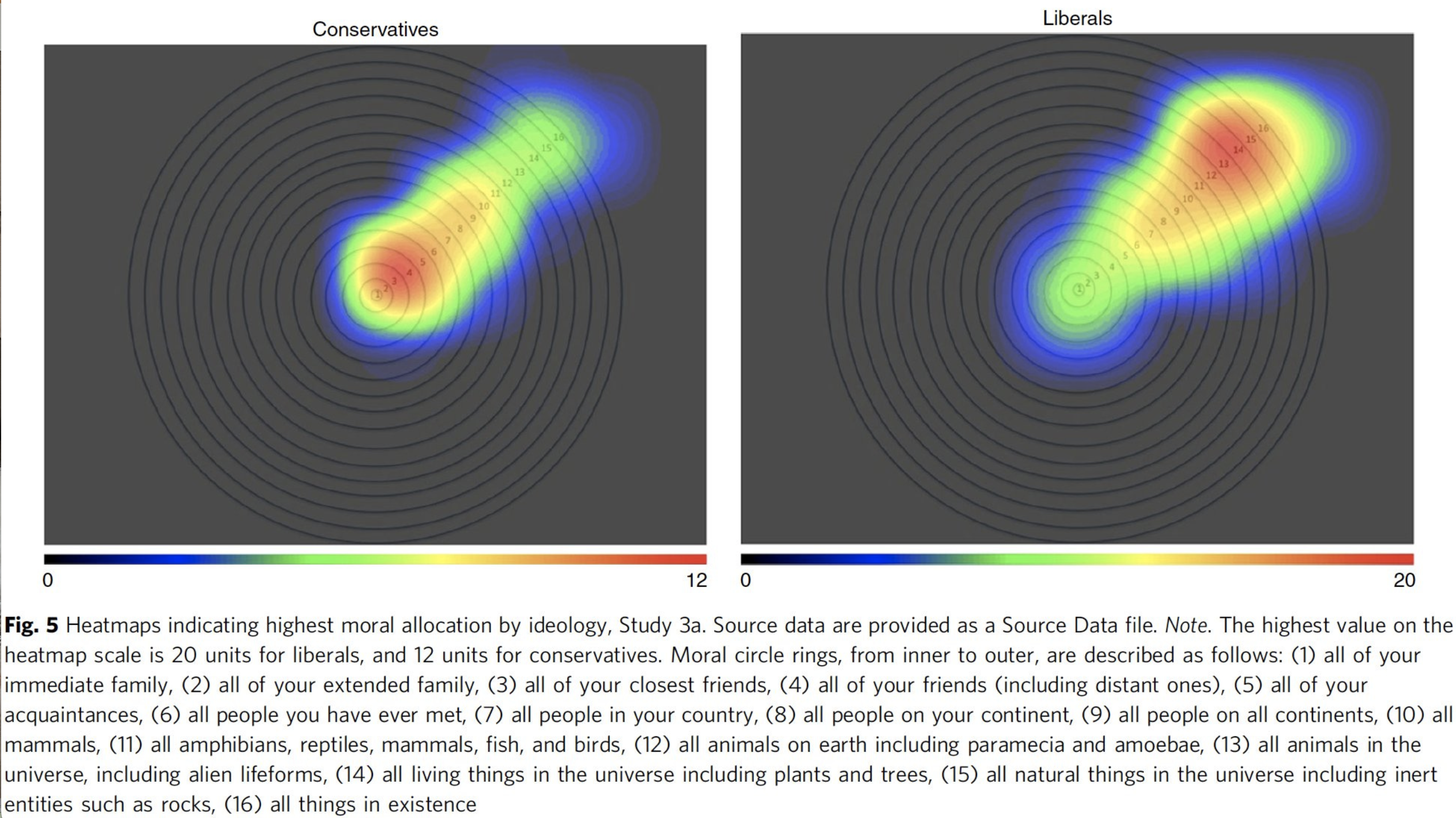



 It's About Empathy - Connection Ties Us Together