Psychopaths and Institutional Triangulation

Still Life with Boo Boo

One of the more powerful tricks psychopaths exploit against individuals is what I call institutional triangulation. This consists of taking a legitimate government organ, like a state auditor’s office, and using devices like whistleblower protections, to pursue harassment or destruction of some target of their pathological rage. The psychopath doesn’t have to do the work, other than filing the complaint. If the accusation is well-constructed, even if not truthful, the agency will do the dirty work for the protagonist.

I myself have had this perpetrated against me numerous times — at least 7-8. I’ve honestly lost count. But the template is as follows.

  1. The complaint is crafted in classic narcissistic fabulist fashion — some ratio of verifiably real information, coupled with a description of either the condition or the targeted person that is completely made up. The key element here is to exploit extant negative mental models that exist in the institutional investigator’s mind so they become passionate about pursuing the complaint vigorously.
  2. The psychopath takes advantage of some property of their anonymity of complaint. In reality, the psychopath wants to include enough detail in the complaint so that you know who is attacking you, but preserves plausible deniability in the context of the complaint. This is handy because if you then disclose who you think is using the institution to persecute you, they can then use the legal system to sue you for money for ostensible destruction of their reputation.
  3. The complaint will fall into “hot button” issues of the day, so as to reinforce the institutional investigator’s motivation to pursue the complaint. “Me Too” complaints are great examples of this. As an older white male, I can attest that universities are weaponized to attack specific demographics for valorous reward. The targets may change according to public opinion.
  4. There will be a paucity of actual information written into the complaint, but at least one plausible example so that the institution, steeped in the hot button issues du jour, that if there are any screens for sorting complaints, the efforts will not be killed by any kind of pseudo-judicial process existing inside the institution. There is no “risible” bar in most complaints. Accusation is enough.
  5. The process is indeed the punishment the psychopath seeks. While a strong psychopathic personality might want to see harsh punishment meted out from the agency — someone may be fired from their job, or actual criminal charges might be pressed by a zealous state attorney — that really is not the end goal. The end goal is to make the target’s life miserable, and constrain their behavior over a long period of time. Remember — there will be enough detail that the target will know who their persecutor actually is. That’s the point.
  6. By making an incendiary, but unsubstantiable complaint, the process can and will draw out for years. Institutional investigators will often quickly see that a given complaint has “no legs” — but at the same time will operate under a “whataboutit” assumption that will not allow them to summarily dismiss the complaint because of fallout from above. A great example in own career was I was accused of sexual harassment by a woman who basically attended class only a handful (I think about 3 times) in a semester, whom I barely knew her name. The investigation took over six months, and I was resoundingly cleared. That investigator — an African-American woman, who was honestly depressed by having to investigate me — was released from her duties sometime shortly after my complaint had terminated in my favor.
  7. The institutional process, which is, of course, the punishment, will cause relational disruption and isolation around the target, involving innocent bystanders, who then also stand to be accused of whatever the preferred “ism” is of the day. In the case of a classroom situation, this contaminates the student experience of others, who likely cannot comprehend the fabulist part of the complaint, and become confused and withdrawn.
  8. The complaint will usually resolve with some trivial finding of wrongdoing, as to protect the institution from being sued for a pattern of harassment. In one of my cases, I was investigated for close to three years for listing my e-mail address on a functionally inactive website that had been inactive for a number of years, stating that photos were for sale. I was found guilty by the state ethics board of using university property for “financial gain” even though the website was inactive. My whistleblower case was so appalling that after the close of the entire cycle, the state auditor apologized to my lawyer and indicated they were reviewing generalized whistleblower procedure because of the procedural abuse.
  9. Boards that can decide these types of complaints typically also attract representatives of ostensibly aggrieved groups. If the target is from supposedly a privileged group, then it is open season as long as the community board is constituted from minorities, both sexual/gender and racial.
  10. There are never any performance audits for any institutions when it comes to persecution of preferred targets, like white males. As such, psychopaths know they can count on sympathetic audiences for whatever pathologically whimsical complaints they can generate. If 300 complaints yield 30 investigations, yet only result in one substantive result, that is good enough. Institutions have deep pockets, and their lawyers have to have something to do. Citizens, on the other hand, are stymied by lack of funds as well as their stress and mental health. Coaching from the institutions is rampant as well. If someone from a preferred group, regardless of veracity of the complaint, approaches the given institutional entity, they will then receive instruction from the professionals on making their complaint stick. “Micro-aggressions” are a key tool in all this. I found out during my sexual harassment complaint that one of the key things the protagonist is told to look for is if I sat in a chair, with pants on, of course, but spread my legs “wide” — whatever that meant — that might be considered a “power position” and sexual harassment. Fortunately for me, I always sat behind a desk. Another professor friend accidentally dropped his phone in his lap during a Zoom call that his wife was also attending. He was investigated for sexual harassment.
  11. Most processes have some alternate process for punishment for malicious complaints. These, however, are never pursued, regardless of how much false information nor fabulist representation of situation, ostensibly because of the “chilling effect” they might have on future complaints. Likewise, if you are viewed as being from a group that is “powerful”, the service of institutional mechanisms is not available to you. A man complaining about abuse of his children, even when well-documented and investigated, has no recourse with Child Protective Services, barring a broken arm. Two standards of justice exist. Family Court in states without default 50/50 custody, where judges are elected as opposed to appointed, are some of the worst offenders. They allow a spouse with a personality disorder to wreak havoc on the opposing party, because of the ability to know enough intimate details to convince a court to proceed with an “abundance of caution” — as long as that caution services accepted mental models, such as men propagating the majority of spousal abuse. While it is true that when it comes to real domestic violence (~10% of cases), men run at about an 8:1 ratio, actual spousal abuse is far more of a 50/50 proposition. Yet any accusation will result in institutional activation if it is directed at the male in the relationship.

V-meme alignment is a key element in how psychopaths both manipulate and embed themselves in various institutional structures. Psychopaths are adept at using externally defined relationships, and negative stereotypes associated with them when they are useful. Elder white professors are powerful. Minority students are racially discriminated against. Young women are irresistible sexual prey. And so on. Fathers are abusers. Women are victims. The problem with all this, besides destroying trust, and the ability to assess trust, is that it creates irretrievable and un-confrontable bias in how the information is then filtered and applied. Truths in all human situations are often ambiguous, and not black-and-white. But if you embed enough personality-disordered people in these processes, then you already have an affinity for splitting and black-and-white thinking.

And when you embed financial incentives inside the institution, through over-staffing and continual creation of extra-judicial organs that are poorly trained to “root out” various societal and social ills, you are going to have to have SOMETHING for these people to do. And once you’ve marched the size of these institutions upwards, re-containing them is almost impossible. You build a Gestapo, you’re going to get a Gestapo. There will always be psychopaths on the outside looking to feed these people raw, imaginary meat, using them to execute their pogroms and vendettas. And no one in the institutional structure wants to take on the necessary downsizing.

And most people will retreat from connection with others. My experience is primarily, obviously, with universities. The end result is the easiest thing to do is NOT interact with students, and just make a Powerpoint presentation to be posted on the web. But learning, especially of difficult material, falls off a cliff with that kind of approach. And while a certain number of disordered students might be satisfied, most retreat.

Who wants to deal with any of it?

P.S. Of course, I have names that I could name. But one of the problems with naming names is that narcissistic psychopaths are sue-happy. I’m convinced that more is not written about this NOT because it doesn’t happen, but because no one wants to end up in court. The process is indeed the punishment. And that just costs more money and drags things out. Gotta remember — psychopaths will willfully lie about just about anything. That includes any details in an obscure blog post.

The Default Mode Network and Reprogramming your Subconscious

The best adventures are with your kids. Standing in the rain, with Braden, West Papua, Indonesia, 2019

How Did We Get Here?

One of the most pressing questions of our time is deceptively simple: how did so many of the world’s problems seem to sneak up on us? How does chaos accumulate unnoticed until it’s already everywhere?

To answer that, we need to understand how mental models operate inside the human mind — and how our psychosocial development shapes the brain itself.


You Are Not As Conscious As You Think

Start with an uncomfortable fact: most of the time, you are not in direct, conscious control of your own thoughts.

Your thinking runs largely on what neuroscientists call the Default Mode Network (DMN) — a web of interconnected brain regions including the medial prefrontal cortex, the posterior cingulate cortex, the angular gyrus, the hippocampal formation, and the lateral temporal cortex. These areas show sustained activity during rest, daydreaming, self-reflection, and social reasoning. If conscious, deliberate thought were the whole story, your brain would go quiet the moment you stopped concentrating. It doesn’t. The DMN keeps running.

That persistent activity isn’t random noise. It is the brain doing something important.


The DMN as Relational Operating System

It’s a short step from there to a significant insight: the DMN is heavily involved in relational programming — the deep, largely automatic patterns that govern how we engage with other people.

And those patterns are shaped by what developmental theorists call the Value Meme (vMeme): the meta-level framework that structures how we participate in social organization. Your vMeme isn’t just what you believe — it’s the operating system beneath your beliefs, determining how information moves between you and others, and how you read social situations in the first place.

Put simply: your vMeme is the default programming running in your DMN. It is what your brain practices most of the time, whether you’re aware of it or not.


Two Kinds of Relationships, Two Kinds of Mind

To understand why this matters, consider that human relationships fall into two broad categories.

The first are independently generated, data-driven relationships — built through direct experience, observation, and personal judgment. These are rational, agency-driven, and form the foundation of genuine empathy. Friendship is the clearest example. You chose your friends based on how they actually behave toward you.

The second are externally defined relationships — organized around authority, rules, and social role rather than personal experience. These are belief-based and non-agentic. A doctor is a doctor regardless of your personal experience with them; a judge commands a certain deference regardless of your opinion of their character.

Neither type is inherently bad. Both are necessary. But which type dominates in your thinking depends on your social environment and your own level of development.

When data-driven relationships dominate, your thinking tends toward nuance and multi-dimensionality. You can hold complex assessments: “I’d trust that person with my life, but not my wallet.” When externally defined relationships dominate, your thinking tends toward rules and authority. You respond to categories — rank, role, label — rather than to the person in front of you. Think of the mental adjustment required when an American first drives in England: the road rules are so deeply encoded that conscious override is genuinely hard work.


Permission Structures: Engineering the DMN

In turbulent political times, the DMN comes under sustained pressure. Forces across the social landscape push individuals away from agency — away from calibrating their responses to information gathered directly from their own experience — and toward pre-packaged interpretations of reality.

This is the core function of permission structures: narrative frameworks designed to guide people toward a predetermined conclusion while allowing them to feel they arrived there freely. The term was popularized by David Axelrod, a media consultant prominent during the Obama administration, and the technique was refined extensively in that era’s political communications.

The mechanism is psychologically precise. A permission structure doesn’t argue with your existing identity — it provides scaffolding around it, allowing your DMN’s self-coherence machinery to reorganize around a new attractor without triggering the identity-threat response that would otherwise cause rejection. In short: it lets you change your mind without feeling like you were wrong.

The danger is that this process disconnects your reasoning from your own direct sensory and relational experience. It substitutes an externally constructed narrative for the data you are actually gathering from your surroundings. Over time, this produces a drift from reality — a gap between the social script you’ve been handed and the world you actually live in.


DEI: An Evolutionary Force That Overreached

The arc of DEI policy illustrates this dynamic clearly.

Early-stage DEI confronted real, documented bias. It forced individuals to reckon with out-group prejudice that operated below conscious awareness, and in doing so opened the door to more independently generated, data-driven relationships across racial lines. This was genuinely evolutionary — it reprogrammed DMN patterns that had calcified around historical social hierarchies and pushed societies toward greater complexity and trust.

Late-stage DEI emerged after many — though not all — of those original targets had been substantially addressed. At that point, the institutional momentum carried on, but the animating data no longer matched the intervention. Ideological rigidity replaced adaptive responsiveness. The framework became easier to exploit by those with little interest in its original goals, and increasingly imposed on individuals scripts that didn’t match the reality of their daily relational lives.

The consequences were visible even within minority communities themselves. Professional-class black families followed earlier white flight patterns to the suburbs — the memetic pressures of the late-stage agenda created new conflicts within, not just between, racial groups.

Worse, the framework became a tool in a separate dynamic: elite overproduction — the intensifying competition among credentialed elites for a shrinking number of top-tier institutional positions. Demanding that a fixed percentage of elite university admissions go to underqualified candidates could be framed as moral virtue, while functionally reducing competition for the remaining spots among elite-class families. The moral language of inclusion became cover for a classic competitive maneuver in the game of institutional musical chairs.

The deeper damage, however, was to the underlying social substrate. The kind of broad innovation and creative collaboration that drives societal advancement depends on individuals freely seeking out their own partners, collaborators, and networks — based on independent assessment of trust, competence, and compatibility. Mandate those relationships from the outside, and you erode the high-trust relational infrastructure that makes complex, decentralized cooperation possible. Creativity and complexity don’t survive the removal of genuine agency in relationship formation.


Immigration and the Relational Immune System

Similar dynamics apply to rapid, large-scale immigration from societies with fundamentally different relational architectures.

Consider the Haitian immigration into Springfield, Ohio. The surface-level conflicts — even the infamous “they’re eating the dogs, they’re eating the cats!” moment — were symptoms of something deeper. When tribal social organization (in which loyalty, authority, and justice are structured around kin and clan) is introduced rapidly into a community organized around civic, rule-based trust, the friction isn’t merely cultural. It operates at the level of the DMN itself.

When authorities then enforce pro-social interpretations of that friction — insisting that residents’ discomfort reflects bias rather than legitimate relational signals — it creates a double-bind. The DMN is receiving direct experiential data that conflicts with the socially mandated interpretation. The result is cognitive gaslighting at scale. And that can lead to civil war.

The contrast with other immigration patterns is instructive. Ukrainian refugees in Poland share language roots, religious tradition, and social mores close enough that integration, while not effortless, doesn’t require the receiving community to override its own relational immune system. The Springfield situation is categorically different — not in the worth of the people involved, but in the scale of relational distance being bridged without adequate time, infrastructure, or honest acknowledgment of the challenge.

The long-term trajectory of forcing such mismatches without support is predictable: societal devolution. You want to generate violent ethno-nationalist backlash? Introduce a large tribal population into a stable community without preparation, honest communication, or adequate integration support, then gaslight the residents when the predictable conflicts emerge. The relational immune system will respond — and what it reverts to, in the absence of better options, is historical sectarian identity.


The DMN Doesn’t Lie — Eventually

A final note on authenticity.

People are skilled at performing higher-level, pro-social values when they have an audience and nothing is at stake. But under pressure — in genuine crisis, in moments of real conflict — the DMN reasserts itself. The deep programming runs.

A recent case from Dundee, Scotland illustrates this. Bulgarian Muslim men were accused of sexually harassing two pre-teen girls, aged twelve and thirteen. A number of conservative commentators, performing centrist rationality for their audiences, publicly suggested the girls were fabricating the accusations. The jury concluded the attacks were real. The commentators have since apologized.

What does this reveal? That even self-styled rational voices will sacrifice lower-status individuals on the altar of status competition — reaching for the position that elevates them in their particular pecking order, rather than the one that reflects honest judgment. When you watch a journalist position themselves as uniquely reasonable, watch what they reach for when the cost of accuracy is social. Their DMN will out.


The pattern across all of these cases is the same. When permission structures systematically override the DMN’s capacity to generate independent, data-driven relational assessments, the result is not a more just or more functional society. It is a more manipulable one — and eventually, a more fragile one.

A procedural noteI wrote this entire piece myself, then dumped it into Claude to streamline the flow. As such, I can tell it does change tone a bit — it’s been Claude-ified. If you’re a regular reader, let me know what you think. I take a lot of flak from folks for too much complexity, too many unique terms, and such. Let me know if this helps or hurts.

I’m going to write a piece on my interactions with Claude. It often does a great job of clarifying my stuff, and that’s impressive. I can also tell when I say more radical stuff that it does run up against some kind of AI sidebars inside acceptable discourse. Nothing is perfect.

Case Study — the Psychopathic Manipulation of Medical Authority

The Dynamic Duo, demanding that I take them to the dog park

Gotta confess — I was raised a doctor’s brat (an actual colloquial term) and as such, have been on the inside of a medical community for my young life, at least.

But times have changed relationally. And the downstream of this is what we are seeing now, which is a collapse of authority of the medical community across the public health debates of the age. But why?

Some background — my father was an obstetrician in a medium-sized town in the Ohio river valley. Portsmouth, OH, was an interesting place, psychosocially, to be raised. It was a collapsing steel town, straight out of a Bruce Springsteen song, with ties to other resource extraction efforts. Empire Detroit Steel was one of the first big integrated steel mills to be shut down, in 1976. And since I got to watch it happen (I graduated from high school in 1979) from a ringside seat, I got to watch the literal formulation of a new, darker age in America’s heartland. Which still reverberates — especially in the medical community — to this day.

My father was an obstetrician/gynecologist in the community for almost all of his career. And as a doctor, I enjoyed the benefits of health care in what is literally a bygone age. When any of us kids were sick, outside a cold, my father would take us to the hospital when he did rounds. Along the way, he would encounter other doctors doing the same thing. He’d have them check me, and give their diagnosis. Then he’d take that aggregate opinion, and treat us as he saw fit. I knew most of the doctors in the community because of that.

But his socialization was not uncommon. Back then, doctors actually circulated in the community, with the various social organizations and fraternal groups. Knights of Columbus, the Shriners and such. Doctors were not an isolated class — they didn’t run for political office, but outside of that, they were everywhere. Doctors definitely ran the hospitals in town, one of which was owned by the Catholic Church. And their wives showed up in PTAs. They were scarce — there’s only so much time any practicing physician has. But you KNEW your doctor.

My father thoroughly enjoyed all of this. By the time his career ended, he had delivered something north of 4000 babies in Portsmouth. He was constantly running into patients at the grocery store and around town, and loved to hear the stories about everyone’s progeny. He was honored, called ‘Doc’.

And he was far from perfect. As he aged, his alcoholism got the better of him, and that’s a story I’ve told elsewhere. But even in the community, when he got busted by the physicians at the hospital for being a drunk, he still commanded respect. After he dried out, he attended his Alcoholics Anonymous meetings regularly, where he was known as ‘Manny’ (his first name was Manoochehr). In one meeting, a member had a literal heart attack. My father dropped to the floor, and started administering CPR, while someone else called an ambulance. He saved that person’s life that day. And immediately afterwards, everyone in the group gathered to shake his hand, saying “Thanks, Doc!” They all knew. Anonymity simply did not exist in that town.

It’s against that backdrop of relational development that we now have modern medicine. No one knows their doctors outside the hastily scheduled, over-managed but underperforming care that we have now. Hospitals are really not run by doctors any more — they’re run by administrators. Physicians are hired for specific roles and specialties. According to some quick ChatGPT noodling, over 80% of all doctors are now guns for hire with the hospitals they work at. Private practice is scarce or nonexistent. And those are subject to the vicissitudes of administrators working to maximize profits and minimize costs, as well as the concerns of private equity investors. In the for-profit sector, private equity owns somewhere between 22-30% of all hospitals. That means money is the only interest, outside of regulatory pressure.

The memetic shift in such a system is profound. My father, even with his alcohol problems, was known as an extremely competent doctor and surgeon. Through his circulation around town, before the town started depopulating from the steel mill collapse, he maintained relationships with all his former patients. This combination of externally defined relationships (he was an OB/GYN physician) and his friendship gave him powerful ties inside the community. But I also think it defined most of small town practice at the time. He saw his women patients for literally everything. There were no complex systems of referral or care, where insurance got to decide what happened. And as such, he had a strong relational base for all his interactions. He really KNEW people. And people KNEW him. And especially with an OB/GYN practice, there was a historical tradition of lifetime care. A woman would have a baby with him, and later on might get her tubes tied, which then led to a hysterectomy in later life. She maintained a changing, but lifelong relationship with her physician.

And so was the mental model of physician choice, and the importance of a primary care physician was established. As well as the concept of medical authority — the mental model of it sprung from a lifetime of care that a patient might receive from one person, who they developed a profound trust relationship with. This mix of formal and independent assessment implies solid scaffolding. You might pick a physician for a given need or specialty — that’s the title-based, externally defined relationship thing. But you wouldn’t persist with that person if you thought they were incompetent, or didn’t heal you. That’s the trust-based, independently generated relationship part. And that developed a much more complex psychosocial profile inside the community. These relationships were literally wiring the way the community thought about things.

What happened along the way that destroyed this, and turned this model into a psychopathic weapon used against the American public? The first thing that likely triggered this was fundamental labor mobility. Numbers are hard to come by, but only approximately 20% of all people persisted in their hometown from school years to death. There has been some reverse migration (another 20%) but the notion of a primary care physician giving you cradle-to-grave care simply doesn’t exist.

And the minute that happens you now liberate a powerful mental model from its independently generated roots. Now the BELIEF-BASED part becomes the only part of the relationship — what is the physician’s title — as opposed to the DATA-DRIVEN part — the independent relationship you generate with the physician based on whether they heal you or not.

Portsmouth, because of economic collapse, suffered the brain drain across the board that happens in that circumstance. It was so bad, Portsmouth turned into the epicenter of the opioid epidemic, which could be directly attributed to collapse of the medical community. When your smart, complexity-driven thinkers move away, the memetic deficit inside your community to handle complex problems also hits the skids. And who replaced them? In Portsmouth, one of the people was a woman I grew up with — the daughter of a doctor. She drove enormous amounts of opioid use across the region.

It’s not just the immediate effect of losing a competent medical community. That belief-based sense of competency is even further put through the wringer, through the machinations of the managed health care system. When you start adding the effects of economic dislocation, as happened throughout the Midwest from the ’70s-’90s, you have a medical community completely unmoored from personal friendships. Doctors are guns for hire, often not even living in the community where they practice. Instead, they take gigs based on intervals of time in residence in a community — 2 weeks on, 4 weeks off — and live somewhere else. In my most recent health crisis, involving a mesenteric thrombosis, all the physicians that took care of me, AND did my eventual surgery, lived outside of Pullman. One even commuted from Maine. In my case, I was lucky. One of the physicians that managed my care was a former Dean of a medical school, and my surgeon (also from 85 miles away) was top-notch. But there was no way for me to evaluate nor have any meaningful selection authority in my care. No agency.

Once a given memetic structure gets severed from his scaffolding, bad things are destined to happen. People are told “listen to your doctor!” or some such nonsense. But nowadays, people overwhelmingly have no data-driven relationship with that individual. So what happens is that meme is untethered, to be captured by the psychopaths running Big Pharma, to be used to sell drugs. In place of that relationship, we are served up an endless round of ads, telling us to ask for these from that doctor with our non-existent relationship. Only the most diligent of us, doing research, would even find the names of these drugs if we didn’t have the ads. So we are bombarded with odd names, with Woke representations of what the potential patients might look like. These representations are designed to be psychopathically manipulative — for example, most AIDS patients are overwhelmingly homosexual, African-American and male. But the ads themselves display a whole palette of sexes and skin types. The result is paranoia, with the appropriate backside covering when the medical community is actually approached. You didn’t trust them, and for good reason — but the mental model that is played is that if you DON’T trust them, something is wrong with YOU.

This then plays out in all sorts of perverse ways. Consider the vaccination wars. You either BELIEVE in vaccines, or you don’t. And your doctor damn well better believe in vaccines as well, or he’s a quack/crank/whatever. But vaccination as an issue has changed dramatically in the past 20 years. The number of tried-and-true vaccines I gave my kids (they’re now 25 and 27) has at least doubled. And the pressure to increase early vaccines has grown exponentially. Consider the recent fight over the Hepatitis B vaccine for infants. There’s no risk for a child being born with Hep B if the mother doesn’t have it. But it’s one more needle lined up for that infant arm, at the earliest possible moment of life. Does not wanting your infant to get a Hep B vaccine make you an anti-vaxxer? Hardly. But the psychopathic voice behind Pharma-aligned interests, as well as psychopathic voices wanting to establish control over what government is allowed to force on you is never-ending and relentless.

And then there is the never ending pressure from elites for Elite Risk Minimization. Vaccines are supposed to protect you from getting a given disease. What that means is that if YOU get a given vaccine, you’re supposed to be safe from contracting a given disease. But in the context of Elite Risk Minimization, that’s not good enough for them. Everyone else has to get vaccinated, so that there is no chance of even potential exposure. Regardless of the given statistics. What this leads to is a classic psychopathic Double Bind — you must get vaccinated even if others around you are vaccinated and shouldn’t be able to get the given disease. This obvious logical conflict then promotes more craziness in a society already under attack by psychopaths attempting to spread fear on other fronts.

The subtext for all of this is the deep fear of all humans of social ostracism. Not only do you not get to exercise your agency on what gets injected into your body. If you don’t, you suffer social catastrophe, especially in liberal communities. Jimmy Kimmel, during the COVID episode, was very clear about how the elites were going to function. If you were vaccinated for COVID, you could receive medical care for OTHER conditions. If not, tough luck. Worse, you lose your job and livelihood.

And then propagated by psychopathic forces was even more diabolical messaging. One was the gasping COVID patient with Neo-Nazi tattoos, who had refused the shot (which turned out to be a colossal bust) and was now gasping at the black nurse attempting to save his racist life.

As with all things, people figure out the bullshit. But it takes time. And then what happens is fascinating. After living through a couple rounds of this crisis, which REPLACES the formerly healthy, data-driven relational construction that people used to have with their original primary care physician, the people become memetically inoculated from the messaging. The problem is that this, downstream, doesn’t help the society when a real threat comes up. Fool me once, fool me twice, as the old adage goes.

Here’s the point of all this. Modern society, through multiple modes (Pharma, private equity, etc.) psychopathically destroyed the appropriately scaffolded, rational relationship people have with medicine. And attempted to replace it with a monetized model whose beneficiaries were not the people receiving care, but those making money off that care — which weren’t even the physicians. And then that institutional psychopathy reached out to other areas, like the COVID vaccine, and naturally, memetically took up the cause of the elites, with Elite Risk Minimization.

Some notable people are fighting back, like my friend Dr. Jay Bhattacharya, who now heads both the NIH and the CDC (at least temporarily.). But there are enormous institutional forces more than happy to pull out the mental models of the past, to ensure their own short-term gains. As with all psychopaths, they have no ‘bottom’ regarding accusations against actors attempting to stem the tide — look at the endless, relentless attacks against Robert F. Kennedy, Jr. And NOTE — all the attacks will be on the top, superficial level. No nuance given — that’s the knowledge structures piece.

The potential for reform is, quite honestly, bleak. As doctors overall have, more and more, been disenfranchised from administering these systems, there is only a modest amount they CAN do. They do have patients to care for, after all. But I believe it is only people inside the system that have enough detailed scaffolding to make a difference. Hopefully this piece serves as a crudely written road map of how we got there. And where we have to get back out of. Memetic evolution is always the answer. But it’s a very rough road.

And we’re not going to get there without some realization about the relational decline that got us here in the first place.

P.S. For a primer on the difference between rational, independently generated relationships, vs. externally defined, belief-based relationships, do read this piece. Trust vs. Loyalty, folks. Both have their place, so don’t go in with a pre-bias.

How to Start Understanding Psychopaths in Systems

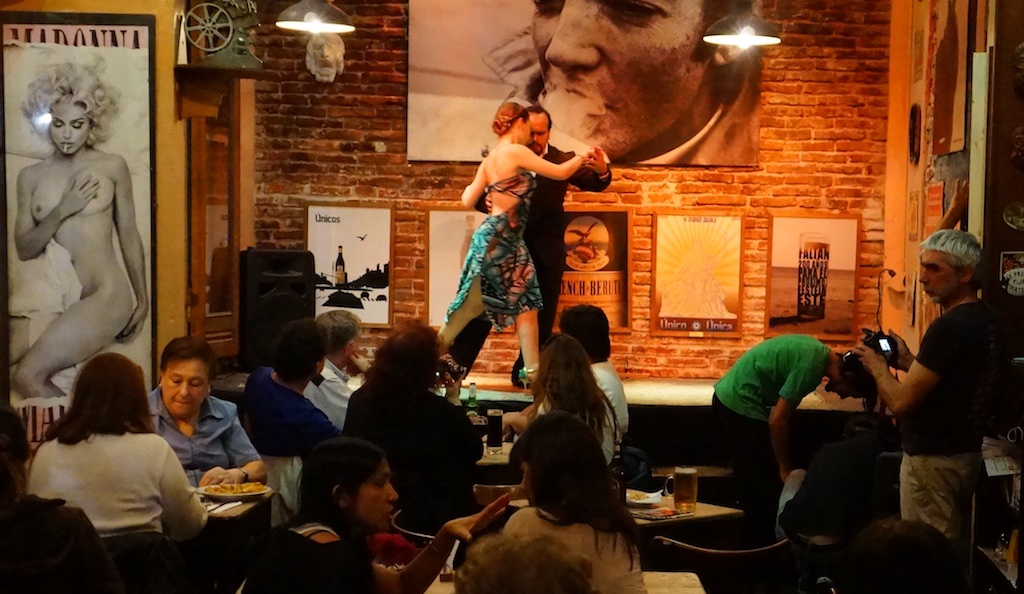
Tango Show, Buenos Aires, 2013

One of the major challenges in understanding psychopaths in systems is that there is vanishingly little written on how such individuals work that can be believed. Most of the “hard” research done on psychopaths has been done on such individuals in prison settings. And the overwhelming body of literature emanating out of the True Crime genre makes one believe that every psychopath is a killer, and that is the end destination of anyone who is a psychopath. The problem with this worldview is one misses all the psychopaths that are non-criminal, and active in our daily lives.

Worse, from the work I’ve read, lots of work done on psychopathy has been done by psychopaths themselves. And while some of that may match one’s personal experience, a lot is done to throw people off the psychopath’s tracks. Think about it — why would any psychopath want to shed light on what might be their own downfall?

What I’ve written below is a summary from my analysis of the overall believable literature, and encompasses some of the definitions of DSM-V Axis II/Cluster B and C personality disorders. I lump all of this together because in the case of psychopaths in systems, the various differentiators are not particularly helpful, as they also can include extensive overlap. Someone who appears to have Antisocial Personality Disorder may also exhibit signs of Narcissistic Personality Disorder. And someone with strong Avoidant disorders may mask multiple behavioral traits that might link to more violent tendencies.

It is beyond the scope of this blog post to review comprehensively the individual characterization of people with personality disorders. Do your own research if you feel compelled. What this piece will do is reveal to you what I have discovered. I also know there is a powerful tendency (especially by psychopaths) for demanding “proof” — names of people I’ve learned these lessons from. That is also not going to happen. It’s easy enough to write about a mass murderer, because that person’s reputation is already ruined. But one thing I’ve learned about all the more ordinary, non-criminal psychopaths I’ve dealt with is that they are a litigious bunch. When you combine this with the willing volubility to lie, that means if you end up in court, you’re likely to lose. Most judges are authoritarian and egocentric, and this maps immediately into the psychopath’s wheelhouse. So no names or relationships. Make of what I write as you will.

If I had to lay down what I’ve discovered about most of the psychopathic personalities I’ve had to deal with, it might boil down to the following points:

  1. They are manipulative, projecting liars. They will often lie, and then project their desires on you while declaring themselves innocent.
  2. They have some version of an attachment disorder. They will be fascinated with a person, practice or object, until one day, they simply just drop that interest.
  3. In moments of excitement, they do not habituate to stimulus. This applies to if you’re hanging on a hook and they’re literally carving you up, or having wild sex. Enough is never enough. Until it is, of course.
  4. They are relationally disruptive, and especially so if in a circumstance where external societal forces are promoting some version of victimhood. Current “anti-racial discrimination” or feminist causes are chock-a-block full of psychopaths, who enjoy social endorsement for their natural tendencies.
  5. Linked to attachment disorders, they have poor object permanence. Things can simply stop existing in their lives on a whim.
  6. They have a poor sense of long-time consequences, and are exceptional in observing short-term spatial and temporal scales. For violent psychopaths, this allows them to literally get away with murder. If you killed someone, when it came to the crime scene, you’d likely miss something. Not a psychopath. The same tendency can favor certain disciplines like surgeons. The best surgeons can repeat the same surgery over and over again, as long as narcissistic supply is provided. And the last thing you want in your heart surgeon is him feeling your pain as he spreads your ribs.
  7. They have poor personal boundaries, which might drive their pathologies. This is also a source of their personal attractiveness, especially in romantic situations. Ego-merging is intoxicating until it isn’t. And the object of desire is left out in the cold.
  8. They can be, and often are charismatic, and are excellent at mirroring empathy.
  9. They can often only be detected through disturbance in the relational field around them.
  10. They cannot be understood nor behavior rationalized using the tools of normal human relational dynamics. In fact, attempts to rationalize how they act or react usually disables the healthy individual dealing with the psychopath. Their behavior does not follow a set of rules that normal humans follow.
  11. The best set of consistent narratives for understanding the various types of psychopathy is found in ancient myth archetypes. Sorcerers and sorceresses, vampires, shapeshifters, and various monsters all exist as humanity has struggled with various psychopaths through the ages.

The most important weapon in the systemic psychopath’s arsenal is the ability to grab the grounding circumstance for an individual, and then distort reality around that altered circumstance. This ability is called ‘gaslighting’, and explained here. The way this is occurs is through mirroring alignment by the psychopath with the target. The goal of the psychopath is to quite literally “get inside one’s head” through some emotional state matching and consilience of circumstance. Isolated individuals are obviously more susceptible than people in healthy communities. Sexual ego fusion is also a prime gateway. There’s a reason why the Chinese government (and governments past) used honeypots for conversion and betrayal of individuals toward their nation-state.

There are many techniques through using alignments of belief systems and mental models that psychopaths operate. Detection by an observer of manipulation depends on identifying top-level information that is either emotionally triggering or emotionally paralyzing, followed by a lack of information that delivers context for a given manipulative attack. In the recent onslaught against US Immigration and Customs Enforcement (ICE), a notable trope has turned into focusing on children attached to illegal aliens who have at least violated illegal entry laws, and often much worse. There is a societal propriety mechanism that says children should not be exposed to violence (even if they are) and makes discussion of individual cases mostly taboo. Yet the psychopath has no problem showing a picture of a child to establish control of the dialog. A great recent example is Liam Conejo Ramos, in a blue hat, who was being detained with his father after his father fled ICE agents outside his residence, and potentially refused custody with his mother. The situation is actually ambiguous. But the psychopath has no problem offering the ICE-condemnatory version up as proof that ICE needs to be defunded. Many such cases involving children being attached to parents in violation of immigration or other laws are used as psychopathic manipulation against DHS and ICE efforts.

This piece on hunger relief programs is a case study of how psychopaths use mental models to sabotage any reform of social services through deep-brain manipulation. As an example, the Democratic Party has used such techniques around the country to stonewall against reform of homelessness alleviation programs. If you take a program initially in line with a country’s values, like alleviating poverty, even after the problem is maximally solved (no societal problem can ever be completely put to bed) a good psychopath can continue the same manipulation strategy to pour money into their own coffers.

One of the key elements mentioned above regarding recognizing psychopaths in social systems is their use of relational disruption to sow chaos and allow them to gain control of situations and organizations. The way psychopaths work is not just directly instigating conflict between people. There is the metacognitive, “dark matter” effect, where organizations in chaos resolve into quiet when the psychopath is removed. People inside such an organization might behave in an aberrant or suppressed manner when a given psychopath is present, yet re-equilibrate to peace and harmony when that person is removed. In “A Primate’s Memoir“, Robert Sapolsky documented this transition in a baboon troop, where three aggressive, likely psychopathic baboons that ran a baboon troop died from eating refuse laced with bovine tuberculosis. After their passing, the remaining baboons basically stopped fighting and restored peaceful coexistence.

The usual result of having disruptive psychopaths in a given social network is actually a time-dependent trajectory. When a charismatic psychopath initially arrives, whether in a leadership or even in a lower level position, there is a flurry of relational disruption as the psychopath rearranges the topography of the social network. But over time, if disruption from the individual persists, human communities will functionally isolate the disruptor. Homeostasis returns, or collapse ensues.

Psychopaths have always been with us. The key to moving forward in an advanced society is to realize where they are at, and their impact. Only then can we alleviate the societal chaos they cause.

Virtue Signaling and Psychopathic Manipulation

Pearl Farm Platform Women — Misool, Indonesia

One of the newest terms to dominate the political lexicon is the term “virtue signaling” — which basically means communicating, especially to your in-group, but also to larger society, your views on issues that will somehow establish your status of possessing a deeper morality relative to those same groups. The old fashioned word for all this is some form of “piety establishment” — which is literally as old as the hills. It is used to project virtue that one typically doesn’t back up with any action, other than spouting off at others. Classic virtue signals are phrases like ‘Black Lives Matter’ or ‘Defund the Police’. The first is meaningless save as a racist attack for immiseration. The second is advocating a policy position, ostensibly for protecting poor people, but one which few poor people would agree with. Living in violent communities teaches you the value of good policing, needless to say.

What is interesting about both these statements is that they are classic examples of what is known as a ‘double bind‘ — an inherently contradictory statement that a given recipient cannot respond to conclusively, creating emotional paralysis. Applied liberally, it creates a destructive cognitive schizophrenia in the target, which then ungrounds the individual, and makes them easier to control.

Which makes it a natural tool of choice for psychopaths and those wishing to propagate psychopathic manipulation. And certainly, in a multi-level authoritarian hierarchy, becomes a convenient go-to for leaders of all stripes. Once you understand and ponder it, it’s not surprising that top politicians and CEOs both use, and succumb to it. When the dominant information replication technique is mirroring, there’s nothing better than a good old-fashioned virtue signal.

That also means that most virtual signals are on the top level of the knowledge structure stack — whatever obvious thing, with embedded tribal meaning, that can be manipulated in the form of a double bind. My absolute favorite has to be “Love is Love”. While there are some standard representations of love we are aware of, it can quickly be commandeered to justify any perversion the individual wishing to propagate to a larger audience. Note how such an argument is used to justify pedophilia. And as with all profound psychopathic manipulations, debate is immediately constrained to the source of the virtual signal. If you respond to the argument ‘Love is Love’ with the notion that it might not exactly apply across the board, you’ll be accused of being a pedophile yourself. This dovetails nicely with psychopathic projection, of course — getting accused of the sin the perp is actually contemplating.

A notable champion of this tactic had to be former Biden Press Secretary Karine Jean-Pierre. She would proudly proclaim her status as a lesbian in public press conferences. But if someone else discussed her lesbianism, and whether it might cast some doubt on her fitness as Press Secretary, that person would be immediately shouted down. I’ve noticed this with my own students — if a student declares themselves as Mexican or Hispanic, no one notices. But if I say something innocuous — like “what is the Mexican perspective on this issue?” — the collective student audience gasps. That’s how deeply embedded these techniques are in the contemporary psyche.

There might be virtue signals in higher level knowledge structures, but they are difficult to ascertain. Higher level knowledge structures usually are underlaid with a deeper “why”, and that complexity doesn’t easily transmit across larger groups. Additionally, higher level knowledge structures usually have some conditional elements, or situational circumstances. “Love is love” starts losing its punch when you start describing sidebars to the idea. It may become more truthful when you’re describing a BDSM orgy, but it loses its edge for confusion. And confusion is the main point.

Psychopaths love virtue signaling precisely because of its memetic transmissibility. And bored people are especially susceptible to it. Any good virtue signal has its roots in an emotional response that leads to that paralysis. So people without meaning or meaningful connection have an open socket in their brain waiting for a virtue signal to plug into. They can adopt the signal for their own, or they can join the ranks of Immiserators for which the virtue signal becomes a weapon. Societies grounded in some version of Survival mode are far less susceptible to virtue signaling. Because bullshit will get you killed.

Organized religion is not exempt from supporting virtue signals. The one thing that organized religion has going for it, though, is vetting of messages against deeper origination myths. The minute you end up with a larger stack behind any top level message, there is at least some hope for dilution of damage.

Deconstructing any given virtue signal is almost always trivial from a rational perspective. In the case of ‘defund the police’ — one might cite a couple of statistics about violent crime, or the actual opinions of poor people. The problem is that the virtue signaler’s thought originates in the limbic system of their brain, which is really a dichotomous processing center — things are either right or wrong. And that will inherently be tied to an emotional reaction, which is likely not going to be pleasant.

The other thing key in understanding psychopathic manipulation using virtue signals is that because of the way they work in the brain, expecting to tie the virtue signal to any sense of responsibility will also fail. The idea that if you broadcast publicly a particular thought, you then are tied into some plan of action to actually remediate the problem, other than participate in a large, group activity that reinforces the virtue signal, is not the case. Most virtue signaling is low responsibility, and once again, because it originates in the limbic system, has poor consequentiality tied to it. No one’s thinking about the downstream outcomes. And when you start bringing those up, you’re going to end up in a hole pretty quickly.

In summation, virtue signaling is a technique for manipulation and control, used primarily by affluent psychopaths. It’s “do as I say, as long as you think I’m great, and I don’t take any collateral damage” that characterizes most virtue signaling. And for those that want to pursue a broader meaning, look at Rob Henderson’s work on “Luxury Beliefs”.

Mental Illness and its Weaponization Against Society by Psychopaths

Blanket Chest — Khaya and Sapele

One of the radical changes in the structure of our society in the USA is the dramatic shift in how generalized populations are supposed to not only address mental illness, through care modalities, but how mental illness is supposed to be mainstreamed into the various operations of our corporations and institutions. No longer is mental illness a condition to be treated and overcome. Rather, now, it must be accommodated in your normative social environment. And if you, as an individual cannot accommodate a given neurodivergent condition, then you face punishment or loss of employment.

Worse, if you are trapped with a severely mentally ill person in your immediate family, the “mainstreaming rehabilitation” mindset is so powerful that if you are dealing with a violent version from a protected class who ALSO has a mental illness, the current systems and institutions supposedly set up to protect society as well as family units collapse. YOU are the bad person for refusing to accept aberrant behavior, and not go along with disordered social service agencies who offer little, if any help.

There can be no more terrible example that the recent arbitrary murder of Iryna Zarutska by DeCarlos Brown on the commuter train in Charlotte, NC. Brown had been convicted and released 14 times for violent crimes, including armed robbery, and his own mother had attempted to have him involuntarily committed. But despite violent schizophrenic outbreaks, this failed, even in light of his extensive criminal history. My suspicion is that had Brown not been African-American, he would have been committed. But our social institutions are so contaminated with the notion that racism must be the root of all evil, even Brown’s own mother’s concerns — she had taken him to a homeless shelter because she could not control his behavior — landed on a tin ear in the justice system. She didn’t persist — and Iryna Zarutzka, a person honestly seeking refuge in this country paid with a violent death, and her life.

When such a crazy, violent event happens, one needs to reflect on what principles are our society structured around. It’s easy to go through some litany of the usual list of the various v-Memes, laying out safety and security at the bottom, moving up to rules to regulate such areas as commerce, or even traffic, and then ending up in the space of opportunity to create new economies, or protect the environment. The list would certainly go on.

But if we were to look at things from a more generalized relational substrate, we might come up with profoundly different answers. From a guiding principles perspective, a society is supposed to lay the groundwork for fundamental coherence of action among its residents. Dependent on the overall psychosocial development of its members, societies should create structured environments that allow members to participate, within reason, in an environment that allows enough predictability for people to join some group action, and have some set of expectations about what the outcomes will be.

The short version is coherence, within the context of development and values of a given society, must be the desired end state. It is one of the hallmarks of Collapse Narratives that they promote other, decidedly more disordered, egocentric outcomes.

When people read that word “coherence” it is very easy, without an understanding of v-Memes, which code how people change and grow over a lifetime, to assume that somehow it means that everyone should be a goose-stepping minion. This is ridiculous. A simple example is in order. In contemporary society, the guiding principle of coherence implies that you ought to be able to get in your car, drive to the local supermarket, and provided you have cash or credit cards in your wallet, buy yourself a six-pack of beer. All those activities rely on a much larger stable system to instantiate this simple action.

And psychopaths know this. So if they want to relationally disrupt the coherence of the system, they have several pathways available to them. One is the obvious, conscious mode of throwing a brick through the grocery store’s window. While that is dramatic, it’s also highly unlikely that brick throwing is going to be mainstreamed as a stated societal value any time soon.

Better to co-opt mental models of virtue that a society might hold dear, that inherently are unstable, and arm different cohorts of society, with these as attack modes to the foundations of a society — which inherently includes coherence — and get people inside the system, functioning on different temporal and spatial scales — to fight. Then the psychopath gets to sit back and quite literally watch the world burn.

Much of this has manifested in the last 30 years. My own mother had a relatively profound personality disorder — she was likely Avoidant/Borderline. She was an absolute fire starter when it came to manipulating people into a constellation where people believed they were justified in starting a fight, especially as she aged. But her demeanor, projected as someone who was introverted, gained her allies across the community, especially in the face of my father’s alcoholism, which was also real. It took me to about 48 years of age to realize that at least part of the reason my father drank was because he was married to my mom.

Yet at the same time, my mother functioned relatively well in society. It was because society had imposed constraints on her behavior. As a doctor’s wife (my father was an obstetrician in good standing in the community) she had a role to play, and she knew it. We were Catholic, and she befriended the local sisterhood, who played no small part in our social lives. They also had problems, but once again, they were constrained by social expectations. There were particular situations where it became obvious my mother had problems. But here’s the key — for the most part, because her role was scripted, and she did have a couple of bright kids, she had little latitude for finding or displaying any deep, disordered feelings.

The key element in her progression through life in the ’60s and ’70s was that she was supposed to be an upstanding citizen, PTA leader, and mother. Any activities straying out of that would have been considered aberrant and anti-social. Her focus of her identity, which was madly scrambled inside her own head, was EXTERNAL to her true self. It is also true she had a brutal childhood, full of poverty and uncertainty, and my own grandmother had multiple husbands that she had. to navigate. But her path was set. And that was a GOOD thing.

Contrast this to any young woman emerging into modern society. As part of the bedrock belief structure of any version of late stage feminism, you get to be, ostensibly, whatever you want. But that means very little if you have a combination of disorders, as well as a lack of family structure. Young men, even though they are an aggrieved and attacked group in modern society, have far more. Bedrock ‘Protect and Provide’, though diluted, still exists. Focusing on the egocentric needs of some women does benefit some — I have some outstanding female colleagues that I wouldn’t trade for anything. But most people have little integral sense of self until they are north of 26. Couple this with the very natural drive to have children, which is then wildly confounded by extant societal messaging, and it’s no wonder we’re in some version of societal crisis. Short version — like every society, we have some percentage of crazy people. We then strip away boundaries for normative behavior, and then additionally arm young women in particular with powerful legal tools to lash out, and we end up with a lethal stew for relational disruption.

The people that suffer most from this are, not surprisingly, healthy young women, who then inherit a hostile relational environment that they are poorly equipped to navigate.

And while there is more to say here from a gendered perspective, the real point is that the de-centering from some version of societal conformity as an expectation for young people, to a re-centering on the poorly developed needs of the self is a recipe for societal chaos. And chaos goes directly against the need inside a society for coherence. The society simply cannot function effectively at the complexity level that it may have evolved to. And so it begins to decline.

Psychopaths love this circumstance of combining what has been called a “moral racket”, combined with my term, “narcissistic shielding.” The more out of it a given person with alternately neurodivergent issues that might have been more manageable in a more constrained environment, or someone who actually suffers from mental illness, the more they show up on the psychopath’s radar as someone who can be co-opted and manipulated against the relational hierarchy in a social setting. In my clinic program, which is somewhat unique in that I send students out into the real world, I noticed a pattern where a more well-formed psychopath would adopt a functional “child” — and then wait for affront from me. It was relatively unconscious, though the impetus for “splitting” by the personality-disordered ‘parent’ was usually a bad grade for work.

Then the bias towards centering the social situation around the person with mental illness or neurodivergence would come into play. It’s well known, for example, that people on the autism spectrum are often literalists, and have a very difficult time with irony or sarcasm. So the student would misunderstand something I said (I use a lot of humor in the classroom, akin to a football coach goading players to higher performance) and then the psychopath would raise the interests of her narcissistic shield in order to gain power and control.

This has happened on systemic levels across society. Academia is well-known to include more than its fair share of mentally ill people (who could study a particularly obscure, minute area for their entire career without the advantage of OCD?) and it’s not surprising, with its development of complex micro-aggressions, often developed by its own psychology and sociology faculty, that there is a rapid relational collapse into externally defined, low empathy, relational modes. The problem with this is that our brains will only do what they practice, and when you end up with entire modern systems that enshrine siloed thinking, exacerbated by a heavily siloed social system, there is a profound decay in the ability to synergize larger solutions that society needs.

As the society plunges ever deeper into the meaning crisis, it exposes even more avenues for psychopaths to use the narcissistic shields of the mentally impaired to focus on ostensibly empathetic solutions for problems — “let’s focus on making people who are severely disordered feel comfortable everywhere.” This creates a wild level of cognitive burden on the rest of society. If a 50 year old man with lipstick wants in your high school daughter’s locker room, she must be accommodated. If the homeless person refuses being housed, and prefers to sleep in the open-air drug market they’ve established at the local park, they must be accommodated! This re-centering causes everyone else to retreat from public spaces, which causes further social degradation, as well as establishing hyper vigilance as the norm for public interaction. Everyone you meet doesn’t mean you well — because they probably don’t. During the recent Palisades Fire in Los Angeles, I brought up on social media the likelihood that homeless people had helped spread the fires. My ultra-virtuous liberal friends immediately went on the attack. How dare I impugn such an obvious source (homeless people in LA often live at the mouths of canyons, and have burn barrels they gather around)!

And it hardly helps the mentally ill, either. I had a memorable adventure once chasing a bipolar schizophrenic through the streets of Vancouver, BC. I don’t know if that sounds like fun — but it wasn’t. He had actually escaped from an institution, but real mental illness is no joke. Mentally ill people need help because they are not normal. And they are often very low functioning. A lack of understanding that differential actually worsens the societal consequences for them. It does not help to pretend.

But for psychopaths, it’s any manipulative virtue/narcissistic shield in a storm. And when your goal is relational chaos, there are multiple paths to get there. Facilitating the crazy is just another tool in the toolbox.

If you think it’s almost designed to make you crazy, or at a minimum, retreat from society, you’d be correct. That’s the key game in the psychopath’s playbook — relational disruption, or make you nuts. And what could be more delicious than using the helpless against society?

One final note — I was in Vietnam looking for venues for international projects, when I happened to encounter a British psychiatrist. We hit it off famously, and ended up having drinks at the Hotel Metropole with another Vietnamese mental health care provider. He had been working in Laos, and I asked him what they did in the villages there. “They build a set of pole cages outside the villages, and when they have someone go on a manic episode, they lock them in the cage.” He went on to tell me that there were only eight psychiatrists in all of Laos, a country of approximately 7.7 million people.

As always — perspective — use it or lose it.

Hotel Metropole, Hanoi, Vietnam

Gaslighting and Psychopaths – Back to Basics

Cute Little Thing — but NOT a Gaslighter

One of the words that has surged in popularity in the last four years is the word “gaslighting”. I think the reason for this is that since the pandemic, the popularity of the technique among politicians has also surged. I can remember working on timber issues back in the mid ’90s, when there was a shift in messaging by the US Forest Service from admitting there were lots of problems with various destructive timber sales, to wholesale denial and lying about the conditions on the ground, were a bellwether. Yet lying — even pathological lying — is not necessarily gaslighting.

The origin of the term comes from the eponymous play, and subsequent remake of a British movie of the same name. In the American version of the movie, Ingrid Bergman is a woman, married to a man, played by Charles Boyer, who, through manipulation of lights in the house (the gas lights) is convinced that she is going insane and cannot trust her own judgment. He does this with the intent of having an affair with the couple’s promiscuous maid. There are plot twists and turns, and if you’re interested, you can go watch the movie.

What is more salient is the concept of the psychopath twisting the information stream, directed at a particular target person, to remove their natural sense of grounding validity– the ability that a person has to assess their temporal and spatial surroundings, and establish their own reference frame. The end game of the psychopath is to make the person subject to the gaslighting to psychopathic control by the abuser. The reality the abuse victim experiences is reconstructed through the mental ground wire of the abuser. This is an important angle of gaslighting — by controlling the functional ground of the person who is the target of the manipulation, they also control their perceptions of their situation.

Gaslighting is often present in chronic battering love relationships, and can be executed by both women and men. In a battering situation, the gaslighter does not construct a negative image of that part of the relational dyad. Rather, the gaslighter manages to, through a combination of isolation and manipulation, a POSITIVE image of themselves, through some combination of dissolution of ego boundaries, and arbitrary rewards (often sexual) in their target’s mind. Most people external to such situations often wonder how someone in a chronic battering relationship can stay. But that’s not the correct view. The real conundrum occurs in how the mental models inside the target’s psyche are constructed by the controlling party. It becomes how can they leave? These memories can linger long after the gaslit party is removed from the abuser. They are deeply limbic, and as such are not easily removed.

Much has been written about cult behavior, and how gaslighting is a primary tool of programming (and subsequent deprogramming) from cults. My experience is that one doesn’t need to go all the way into a cult in order to see various psychopaths executing disorienting strategies toward potential victims. Gaslighting can, and does, happen all around us — especially when the larger cultural zeitgeist promotes it. The recent COVID pandemic, had the public been led by anything other than a group of crazy psychopaths, would have ended in April of 2020. Instead, the psychopaths in charge (various members of the CDC, NIAID and the heads of the federal government) seized upon the chaos to dismantle the public’s ability to ground itself.

One of the best scare tactics used was the promise that hospital availability in general, and Intensive Care Unit rooms in particular, were always in short supply. Yet there was an application developed by MIT where one could look up ICU or regular hospital availability, using crowdsourced data, that showed there was no availability crisis. The mainstream media played a dominant role in this warping of reality, enlisting late night talk show hosts like Jimmy Kimmel, who served as a moral arbiter of the nationwide vaccine campaign, going so far as to say policy development should exclude the unvaccinated from receiving health care.

All of this gaslighting fell under the umbrella of what I called Elite Risk Minimization — a governing philosophy manipulated by elites whereby others outside of elite communities should be deprived of various agency-based health care decisions, if the end result was greater health protections for elites. Elite Risk Minimization is alone not evidence of gaslighting. But when facts and circumstances are directly manipulated in order to place a burden on others outside the elite group, it most certainly is. The worst of the COVID gaslighting was directed at children, with false prophylaxis of forcing young children to wear masks, attend school remotely, and suffer extreme isolation.

The worst of these excesses have not even come to light. Because of complexity issues, especially when dealing with the larger public, there’s a tendency to focus on the top-level intervention — e.g. the actual wearing of masks interfering with children’s speech development. While this was bad enough, what is always ignored is the punitive disciplinary regime necessary to get kids (especially young ones under the age of 10) to even wear masks. This allowed psychopathic teachers, crippled by their own OCD fears, to lash out at children who simply couldn’t comply because of their own neurodivergent problems. And the continuing lack of addressing these issues is psychopathic gaslighting at its finest. Professional societies, like the American Academy of Pediatrics, still refuse to acknowledge pandemic abuses. And what that does is elevate those inside their organization who are more than happy to play yet another gaslighting charade against their membership. Hateful, abusive relational modes start piling up, and move entire professional organizations away from working to regain the public trust, and shifting back into data-driven trust-based relationships.

Instead, they rely on psychopathic assertion of authority. And the end result of that? As I’ve commented elsewhere on this blog, when psychopaths initially show up on the scene, there is a hue and cry for the contamination of the information channel. But over time, societies and social networks shift towards exclusion of these organizations. No one may speak against their ostensible authority. But no one pays attention to their recommendations either. COVID booster shots now run about 10% for kids under 12. Once the ground wire is seized away from psychopathic organizations, it is almost impossible for them to control the debate again.

One of the main things to be aware as a cautionary tale regarding gaslighting is one’s own belief in the potentially conscious or deliberate nature of psychopathic messaging designed to seize control of the victim’s ground wire. If you watch the various psychological thrillers involving individuals gaslighting others for various goals, you might believe that most gaslighting is conscious. But psychopaths often do not operate with conscious strategies — it is very difficult, if not impossible, to predict accurately the outcomes of the psychopathic mind. In a person with fractured, or hopelessly destroyed ego boundaries, strategies are often ad hoc and enacted to stimulate cortisol or other hormonal rewards buried in the limbic system. And psychopaths are different than normal people in that they have extremely poor habituation responses. What that means is just like the hamster hitting the cocaine water repeatedly in the lab experiment, psychopaths can continue to go back to the well over and over. And whether that is a conscious strategy or not is open to fair debate.

One of the key elements of understanding gaslighting strategies is to also understand psychopathic projection. Projection is the phenomenon whereby the psychopath projects onto its victim its own predilections. It appears to be a process of self-justification — “I’m not the only person that wants this bad thing to happen, so I’m going to guess that this other person is thinking this.” Gaslighting supplements this as a strategy, because once the control victim is established, if the psychopath can get the target to also do something bad, what happens next is a self-justification loop built around the victim’s response. Here’s a lighthearted display (I need this about this time writing about gaslighting) of projection and deflection at work, with one of my cinematographic heroes, Pee Wee Herman. “I know you are, but what am I?” indeed.

https://www.youtube.com/watch?v=xfeLsPRl3so

Finally, one thing the master gaslighter takes advantage of is information complexity. In large-scale, conscious manipulation strategies, the psychopath-in-charge may indeed realize that the issue they’re using to manipulate public opinion has multiple levels of complexity — from the day-to-day effect of the issue, to long-term outcomes that may not be desirable at all to the target. Yet the psychopath basically chops out the nuance of the issue, with the goal that the target has no real way of knowing the detail, and the psychopath can fill that in, in a way beneficial to the psychopath’s control, at a later date. As I write this, the Democrats are attempting to use a canned set of talking points (obviously manufactured from a central source) to disavow the fact that the current government shutdown is a result of their filibuster of the Republican’s offered Continuing Resolution to fund the government at Biden-levels of dollars until a compromise is reached. It’s certainly not like Republicans, placed in disadvantageous positions, haven’t tried similar strategies. But this one will certainly come back with loss of support for Democrats in the long run, mostly in the context of people, once again, moving away from relational disruption in order to get on with their lives.

To sum up — gaslighting is a hallmark of psychopathic actors. It is a control strategy whereby the perpetrator attempts to grab the ground wire, in order to change the perception of the victim and leave them open for abuse. It also is fundamentally relationally disruptive, involving isolating the target from other grounding inputs, such as other people. It also often involves triangulation of external sources into making the isolated victim fill with doubt. We are seeing, for example, a proliferation of Münchausen Syndrome by Proxy cases related to mothers in the trans issue, declaring their 3 year old toddler gender-diverse or other such nonsense, gaslighting the infant through dressing them up in gender-inappropriate clothing, and then leaning heavily in the public sphere on maternal authority to continue to perpetrate the abuse.

Oh boy. Now I’m exhausted.

Back to Basics — Metacognition as Dark Matter

Two therapy dogs, Ghillie and Cecilia, getting ready for a child client

One of the most frustrating parts of what I write about is getting people to realize that they don’t know stuff, and the real solution when you don’t know stuff — at least to start — is to realize you don’t know stuff. You can’t effectively harness new modes of understanding until you get to the point where you realize that all the old answers you used to think might explain stuff just aren’t going to cut the mustard. Too many contradictions, and such, means you have to accept your ignorance and move on. It is only then that enlightenment can occur.

This is hardly a new idea, and the Zen masters — my favorite go-tos — were big on this. One of my favorite stories from Paul Reps’ collection, Zen Flesh, Zen Bones, is below, and deals directly with my line of employment.

Once, a university professor went to visit a well-respected Zen Master to learn about Zen. The Master first invited him to sit for a cup of tea. The professor sat down and started talking about Zen. The Master quietly prepared and poured the tea. When the tea was filled to the cup’s brim, he kept pouring. The professor watched the overflowing cup until he could no longer restrain himself. “It’s full! No more will go in!” blurted the professor. “The same with your mind. How can I teach you Zen unless you first empty your cup?”

But changing adapted mental models is hard. Why, for example, would you bother to learn what I talk about on this blog? You really have to be tortured by your own confusion to sit down and spend the time to instantiate all this stuff. And you’re likely not going to get much community support dwelling on what some rando on the Internet says might change your life. (That Rando would be me, of course.)

In short, you have to possess the developed ability of metacognition — knowing what you don’t know, and having a sense that there is stuff out there that you’re not even aware of.

Why is this so challenging? As I said in this piece, once you open your mind to the notion that maybe the truth is really shared information that different, active sentient agents use for inter-agent coordination (read the piece for details — it’s a little complicated) you realize that if you adopt a different mental model than your friends, you risk alienation and loneliness from your cohort group. And humans no likey that kind of thing, at all. Being alone means that tigers are gonna eat ya. And if you think you’re going to retreat from some likely 10M years of evolution just to figure out how to help pilot our society out of its current mess, I’ve got news for you.

Metacognition — or admitting that you don’t know — in a group is going to have also other active agents rush in to fill you up with their views, which probably aren’t any better, and likely worse than your own. It’s how we get those mass psychoses we’ve got going. And the more externally defined/emotionally available you are to what others think, it’s going to get ugly fast. Corrections in this kind of peer pressure are long-term. People just don’t want to hear your bullshit confusion.

Some things we don’t know are also profoundly comforting in not knowing, especially if you already have a narrative figured out that makes sense with the surrounding sensory inputs in your environment. I used to be a big Anthropogenic Global Warming (AGW) advocate. But as time went by, and, well, the seas didn’t swallow New York City, I became more and more of a skeptic. And then when people in the IPCC threatened something I happen to love very much — in this case, vast swaths of native forest, which at least some of them wanted to cut down to make the planet more shiny (that’s the albedo thing) I woke up. There are more things in heaven and Earth than my philosophy can know, Horatio.

And then I continued my journey with meeting people like Judy Curry, the former chair of atmospheric sciences at Georgia Tech, and someone that had made the jump herself a couple of decades ago. Judy’s book, Climate Uncertainty and Risk, is dense — but a classic. Only someone like Judy could go through the probabilistic analyses of what actually is going to happen in the climate space, as a risk management and probability expert. It was one piece in the puzzle that convinced me we actually have a memetic problem with climate science — not so much a scientific one. Status elevation in the field was (and still is) tied to how catastrophic the narrative one creates, instead of anything resembling a grounded reality. Those louder voices have seized the megaphone, and they’re screaming. And if you don’t fall in line, it’s only tigers for you.

And what do those loud voices do? That’s where my expertise kicks in. Some very famous loud voices in the climate science community are also connected in a very closed-loop feedback modality to the insurance industry. If they’re all saying we’re gonna wash away in the next big storm, someone has to sell us insurance so we can rebuild back in the same place. That’s what insurance is all about. And that means they have to raise their rates, because business is business, don’tchaknow? Or the government has to cover the house. Or something. Short answer — the real problem is brain worms in the scientific climate community.

So to understand all of how this might be connected, you gotta start admitting you don’t know stuff, and looking for other signals that people are lying to you. The biggest would be insurance company profits. Which is downright metacognitive-y. Because now people are paying increased premiums for things that didn’t happen. And our news media stream is not about reporting things that didn’t happen. You didn’t read a piece recently “China didn’t invade Mongolia this week,” because that wouldn’t have much signal value. Or emotional value either.

But just because I wasn’t aware of insurance profits, didn’t mean that the signal wasn’t there. That’s the whole Dark Matter part of metacognition. Dark Matter is the stuff in the universe that doesn’t reflect light, but it’s still there tugging on all sorts of other stuff through gravity. Considering that it makes up 85% of the matter in the universe, though, you can’t just ignore it. And that’s what is happening in the memetic-sphere with our thoughts. Metacognition is accepting that it really does exist, and then starting the process of adjusting our worldview to understand it.

My friend, and atmospheric scientist at UC-Davis Joe Biello sent me this picture. Once you understand where that Dark Matter is, it’s not surprising that the picture it gives of what’s going on starts becoming more coherent, or in the colloquial, making more sense. Here’s insurance industry profits.

I used to use the signal that the insurance industry was raising their rates as proof that AGW was real. But it turns out not so much. It turns out the same people spreading the AGW hysteria are also looped into the money-making machine. And it’s not that some level of GW is happening (and some is caused by humans) it’s that the hysteria signal prevents more reasoned debates from occurring on what actual solutions might be. Or on what scale we should respond. I’m extremely pro-environment (spent my entire life working on various issues) and totally believe humans can fuck up stuff locally, as well as regionally. Big time. Anyone can see a clearcut. Or an urban heat island. But actually grounding yourself to changes in the global system needs lots more research.

Which we should be doing. But when the hysteria meter is off the charts, instead of understanding how our natural systems, which are obviously complex, modulate the climate, through vegetation, circulation and growth (see my buddies Anastassia’s and Andrei’s work on the biotic pump) we end up with people demanding we turn Siberia into a parking lot. We still don’t know exactly how all this works. But we won’t even study it if all the money is diverted into computer time and large models. It’s like sticking our fingers in our ears and saying “Nyah nyah nyah!” Not very metacognitive-y. Nor wise.

It’s no surprise that human brains work like this. Yeah, I like my work on knowledge complexity. But you’ll also find me recognizing Michael L. Commons’ work on hierarchical complexity as well. Not quite as system-y as mine is but spot on as far as understanding what humans are capable of knowing. And here’s the key. One of the hardest things for humans to process is cross-paradigmatic complexity. In our example case here, the cross-paradigmatic complexity is how AGW research feeds into insurance industry profits. There are at least three jumps across physical to social systems that reveal the relative truth of a lot of this stuff. Most human brains no likey. And even if your brain DOES like it, you’re likely to be missing something. I know I certainly was. The easiest immediate proof that storm intensity and frequency are NOT increasing is found in insurance industry profits. Because if it actually was, you better believe the insurance industry would be howling more than they already are. And there’s also ancillary cause-and-effect (like building more cheap houses in places like Florida) that are also potentially causal in insurance industry profits going down, if there actually were a hurricane. It’s all part of the metacognitive puzzle — not just looking at the connections, but also looking at how, and which are the connections that matter.

This kind of analysis (or really, meta-analysis) can leap all over the map. I’ve been going back-and-forth on the risks of AI tech, for example. And one ALWAYS ends up with the “correlation is not causation” tropes, like increasing ice cream prices are tied to tiger predation, or some such icks. You can look those up yourself.

If there is any answer to all this, it is awareness and your agency. So walk around and think about stuff you really don’t know much about. And then investigate. The worst thing that can happen is you become a more interesting cocktail party guest. Even if no one wants to invite you.

P.S. Judy’s latest contribution to the DOE’s climate report is here. They did a great job in pulling apart a very confounded body of work that is mostly nonsensical. You’ll hear the usual hue and cry about the oil industry blah blah blah, but I really encourage you to read it. It’s good mental exercise.

The Iran Bombing and the Detox from National Gaslighting

Reproduction of a Side Table designed by Tage Frid – Walnut

It’s been over a week since the B-2 strike force, armed with GBU-57 “bunker buster” bombs, took off from Whiteman AFB, flying some crazy mileage to and from sites in Iran (Fordow, Natanz and Isfahan) and dropping some specified load literally down the ventilation shafts of the Fordow site, to devastate the caverns where Iran had set up their centrifuge cascades. Uranium starts out as a gas, and then is spun in these centrifuges, each stage concentrating a little more, until sufficiently dense fissile material is collected.

From a memetic perspective, building any nuclear weapon requires a society of sufficient complexity, so that the parts of each step along the way can be coordinated and formed into a bomb. As I’ve said earlier, everyone pretty much KNOWS how to do it. But it’s kind of like watching a high diver pulling off two flips off the high board. You KNOW how to do it. But actually doing it ain’t so simple.

Less than 24 hours after the strike, a Defense Intelligence Agency report, ostensibly of “low confidence” was leaked to the likes of CNN and MSNBC, saying the strikes had not been successful, and that Iran’s nuclear program had only been set back “a couple of weeks” or some such icks. I thought that was patently ridiculous — I’ve worked as a military-adjacent rocket scientist my entire career, as well as supervising numerous projects in the nuclear nonproliferation space. The Air Force had dedicated a single individual to deeply understanding and planning this raid for FIFTEEN years, according to JCS Chair, General Dan Caine, when then led to the development of the GBU-57. That’s some crazy information sophistication right there.

But at the time of the raid, the point was straightforward — at that time, there was no way anyone could believe that any human could even know what happened to Fordow. At least any normal human. Fordow was a site buried under 300′ of mountain. Yet journalists like Jake Tapper jumped on the narrative that the strikes had failed. When, after some time had passed, it was obvious that there was a.) no way Iran was restarting its nuclear program any time soon, and b.) the strikes had been a devastating success, clowns like Tapper decried attacks on their reputation, as well as their obvious compromise of the intelligence apparatus of the country that hosts them.

Tapper had, however, played his important role in The Matrix — as one of the key gaslighters in the media apparatus. He had cast some doubt (however short-lived) on Trump’s declaration of victory, accompanied of course by the usual Trump bloviating. Trump is far from perfect, and boy he do go on. Those of us that have watched the gaslighting trajectory of what Mike Benz calls “The Blob” weren’t surprised by any of it. But there, for a brief time, the MSM had managed to spin up, along with the Blob-Congressional-Industrial Complex, the idea that the US Air Force, as hegemonic a force as has EVER existed on the planet, could once again not get anything done.

I’ve confessed in the past that I’m a Tolkien fan. And if there’s two quotes that roll through my brain on a regular basis, both are from the Lord of the Rings – notably, The Two Towers. The first is by Eomer, Lord of the Mark – “Those who do not lie are not easily deceived,” and the second by the traitor to Theoden, the King of Rohan, Grima Wormtongue, upon being daylighted on his deception, uses rules of engagement to avoid a dark fate “You have no right to assail me. I have not drawn sword nor threatened you.” Classic manipulation of civilization to protect obvious treachery. Those Eomer-devotees were not fooled, even if we didn’t know the answer.

What Tapper and others were doing were feeding into the chronic gaslighting narrative that the American public has largely been fed since the mid-90s. It is relatively nonpartisan (think Clinton’s impeachment trial as a start) as well as Bush’s Iraq War (GWOT) as well as Obama’s continued prosecution of it through Libya, as well as Afghanistan. It’s moved to high dudgeon with the Democrats, and the insidious development of the NGO-Industrial Complex, that’s formed so many channels for money to flow out of the Treasury, to all sorts of congress-lizards’ pet causes and spouses. Most of it has been squandered in the name of whatever cause-du-jour sounds the most virtuous for elites. But the reality is that the money hits hard in the travel budgets of the well-connected, as well as the academic institutions that prop up the philosophical component of the current elites, that is so important in forming rationalizations that confuse.

Which is the point. The definition of gaslighting, a term popularized from the movie ‘Gaslight’ with the immortal Ingrid Bergman, is a chronic and repetitive manipulation of information that the target experiences, with the intent of making them doubt all their own senses. Which then, deprives the victim of actually figuring out what the truth is on their own. It’s intended as a spatial/temporal agency destroyer, and boy howdy — it can work.

Gaslighting expands in the space of a society being overwhelmed by increasing complexity. People go looking for easier, simpler explanations of phenomena, often with high-level emotional resonance, which makes the various stories easier to remember. Psychopaths figure this out, and are more than happy to create these stories, almost always designed to strike fear in the target audience, with the intent of immobilization of the populace. You get to the point where you have no real idea what’s going on. So when something happens that you should know something about, you give up early. This drives relational disruption as well as the bonding that can happen over actual truth, between disparates parts of the population. The truth might be out there, folks might be able to agree on what that is, and form synergistic perspectives from different sides of the political spectrum. But we just can’t. We’re already been taught some version of learned helplessness.

And what THAT does is drive some form of decentralization, or its darker form, disintegration of societies. Things that OUGHT to be knowable suddenly are not. And then the folks making bank exactly from that confusion rush in to vacuum up the money feeds from the downed carcass. If a pack of hyenas comes to mind around a hapless giraffe, you’re not far off.

And so it is with Trump’s bombing of the Iran nuclear sites. One of the persistent myths in the US is that our armed forces are somehow incompetent, and cannot do their job. The reality is so strikingly different from this. In all cases, all branches of the military are wildly effective at blowing stuff up, everyone else literally runs for cover when they hear we’re going to show up. We consistently wiped the map of any of our enemies in ANY of our past conflicts. Even in ostensible debacles, like the Blackhawk Down incident in Mogadishu (I had a friend at that shit show) where 15 Army Rangers got killed, we killed over 1500 Somalis. And that was in the presence of Somali children running supplies for the warlords.

But tagged to that obvious first-wave success has also been myths — and they ARE myths — about our ostensible obligations in enforcing the American Empire. Colin Powell, former Secretary of State, as an inveterate liar as ever disgraced the State Department, said “you break it, you own it.” Of course, this is not true — we might have bogged down in Afghanistan and Iraq because of that philosophy, but we sure as hell didn’t care about Libya when we whacked Qaddafi. Libya now sits, a profound wreck of a society, with open air slave markets. The real point of the gaslighting was to prime the pump for both military contractors and NGOs to make a shit-ton of money. So we had to manufacture gaslighting myths to explain our presence in those countries, so that our winners, consisting mostly of elite East Coast families, could continue to make bank from the public trough.

When you assign someone to a 15 year tenure to blow up one place on the map, you’re doubling down on sophistication to fix your foreign policy problems. And in the case of Iran, Trump, wielding his own sword to cut the Gordian Knot of gaslighting around the use of military power, did that. I have no doubt, just looking at the subsidence patterns around Fordow, that the ceiling literally came crashing down. And Trump did NOT pay attention to the Collapse Mavens, like CBS’ Margaret Brennan, whom Secretary of State Marco Rubio demolished in an interview last week. It’s profound de-gaslighting when someone like Rubio basically said “these people have been obviously making a bomb, and we didn’t listen to all you idiots that attempted some re-interpretation of the fact that they had built this huge underground facility to make a bomb.” If Brennan’s side of the argument can’t be perceived as a Collapse Narrative, well you, dear reader, are not going to have your mind changed by a piece on a relatively obscure blog.

And, especially with regards to military power, we’ve ALWAYS totally dominated, for lots of reasons that I’m not going to go in here. Our military is powerfully sophisticated — to the point where the Collapse Champions have gone after it to make it less so. Obvious things, like “trans women in the military” or even deployment of women to forward zones (the pregnancy rate goes through the roof when it looks like real conflict is brewing, regardless of the actual valor of some women (some of whom have been my students) ) are attempted by the gaslighters to be turned into conflict-laden narratives, intended to divide.

I’ve mentioned Anand Gopal’s fantastic book before, No Good Men Among the Living, about our war with the Taliban. Militarily, we established country-wide superiority in almost no time at all, spunky mujahedin myths be damned. But we couldn’t hold it, because the gaslighting contingent, interested in turning our foreign wars into a money printing machine, didn’t define a military goal and then get out. When the Taliban was first subjected to F-18 strikes from carriers, it blew their mind — a literal alien force showed up and annihilated any resistance.

But where the lack of clear goals came in was in our lack of understanding of societal psycho-social development. Afghanistan could only be moved so far — especially in any kind of meaningful progression. And democracy was not going to be the end state. What that meant was that we would need to decide if we could do what the psychosocial DNA of that society, with its enslavement and chronic rape of women, men and animals, could be reformed. That would require a level of murder and assassination we are simply incapable of providing from our advanced civilization. And putting military and CIA operatives in place was not going to change that. It was the toxic sludge produced in the minds of our history and sociology profs that condemned us as much as the desire for money laundering from DynCorp and Halliburton, as well as the insane USAID network and plans to help Afghans increase the opium trade in the name of rural development. Gopal’s book details how the tribal leaders, realizing our own military leaders, with THEIR own limited psychosocial development, could be manipulated in taking out each others’ enemies using our military, which they had accurately assessed as being so overwhelming superior to their own. Societal evolution was not required.

And similarly in Iraq. While the various factotums were running around championing turning Iraq, a nation held together for reasons by Saddam Hussein’s barbaric form of Tikriti justice, the fact that Iraq as well was no monolithic mass of body politic (similar to what the gaslighters are projecting now on Iran, though Iran’s is a few evolutionary clicks ahead of Iraq) also escaped our analysts’ projections. Military strikes are one thing — and relatively sterile. But War itself (with a big W) always entails the same things, and Americans historically don’t have the stomach for it. War involves killing all the men, and raping all the women. It’s the way the game is played, deep in the Tribal/Authoritarian v-Memes. And if you can’t play that game, you better not show up with your various virtues. And the real reason your ostensibly virtuous NGO is there is to rip off the pig.

The real effect of Trump in the mind of the American people is he is ripping off the mask of the psychopathic gaslighters, that have sold us a myth of civilization in places that aren’t capable of sustaining a lot of it. Men can be women? Trump rips off the mask. Boys wearing lipstick and pretending to be girls aren’t destabilizing the level playing field of high school sports? That scab is coming off. USAID is really about curing AIDS around the world? That one’s gonna hurt.

And even further into our institutions. My pal, Jay Bhattacharya, at NIH, is also doing yeoman’s work in the de-gaslighting of the American populace. AIDS vaccine research that’s going on for 40 years, with no meaningful advance — that one’s gonna go. As well as a host of other emotional triggers that the old gaslighting elites have been using to great effect, to keep the money flowing into their various institutions. Look at the gaslighting virtue argument used FOR Gain-of-Function viral research. Mind-boggling that there’s even a discussion.

But don’t count on the old gaslighters to go without a fight. The recent donnybrook over illegal immigration is a great example of how the elites making the bank have their own Praetorian Guard of True Believers, holding forth on everything from “dads who are human traffickers are dads first” to “who will scrub my toilet at a rate under minimum wage?” The current 14th Amendment Birthright Citizenship kerfuffle is an amazing example of this. The 14th Amendment was passed to insure justice and citizenship for slaves at the end of the Civil War. Using it to argue for anchor babies, as well as birth tourism from China, in order to make sure their one precious baby can get into the UC System requires a different level of gaslighting. Yet, in this moment of time, it’s the Ds screaming about the unconstitutionality of Trump’s EO on this issue. And like all good gaslighters, they’re doing it with a straight face. With tears. Never underestimate the power of women crying. It’s an old trick.

Of course, America will remain confused for a while. Any detox process takes time. And the gaslighters, while fading, aren’t gonna stop any time soon. We didn’t get into this rut overnight, and we’re not going to climb out overnight. The irony that it took Trump, a pathological narcissist, to start the unraveling of the Great Gaslit Empire (backed with data from Elon) isn’t lost on me. But when your civilization is on the brink, your heroes you get are the ones you get.

And as for Fordow — that place went boom. Boy howdy.

P.S. A piece for another time — but how many of our institutions can we hope to save, considering how deeply they’re invested in gaslighting? Dunno. Some have completely turned into what I call Vampire Colonies. Where the psychopaths have functionally taken over. Not much hope for them.

What Does IQ Mean, Anyway?

Evening at SeaTac Days of Miracles and Wonder

One of the most vexatious arguments, to me at least, is this whole idea that “smart people should run the world.” As a certified Smart Person, I can tell you that the last thing you want is for smart people to COMPLETELY run the world. I do think smart people come in handy — we can do particular things very well, and some things that no one else can do that’s not a smart person. But having not just fallen off the turnip truck yesterday, I’ve known plenty of people that wouldn’t score so highly on something like an IQ test that have saved my bacon.

What’s worse, from an epistemological perspective, we have a very poor idea of what “smart” even means. Smart can often mean self-delusional, and that kind of BS leads to all sorts of sadness and death. I really do like this video by Gurwinder (the full credits are on the Youtube clip.) Gurwinder’s a pretty smart guy himself, and on the way to becoming wise.

The short version is that smart, or rather High IQ people can be very good at self-delusion, in that their brains can create false, self-justifying scenarios that they themselves can believe. And then because they often have more intellectual/memetic tools at their disposal, they can be very good at amplifying these beliefs. In status-driven hierarchies, they can rise to the top.

But then, if you actually study some of the concepts on this blog, you see how this can become very self-limiting. Why? That old concept of Grounding Validity. It’s not enough to have things that are complicated and sophisticated. Sooner or later, you’ve gotta ground your ideas (or at least try) in some kind of reality. Touch grass, as it were. Or else you’ll envision planets like Dune, and have spaceflight-sending psychopaths. Which is fine for entertainment. But hardly any way to build a rocket company. My favorite example of this kind of nonsense is Black Panther’s Wakanda. Here we have an advanced, technological society that’s basically hidden, that settles leadership through hand-to-hand combat. Give me a break. Conway’s Law just says “no”.

Back to IQ. My mother, socially dysfunctional as she was, drug me down to some testing center when I was 15, and put me through the various tests. My IQ came back — 164. She was already at her personal limits attempting to figure out how to deal with her home situation, and she had no real idea what to do with me. I obviously wasn’t autistic (though I have been called meta-autistic — one of my favorite compliments!) and had already passed through the typical calculus gauntlet at 13. So the following year, they packed me off to Case Western Reserve to engineering school. There were other bona-fide, award-winning mathematical geniuses at the school, but they were actually autistic, and I didn’t fall in with them. Instead, I practiced drinking a lot of beer quickly (I was a perennial beer chug contender) and worked on getting out of school, which I was going to have to compensate my parents for, as quickly as possible.

There’s a whole lot of academic “blah blah”, as well as a stint in the steel mill, in between there and here. Recently, I re-tested my IQ with one of those informal tests. It made my head hurt, but did remind me what goes on in an IQ test. My retested IQ at 60? About 115. Certainly, my friends and acquaintances will support the notion I’ve gotten much stupider. But maybe not that much.

What IQ DOES test is some version of pattern-matching ability. It is intrinsically algorithmic, which means that kids raised up in a stricter legalistic environment are far more likely to get a higher score than kids raised more loosey-goosy. People in the Survival v-Meme don’t stand a chance, and kids raised in neo-Tribal societies are gonna struggle as well. It’s no surprise that Asian-American kids do the best, at least to me. White kids come in second, on average, though if you understand that demographics are some form of Gaussian-distributed, once people are in a stable version of modern society, there’s going to be convergence. I don’t even want to get close to the question of “IQ as a genetic inheritance,” other than to say that if you’ve got smart parents, you’re gonna get a leg up on whatever processor architecture compared to the rest of the population. Both my own sons are wicked smart, though I say with no humility that at least some of this comes from their mother. And yes — they had some IQ advantage coming genetically from us. But a lot of their smarts come from them be raised in environments where grounded problem-solving was the norm. See below for that environment. Needless to say, you gotta think for yourself when you’re in a tight spot.

Conor at 12, dropping in. He wanted it — bad.

What IQ means cannot be decontextualized outside canonical knowledge structures. And young people’s affinity for future learning also cannot be separated from the dominant culture they come from, as well the developmental stage most young people are in at any given time. IQ testing comes along right when kids, in advanced, legalistic cultures, are passing through the gate of evolved algorithmic thinking. And so it’s no surprise that kids that likely have genetic affinity, along with reinforcing culture, and developmental tracking are going to do better on IQ and other tests, like the SAT. Of course.

And if there’s any understanding of how that plays out, it’s that the kids, relative to others in their age cohort, are going to be more SOPHISTICATED thinkers than others in their cohort. But now societal trade-offs come into play. You’re also going to be pre-biasing the educational system, especially for professions that have complicated hierarchical social structures, like medicine, or even programming, for kids that at this point in time are optimal. Certain types of neurodivergent kids are going to win this competition every time.

But down the road, they may NOT be the kinds of people who you really want that have the ability to cross-fertilize with others. Who are more evolved and empathetic thinkers. Who may indeed be the kinds of people who can integrate disruptive paradigms into innovative strategies that move society forward. Let’s review quickly Evolution vs. Sophistication with this graphic:

What this means is that you are selecting young people for tracking into institutions (like universities) where the be-all and end-all actually IS status. And you’re not leaving the door open for those that might be superior not so much in ANALYSIS – but actual SYNTHESIS. Because successful designers require agency, and the ability to make choices, which inherently is a very different set of neurogenic pathways. And THOSE people have to be able to listen to others, and synthesize their viewpoints into a larger, aggregate understanding. There are decisions being made when one solely considers IQ that inherently can close off those future paths to career success.

Long-term, from a societal perspective, this ain’t so hot. Without some understanding of how disruptive innovation works, which often involves folks taking a Hail Mary moonshot, in a different field, you’re only going to end up with incremental innovation inside a particular type of legalistic/algorithmic knowledge structure. That is, of course, what is happening inside academia. I got tenure with (I think) ten papers. Now, all our young faculty better have about 20, or they don’t stand a chance. So the system is, from an incremental Darwinian perspective, selecting for rule-following neurodivergence and IQ. But this will not produce the people who will necessarily invent more profound ways of teaching the current crop of young people, which is going to require more understanding of others, in a different cultural milieu, and a different set of tools that they may have facility with, that the teachers do not (e.g. ‘digital natives’.) Which is especially problematic in engineering, with the huge turnover in relevant knowledge happening constantly.

Further, the people you want inventing ways of measuring these higher cognitive skills — academics! — also end up being v-Meme limited in how they even assess heuristic decision making ability, because these abilities are poorly evolved in their own context! One ends up with obvious complexity ceilings among the teachers. And that is problematic.

How? Over the years, we’ve had various “critical thinking” projects at my university. These are well-meaning. But it doesn’t take long (usually after the pioneers of said programs have moved away) to only reward and call things “critical thinking” that agree with the professors’ viewpoints. In the Woke World of the modern academy, this has been disastrous in stifling debate, as well as producing ideologues. And because the subject matter is often about societal interpretation, it attracts more than its fair share of psychopaths, interested in only power and control.

The path to answers I’ve followed, at least from an engineering perspective, is to open my classroom up. Lots of contact with the outside world of engineers, which means LOTS of validity grounding, for both the students AND myself. I’ve been very successful with this — there ARE answers.

But this does not get at the heart of people wanting testing protocols for K-12. And therein lies the rub. And because education is, inherently, at the lower levels, a status-sorting game, the interest in actually creating more enlightened young people is just oh so boring. I’m not the first to say that the system is functioning exactly as it’s been created to function.

The problem is that the asteroid of complexity in many fields, as well as how to run a multi-ethnic society, is approaching. We’ve done a pretty shitty job of creating a society where people can find meaning, as well as developing pathways for others to find it, as well as make sure the trains run on time and the grocery stores are full of food. The problem with NOT doing this is that you end up lots of elites working to find ways to tear it down, because that’s in their non-self-aware elitist interests during periods of Elite Overproduction.

Educators might consider what might happen to our shared future when it finally hits.

Summary

There’s a lot in this post. Summarizing:

  1. We test for legalistic/algorithmic abilities and sort kids based on these at THE critical juncture in their lives — at 18 — with things like IQ tests and SAT tests.
  2. Some cultures have a profound leg up because their kids are raised in orderly societies.
  3. We don’t test at all for agency and empathy, nor do we particularly focus on raising young people to be independent. Yet these two things are critical for evolving our society as life conditions change.
  4. Academia has little to no interest in persistently systemically confronting this failure.
  5. We have no accepted epistemology for even looking at this problem in knowledge and decision making ability.
  6. Without some enlightened sense of awareness, we’ll eventually converge on societal stasis and promotion of neurodivergence, which will not play out well in the long run.