The Little Black Wolf, on the beach outside of Asotin, WA
One of the more recent, fascinating aspects of the societal fight over CO2 and its attribution, solely through modeling, toward Global Warming (if not Anthropogenic Global Warming) is how GW is portrayed in the media. The drumbeat is constant — more hurricanes, more extreme weather events, all killing more and more people, and of course, causing more and more property damage.
The problem with this take is that basically none of it is true. In this piece by Roger Pielke, a professor emeritus from UC-Boulder, in climate science, he very agnostically takes apart the statistics, and the signal therein, regarding potential change in weather from climate change. Short version — some evidence of heat waves, some evidence of increased precipitation, but no flooding. No evidence of really extreme weather events, and hurricanes, etc. Inside the piece is a video that’s well worth watching. Roger is actually pretty milquetoast in his declarations, supporting the impossible-to-support CO2 hypothesis of climate change, while at the same time showing that not much is really going on there with the biblical plague aspect.
By any standards, it’s a reasonable, from an emotional perspective, view, and hard to fault him on it.
One of the things that I and my colleague, Joe Biello, another full professor in mathematics, specializing in atmospheric science, have been working on, though, is the larger question of ‘attribution’. Attribution is the process of assigning a given hurricane to having a root cause of AGW, and CO2, and then arguing for Net Zero or some other CO2 reduction philosophy, that even the true believers attest will make no change until after we are all long dead. But the fear engine must be stoked, and apparently the larger AGW community decided that just global temperature rise wasn’t going to do it. We had to go the biblical plague route to get the peasants to start screaming. And here we are, bombarded with catastrophe after catastrophe, all leading in a straight line to AGW. Even though the basic statistics show this is garbage. That’s attribution.
What’s interesting is when you constantly insist, even AGAINST the scientific consensus that there has been no change in the Atlantic Meridional Ocean Current (AMOC) that Europe is going to freeze, and the world is literally going to end through its reversal, you open up some serious memetic Dark Matter possibilities. Dark Matter, in the physics lexicon, is all that stuff that you can’t see in the universe, that still pulls everything else around. You can’t see it, you don’t know it’s there, and its only evidence is how it affects everything else.
But the core memetic thought here is that Dark Matter is very meta-cognitive-y! Far easier to look at the flood and scream it’s a mental model that everyone is familiar with, and tell them if they don’t listen to you, they’ll be dead. Some serious psychopathic energy you’ve got pumping!
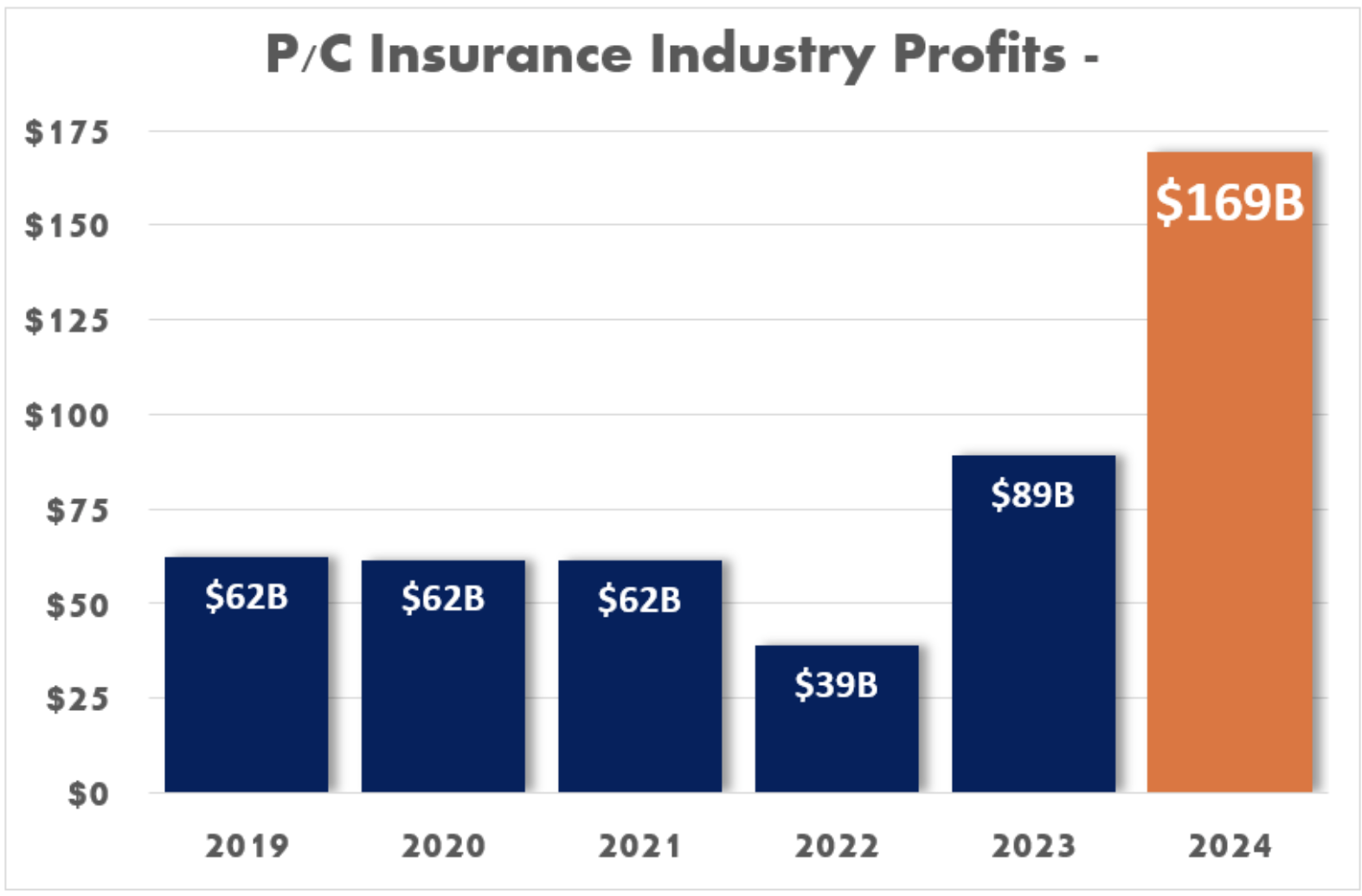
But nothing keeps going without money. Let’s say you’re an insurance company. Your board is bombarded with the message that AGW is going to create extreme weather events. These are in the future, of course — this is insurance. And most of the actuarial information comes from models, that alternately predicted sea level rise of 8′, or no ice at the North Pole by 2014. You sign one of those modelers on as a chief consultant — don’t want to be caught holding the bag.
And then you have seven years of no serious hurricanes. The news doesn’t report the hurricanes, because they basically never happened, even though extreme weather events were supposed to increase — but didn’t. Yet you charged out, through your policies, which were highly supported by the governments, especially in blue states, because of the hysteria. It’s what people believed! And they screamed about The Science – even though the actual science was clear on what was happening.
I’ve been doing some driving lately, across the West, which has given me the opportunity to download and listen to a couple of podcasts. I am a Joe Rogan fan — a lot of his content isn’t so much my cup of tea (I’m not an MMA guy per se) but he manages to haul in a lot of interesting science as well. Some might consider it “fringe” — but it’s fascinating. And what Joe does really well is explore the issues of what the government might be hiding from us. Which as we know from COVID, is likely immense — and critical.
This show, #2365 with Anna Paulina Luna, Representative, US House, Florida District 13, covered the physical evidence existing that Unidentified Aerial Phenomena is convincing regarding the presence of little green men. Here it is:
and the second, with David Kipping, Associate Professor of Astronomy at Columbia University (#2363). David’s show is more speculative across the board, focusing on star travel, aliens and exoplanets. Both are informative and fun, and highly recommended.
And while folks do love to talk about (kinda) meeting aliens, and what kind of tech must exist in order to cross interstellar distances, the room goes quiet when we bring up the conversation of how we’d actually connect, outside the base assumption that aliens are going to speak into some box that makes some croaking facsimile of English.
We did have the movie, Arrival, which was an intellectual puff pastry that implied somehow a professor of linguistics might help us. Maybe. But from what I’ve seen navigating the information structure space over the last 12 or so years, we’re not even on the right meta-paradigm. Even though when we look out on the cosmos, we count on the same laws of physics holding galaxies away, we simply can’t wrap our heads around the idea that there might be some similar set of laws in the information space.
Well, except for this blog. And I’ve named this Structural Memetics. What is the paradigm shift that I evangelize about? It’s the notion that ideas, and creativity, as well as their instantiations, arise from coordination between agents, with specific physical characteristics. Sentience arises anywhere in the universe because of the need for information to share, potentially at the beginning between members of the same species. But over time, as a given species evolves, and weaves itself into any web of life, the notion arises that maybe it might be time to communicate with other instantiations that may not match biologically. Scientists might hate the idea that your dog loves you — but anyone with a dog knows that your dog surely does. Even if you’re an asshole.
And this seems to be true, in some measure, for species as far afield as Tegu lizards. Even if you aren’t convinced, this video will still make you smile.
When you start believing that sentience is evolutionary and self-organizing, then a path gets laid out for how we might decode what aliens are saying — because we’ll realize they have a defined structure that progresses up to higher complexity. And it all depends on how sentient agents connect and transfer that information — which, especially at the more complex levels, is going to have to be more similar. It might be true that at the base hardware level, we cannot instantaneously decode another animal’s hormonal signature. But as we move up in complexity, there is going to be some commonality.
I have my constructed Empathy Pyramid, an expansion of Frans de Waal’s work, for humans. See below.
These correspond to physical scalable phenomena — mirroring is instantaneous signaling, emotional empathy is state matching, rational empathy, some version of functional data matching, and the levels above are keyed to manipulation of lower states, as well as n-dimensional fields. These are certainly true, up to whatever developmental level a given agent operates under, for all creatures on Earth.
And the thing is, since it’s based on physical phenomena, it’s likely, in greater or lesser measure, true for sentient beings elsewhere.
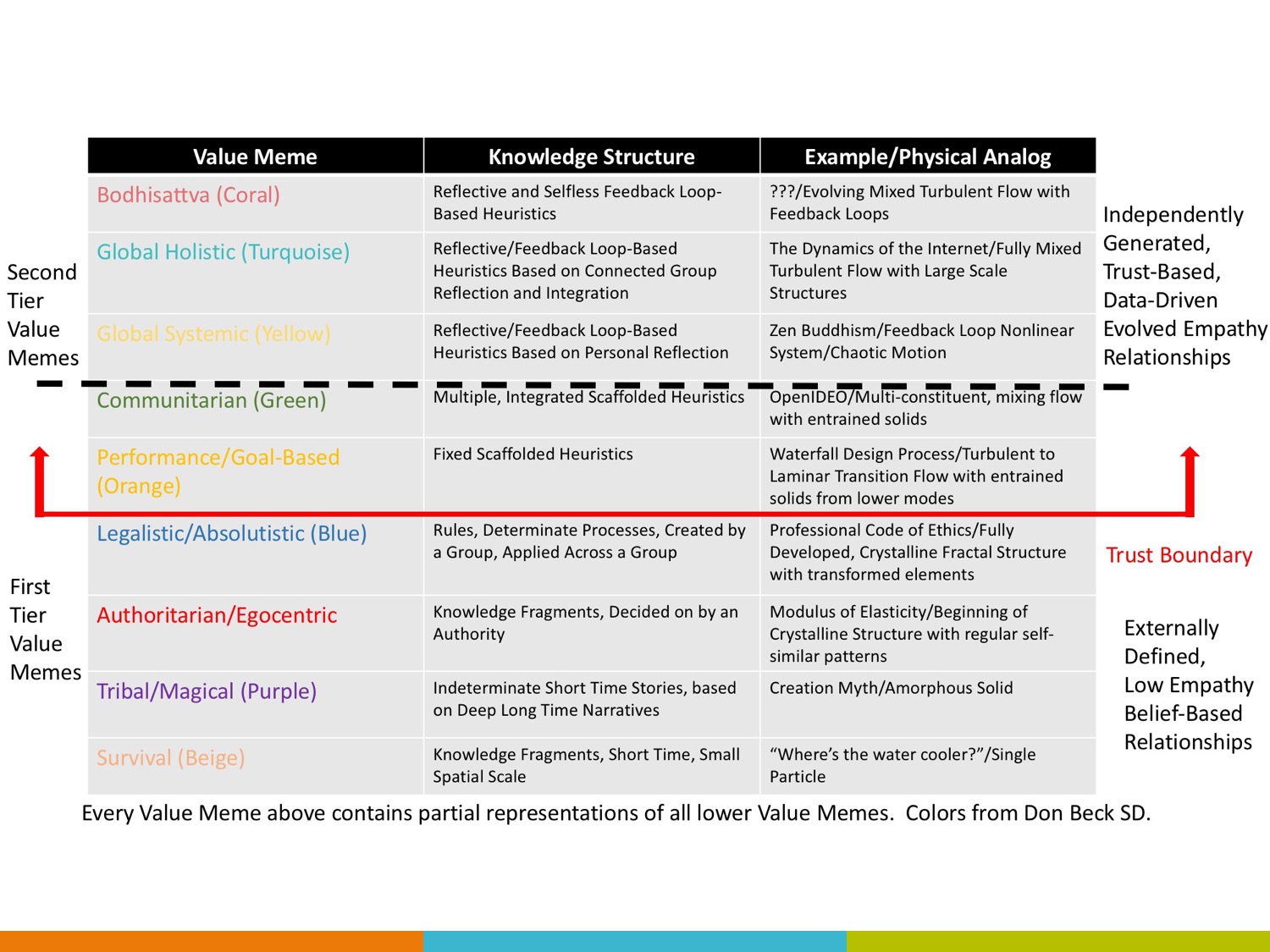
What that means is that given social topologies are ALSO universal — so this set offered up by Don Beck, of Spiral Dynamics fame, are a good roadmap for how other extraterrestrials organize.
The challenge that we have here is that all these social structures are dependent on the level of agency any given sentient agent has. And that, is going to feed forward into a canonical set of knowledge structures. Which then creates various design instantiations, a la Conway’s Law. All that’s here.
But here’s the rub. Though there are lots of hypotheses that aliens want to farm us for food, because in a cosmic sense, we’re so damn dumb, we’re kind of a lousy food species for an extraterrestrial. And the rub that isn’t discussed in talking to our E.T. buddies is that they are likely far above us in thought complexity — unless their figuring out how to cross the cosmos was some kind of weird fluke. Which is unlikely. With all things involving complexity, we are limited in seeing much above our head in what additional complexity might look like.
So THAT means they’re more likely looking down on us like we view dogs, and hoping they can communicate a couple of simple commands to us. They’ll still have the same lower level knowledge structures. But the upper level ones, inaccessible to us, might indeed contain information in other dimensions. Here’s the ones we have access to.
I’m going to wrap this up by saying that I’m one guy. And yes — I do have a lot of background in lots of different things — from engineering design, to languages, to astrophysics. But I’m still one guy.
So let’s pull an analogy from one of my favorite sci-fi trilogies of all time — The Foundation Trilogy, by Isaac Asimov. We’re always all hyped up on the material construction foundation — the First. But aside from some poseurs, we’re really doing a shitty job with the Second, the one in charge of deeply understanding the ‘social’. Currently, the field is an utter disaster. We could use a few rocket scientists working on it.
Feel free to join in!
P.S. I’ve written about a lot of these issues before. Here’s one of my favorites. Searching the blog will yield more insights!
For those that don’t know, I have been a hard-core environmental activist my entire career. I wrote a book on my backyard (full of amazing forests) and was an activist participant, organizer and strategist for forest protection across the U.S. for a good 15 years. I’ve also, at the same time, worked with timber companies, as well as oil refineries, in the context of my Design Clinic as an engineering professor as well. So you don’t have any surprises here — as an engineering professor in the Pacific Northwest, I work with almost everyone.
But in the late 2010s, regarding Anthropogenic Global Warming (AGW), my ardor toward all of this started to cool. After three decades of catastrophic predictions regarding AGW, none were basically coming true. Sea levels weren’t rising in any particular way. Storm frequency, the same. Regional modification of climate? Yes. Glaciers were melting. But glaciers started their retreat, at least in a way I could observe (using interpretive trail signs!) far before the magic date of the mid 1930s for the impacts of human development. And in my own backyard of the Palouse, basically no change at all.
But even more than that — it was the matter of tying actual events, in a meaningful way, to human activities at a global scale. As I traveled the world, I did see effects of extreme weather. Storm cycles in the Philippines made a big impression — certain areas were seeing 30 year storms every seven years. And so on. Why not just tie that to CO2? “Models” said so.
Ah, those climate models. They’ve told us over and over the world is going to end. Sea level rises of 8′. Total inundation of coastal areas. On and on. I didn’t know much about models (except they’re large finite difference codes run on supercomputers — the Earth is a big place…) and didn’t really want to find out. I actually know a fair amount about these kinds of models, because in a way, they’re just an inversion of the same stuff we use on airplanes. And trust me — those ones used to fine-tune aerodynamics of airplanes are spot-on. (I am a bona-fide aerospace/rocket scientist.)
But they’re spot-on for a reason. You can take an airplane (or appropriately scaled facsimile) and put it in a wind tunnel. I worked at NASA Ames for a couple of summers, and watched them do it. Every finite difference model in the world has to be tuned to give a correct answer. You tune this for given flow regimes, with a real airplane in the wind tunnel, you’ll get amazing results inside the computer. But that’s because you have a physical object, appropriately instrumented, that you use as your baseline.
To say that you can do this with the world is ridiculous. And the stupid keeps piling up. Even using temperature profiles any time and assuming that they’re accurate, before a self-declared “Age of Satellites” or “Age of P-3 Orions” is just nuts. And when you combine the self-inflicted errors from bad measurement WITH the inarguable spread of people across the planet, which would inherently impact many of those temperature measurement sites, you start seeing you have a major grounding validity problem on your hands. Grounding validity is matching whatever model you have with reality, at the appropriate temporal and spatial scales.
But I kept my mouth shut, and deferred on it all. Saying anti-AGW statements would get me thrown out of MY tribe. And I noticed that stridency on this had only increased. If only it were supported by actual events.
It wasn’t until Anastassia Makarieva and Andrei Nefiodov, my Russian theoretical physicist friends, showed up on my doorstep, that I really woke up. Why? Because one of the recommendations to “solving” AGW, by the Intergovernmental Panel on Climate Change, was logging the Siberian/boreal forest to increase reflectivity, called albedo, of the planet to stop it. We were going to destroy wild nature on a planetary scale to save it.
Both Anastassia’s and Andrei’s work on how forests actually work should be part of the larger discussion regarding AGW. They are, along with their advisor, Viktor Gorshkov, advocates of a theory known as the biotic pump. What the biotic pump says is that without forests, you can’t have internal continental moisture – you get deserts instead. The forest itself is the primary transport mechanism for moisture into the interior of continents. Chop down forests, things dry out, save on the coast. On top of this, there is another extremely important implication. Vegetation interacts with the atmosphere in a profound way, that feeds back into the cycle.
This turns out to be a huge conundrum in how atmospheric systems work. Scientists like Antonio and his brother Paolo Nobre, have written extensively about atmospheric rivers, that bring literal rivers of moisture over the mountains and from the seacoast, that create the wet conditions required for places like the Amazon jungle to flourish. Chop down the trees, the weather stops happening.
Contrast this to what we would call an open loop system. An open loop system is one that is pre-eminent in basically all current climate models, where climate happens, and vegetation either thrives or dies dependent on what the atmosphere is, and the model says. The notion that these planetary systems are actually coupled doesn’t enter into models. And aren’t likely to be included any time soon – think of the additional complexity. Water vapor itself — the primary greenhouse gas — isn’t even a factor in most climate models. It’s CO2 uber alles, like some magical dial that all global climate depends on.
All these systems operate in some homeostatic form — meaning a process of self-regulation on the internal system — that all living creatures function in order to survive. Exactly where that internal/external system boundary is can obviously be an area of debate. Is a forest 10K acres? 100K? 20? The answers are often fluid. But the notion of the alternative — a one-way system, isn’t borne out by reality. If you doubt this, visit the coastal redwoods in Northern California. Redwoods are a microcosm of the biotic pump, living on seaborne moisture, and in turn preventing the desert that one can see further down the California coast.
It was then I realized I was in The Matrix. What is going on with suspected AGW has little to do with the science. Or at least the grounded science. But it has a ton to do with the memetics of climate science, which are often psychopathic in their direction. The current state of the accepted field, that lines up with the Mainstream Media, is Authority-driven, with the atmosphere playing the proxy of the boss, with the rest of the complexity absent from time and spatial variance, as well as flaws in measurement.
And Conway’s Law was still in play. The design of the system must fundamentally represent the social system that created it could not be more evident. The knowledge regarding that design of understanding is stuck there in the middle. Those with tremendous status and sophistication — the modelers — were controlling the debate on what was actually happening, armed with prestigious lab and university affiliations. And like the climate system model themselves, it was top-down.
Had we not just come off the catastrophe of listening to the Expert Class in COVID mitigation, I also don’t know if I would have paid much attention. Getting banished from one’s tribe (and I, as a forest activist, and definitely a fan and defender of the natural world) is no fun. But when your tribe has been hijacked, as has most certainly happened with climate science, and the main thing I love — the natural world — is on the literal chopping block, I had to gird my loins for battle one more time.
While AGW has been an issue for the last 20 years, I believe that COVID has made the passion for intervention even worse — regardless how crazy the intervention is. I’ve seen it said that a single billionaire, Lex Luthor-like, could set themselves up on an island with a huge sulfur atomization gun and spray sulfur into the atmosphere. The same principle I’ve maintained — that humans will, barring a major technological revolution (think paradigm-shifting like nuclear explosions) means that such actions will likely have little effect with their efforts. A major volcanic eruption can cause climate disruption for a couple of years (think 1883 Krakatoa). But most of what happens, damage-wise, happens to regional systems, including the people living adjacent. It’s a narcissistic fiction to think otherwise, and it’s also supported by Andrei’s scale analysis of energetics on the planet (see Part 1.) But that won’t stop the narcissistic billionaire. After all, they’re doing the brutal work of saving the world by destroying the atmosphere. It’s for our own good. Sound familiar?
But what happened with COVID — whether you were a COVID elite winner, and coasted through the pandemic with DoorDash, or suffered through losing your business because of lockdowns, the message of social and spiritual isolation was clear. In my adjacent town of Moscow, ID, the city government attempted to prosecute a group of singers from the full bible church, Christ Church, for holding a protest singalong. This was elite memetic prosecution and immiseration at its finest. The older progressive community, who are probably a good 30 years in age older than the younger Christ Church community, used their proxies to arrest the leader of the protest event. I’m not endorsing all the activities of Christ Church, and there’s a lot to talk about in the context of their minister, Doug Wilson. But clearly we’re moving toward late-stage liberalism. And it’s not bringing together its own membership with any degree of personal agency allowed for its members. Though the city government ended up paying out $300K for violation of Christ Church members’ civil rights, the diatribes in the local newspaper never relented.
Various social scientists have called this kind of hysteria “mass formation psychosis” and that may be accurate. But it is worth a minute to consider the causal path of how we got to a population susceptible to such behavior. People isolated, even with advanced development, need other people to maintain an open mind toward life circumstances of others. When humans are isolated, there is a process of depression that inherently occurs. And as I’ve written about before, depression of a population is a necessary precursor to Authoritarianism, which then (tri)dichotomize themselves into either Followers, True Believers, or the Unclean. Short version — the Followers/NPCs are low energy. And the True Believers are profoundly coherent, and undifferentiated, inside their In-group within an In-group. And the Out-group is, well, the Out-group. They can be disposed of.
What happens in the context of that spiritual devolution inside the movement is very similar to atomized gasoline presented with a match. Old people might just go to sleep. But young people, presented with an opportunity to connect with like minded people, rapidly become explosive. Google ‘Extinction Rebellion’ if you need to witness the various climate protests.
A similar behavior was witnessed among the masses protesting the Israeli invasion of Gaza this past year. The precipitating act by Hamas on October 7 has long been forgotten. But the profound need for belonging by young people, post-pandemic, finally found its catalyst in mirroring empathy for the Palestinian people. Hamas’ attack was only a day, whereas Israel’s invasion is still, as of this writing, ongoing. The fact of the complicated history of the region, as well as ostensible cultural proclivities (it is extremely challenging to understand how queer people would rally for a culture that would likely kill them, were they living there) all were subsumed in the human need to connect.
And it’s the same for AGW. It is precisely these dynamics why I’m writing this piece. Short term, Authoritarian coherence for a long-standing problem is a false god if there ever was one. And has the potential to lead a population to far greater atrocities than the original sin. The reality of banning fossil fuels, whose role in GW is far from clear (and potentially insignificant) will be the death of billions of the planet’s human residents. And the chaos unleashed will very likely affect the natural world worst of all.
If we were even remotely operating in a world where wisdom, which depends profoundly on metacognition (knowing what we don’t know) were the rule, you’d think we’d at least see solutions floated about preserving and restoring native ecosystems, regardless of their content, across the globe — and especially in ocean systems where our core knowledge of functioning is exceptionally poor. As well as dedication to rapid development of nuclear energy.
But we’re not seeing nor hearing this. Such a world connection perspective barely exists. What we hear are more monomaniacal calls for destruction of the natural world in the context of saving it. Nothing could be more emblematic of this than the razing of 4000 acres of Joshua trees for a solar farm. As with all things, it’s the dialog not being had which is the most interesting. If it really were about solar panel siting, how many acres exist across the tops of buildings in L.A. that can’t be placed there because of building code restrictions?
And it keeps piling up. In the lee of two moderate-sized hurricanes, Helene and Milton, that just hit the Gulf Coast of Florida, there is basically no headlines saying that these two storms were NOT caused by AGW. Every headline fingers CO2. What is really pathologically interesting is that only 20 years ago, the script that no one single storm could be traced back to AGW was an orthodoxy among climate scientists and meteorologists alike. But that was simply not providing the messaging coherence the current apocalyptic cult behind AGW needs to thrive, nor provide the spiritual connection. You’ve got to get down deeper in the limbic stack. And that means greater fear, as well as more profound threats to apostates like myself. There will be no debate. If your message isn’t The End Is Near, they don’t want to hear it.
What’s happened to the environmental activist community in particular, and the Left in general, is they’ve anointed CO2 and AGW as their One Ring — the magic talisman that they are going to use across-the-board to fix all our woes. But it fails to understand that the singular devotion to such a notion makes the entire movement perilously open to kidnap by far darker forces. J.R.R. Tolkien remains one of my favorite authors of all time, and the comparison between Sauron’s re-creation as Annatar, the Lord of the Gifts, and the singular focus on CO2 is particularly apt. The environmental community is participating in forging its own One Ring, just as the elves did on the sidelines in the Second Age of Middle Earth. And when it gets used against those of us that believe in protecting the natural world, as it inevitably will be (look no further than forest fire “prevention” if you need a simple example) don’t say a couple of us didn’t see it coming. If you’re not on the side of what J.R.R. Tolkien referred to as the Free Peoples, then you’re against ’em. That means being comfortable with the notion of freedom — which the Left seems to have totally abandoned. What would Galadriel do, indeed?
We are going to have to come to terms with our core humanity, and our predilection with profound fear of abandonment being sown by our current group of narcissistic psychopaths. But this fear is deeply rooted, for reasons. I close with a short parable.
About 15 years ago, I was on safari in the Greater Kruger Park in South Africa. I was lucky, and ended up with only me and the guide in the open-top Land Rover for most of my stay. One day, we were driving around, and happened upon a herd of Cape Horn buffalo moving down to the watering hole mid-afternoon. Two lions, an old one and a young one, were sitting on the side of the road, about 20′ away from our rig, watching the buffalo move.
A female cape buffalo, from that moment
The younger one
When driving in a safari wagon, usually one person does the driving, and the other person holds an elephant gun. I think ours was a classic 450 caliber Rigby, typical for use in hunting large game animals. We were only taking pictures, but I got to hold the gun because the driver couldn’t. Once we stopped, I stood up to take pictures of the lions. Immediately, the lions’ heads snapped around. Though lions won’t mess with bands of humans (you can take walking tours with groups of 10, though there are still guns involved) a solitary human is a prey species. The guide yelled at me to “drop” and went for the gun. The minute I vanished, the lions went back to watching the buffalo. We later heard from a ranger that a refugee from Mozambique had been treed for three days by three lions, before he had finally been rescued. And that lions had eaten something like 300 people fleeing the civil strife in Mozambique just that summer.
We have to confront the fundamental spiritual isolation of our current society, as well. It directs the psychopaths to use our fears against us, for what will be terrible ends. And like it or not, at this moment in time, it is FAR worse on the Left than the Right. If we cannot, the voice of the lion will be all that we hear.
Two astronauts aboard the Boeing Starliner, a reusable space capsule design by Boeing Defense, have been temporarily stranded at the International Space Station due to maintenance and reliability problems with their capsule. NASA Mission Control decided to bring the capsule back empty, rather than risk potentially catastrophic failure of the capsule during re-entry, without question the most stressful part of spaceflight, when the capsule must plunge back through the atmosphere in a literal fireball.
Butch Wilmore and Suni Williams, the two astronauts who took the big vertical ride early June 2024, were sentenced to additional months in orbit on the ISS because of the mission failure, though when the Starliner was brought back through the atmosphere, it did touch down in September (uncrewed) successfully. Starliner was a program funded coterminously with SpaceX’s Dragon capsule, to the tune of $4.2B, while Dragon received $2.6B. According to Wikipedia, Boeing’s project had already exceeded its fixed price contract by $1.6B, indicating a major financial loss for Boeing.
There are all sorts of interesting top-level insights on the Wikipedia page, and I recommend reading it (I hadn’t until I decided to write this piece!) Of particular interest is receptivity to feedback from both the Boeing and the SpaceX engineering teams in the development phase of this project. The various mission failures along the path of Starliner resulted in the termination of Boeing Defense, Space and Security CEO Ted Colbert, who previously had been in charge of Boeing Global Services and CIO of the entire Boeing Company. From reading his resume’, Colbert had been rewarded with recognition that he was both African-American and an engineer multiple times in his career. I’m sure he was happy to play the DEI card in order to move up in Boeing’s chronic Game of Thrones hierarchy, and achieve entry into what many of us call Boeing’s Prince cohort. People at the level of Colbert wield a lot of power and authority. They get their own plane (and I’m not talking a Cessna 172.) I don’t know the exact number of levels in the hierarchy necessary to get to his position, but I’m guessing it is at least seven.
Was he hired because he was a black man? Well, that was probably a consideration. Boeing touts its DEI focus loudly, so I can’t really even understand why that would even be considered in a racist insult. That sword cuts both ways. But it’s just not interesting to me hanging the failure of Starliner all on one dude because he’s black. It really dodges the real blame of what different psychosocial systems produce. What does Conway’s Law really tell us, after all? Rigid psychosocial systems like the Boeing Company, at best, maximize incremental improvement and reliability. And at worst, reward the anti-risk-takers, who then propagate that attitude down the various levels of hierarchy toward a cult of new design mediocrity. Great for maintaining a legacy product line, maybe. Awful for producing anything new.
And Colbert didn’t take over Boeing Defense until 2022 — long after the various problems with Starliner’s problems with its thruster clusters were well-defined, if not understood. Sure — he didn’t fix them. But it’s not clear inside a massive, political rigid hierarchy, that he even could. What CEO, in a multi-stack hierarchical system, even does?
A better way of understanding the problems with Starliner, filled with status-driven infighting at the Boeing Company and its subcontractors, is to look at what SpaceX has done right. The answer is simpler than one might think.
SpaceX is willing to blow rockets up.
Why does this matter? One of the biggest challenges of complexity, that has been covered to death in the aftermath of the Space Shuttle Challenger disaster, was the lack of what’s called “All Up” testing. All Up testing means putting the whole system on a launchpad, and launching it into space. Doing this recognizes that there is only so much information that can be gathered from reliability testing of components. Why? Components in a large-scale system can only have their respective interactions observed when assembled together and tested. Even then, there’s no hope of constraining complex subassemblies and gathering statistical data for the entire system. You can’t launch a space shuttle 1000 times (or a rocket, for that matter) and gain that kind of confidence. Sooner or later, you have to put it together on a launchpad and Light That Candle.
But rigid hierarchies crave that kind of security. Boeing and NASA have, in the last 40 years, enshrined a no-risk culture that simply is not feasible for pushing the boundaries of spaceflight. The key concept here is what’s know as “configuration control.” What that is is you know all meaningful interactions between the various subsystems before you move forward. And while some level of due diligence in predicting those interactions is certainly part of engineering excellence, the other part of this is realizing you can’t know. And this kind of epistemic humility does not emerge out of experts in rigid silos.
Colbert was not set up as a fall guy for DEI, though he was indeed likely given the position because he had proceeded up the hierarchical stack and had the resume’ for the position. And he was black. But just look at his Wikipedia entry — everything in his career pattern was about exactly what the v-Memes of the contemporary Boeing Company enshrines. And that ain’t risk taking. So metacognition dies, your organization becomes insular, and all your enemies are, of course, on the outside. Because no one on the inside would even bring up a problem before it would happen.
That’s what the death of metacognition looks like.
Meanwhile, SpaceX has been busy lining up rockets to blow up, knowing a priori that they would. And because of a young engineering culture, and an expectation that they are creating a learning organization, they’re successfully learning the boundaries of what they don’t know — which is what you need when you cannot a priori assess the limits of configuration control. Knowing what you don’t know enables you to cure your ignorance. And then push the system boundary continuously outward.
There are also some natural consequences of demographics that SpaceX has going for them. I’ve done a couple of projects with them (I’ve also done projects with Boeing) and the main thing that impressed me was how young their engineering staff was. Aside from a couple of my ex-students, I never dealt with anyone older than 30. Combine that with goal-based v-Meme thinking (we just want to solve the immediate problem any way we can) and deep Guiding Principles directions from Elon Musk, the founder (we want humans to be a multi planetary species) and you have a far more potent v-Meme structure than moving up one more click in a massive hierarchy.
Will Starliner ever be a successful competitor to SpaceX’s Dragon crew capsule? I personally think that it will take a while, but yes. The v-Meme system at Boeing — a large Legalistic Hierarchy — has the ability to generate the information to cover the information space to make a space capsule. And in large part, their reputation for other lucrative contracts depends on it. But at what cost? We’re going to get some time/money comparisons out of this as far as the efficiency of psychosocial systems in generating and dealing with complexity. Right now, we’re easily at 2:1 or 3:1 in favor of SpaceX But the answer ain’t gonna be pretty for legacy organizational modes.
Ladle Rapid on the Selway River, from another life
One of the things that is exquisitely irritating to me is when people go on about “the truth”. Why? Because the person talking about it usually isn’t in possession of it anyway, and anyone that knows much about a given subject realizes that, for the most part, it’s a scaling problem, in both time and space. Truth at a small scale is too often an inadequate descriptor with truth at a large scale, and if you don’t have any real sense of epistemology (at least if you’re here on this blog, you might be looking for one) you won’t even get there.
And to make things worse, seems like the primary reason anyone brings up “the truth”, as opposed to making the argument, is to gain power and control over someone else. It’s not like they’re really looking to share.
That doesn’t mean that objective truth doesn’t exist. It’s just powerfully difficult to get to, and really depends on how you bound the problem, as well as possess access to the different change processes extant in any given observation. I wrote a whole piece on “truth in information” if you’re interested. Short version of that piece — “truth” is what you use, from an information perspective, to coordinate with your homies. If you take that concept, and meld it to the latest meme — FAFO (fuck around and find out) — you’ve probably got most of what you need. What FAFO really is for those that read my stuff is FAFO is the same as “grounding validity” — some set of experiences that you either create, or get tossed into and endure — that then shows whether your notion of the truth maps to anything in your larger world.
Scientists have all sorts of fancy schemes for FAFO, with lots of other acronyms, like RCTs (random control trials) which are more reliable ways of determining if you found out. Whole fields won’t even permit you to FA (theorize) because inherently, that’s going to replace some old dude’s theory that a certain group is ferociously fond of. So you can’t even get to the FO part of everything, not because you might be wrong. Rather, because you might be right. My favorite example of this was portrayed in the National Geographic series “Genius”, in the sub-series on Albert Einstein. Philipp Lenard, an experimental physicist in Germany (and famous Hitler supporter) was one of the people who condemned Einstein’s various theories as “Jew Physics” and was in part responsible for Einstein leaving Germany and coming to the U.S. where he persuaded Roosevelt to build a nuclear bomb based on his theories. Talk about FO indeed.
OK — I could go on. But let’s do a simple example to understand this truth thing a little. Hopefully, this will show you how it works a little better.
Let’s say we have three scientists at a conference, standing around, drinking the bad coffee one drinks at conferences. These three scientists study gravity. They are typical scientists in The Matrix— not a single hell-raiser like me in the bunch. They exist in a classical Legalistic v-Meme social hierarchy, and as such, they follow rules with their experiments to come to conclusions. What THAT means is they set up complicated, ever-more-precise experiments to study this phenomenon.
How do they do this? Let’s just assume they are highly sophisticated ball-droppers. They drop a ball in one place, and they measure the acceleration of the ball as it speeds toward the ground. The first scientist says to the other two: “Hey, I’ve been studying this phenomena where when we drop a ball, it speeds toward the ground. We’re very diligent and precise in our measurements, and at that place, it seems that the ball accelerates at about 9.8 m/sec*2!”
The other scientist chimes in “well, we’ve been running similar experiments. We carefully calibrated EVERY part of OUR experiment, even buying a bowling ball polisher, and we’ve dropped our balls, and it turns out when we measure the acceleration it’s 9.81 meters/sec*2!”
The third scientist takes a swig of that nasty conference coffee, and says “I’ll bet that if you two stepped outside of your labs, and measured the acceleration of this so-called ‘gravity’ in the downtowns of your respective cities, you’d find out the acceleration of those dropped balls would also be 9.81 meters/sec*2.”
OK. What do the other two scientists, locked in their Legalistic v-Meme social structures say?
“If you want us to believe that, you’re going to have to run another experiment and prove it!”
Of course, we all know that when it comes to gravity, we’re far past that particular point in how physicists understand all of this. There are a host of reasons why (math being one) that this is a kinda-silly example. But it illustrates how an empiricist/experimentalist might approach this situation.
And here’s the point. The knowledge structures that you have access to come out of the social structure where you operate. Legalistic social structures are title- and process-driven, and such, the relationships inside them are low empathy. You are supposed to follow the rules in dealing with someone inside them – that’s the knowledge structure tool you have access to. And that’s going to be dependent on their position in the hierarchy. They MUST know what they’re talking about if they have the title and position they have, and there is a rule-based order to things. And metacognition? Knowing what they don’t know? And especially guessing? That’s an agency-driven ability. You certainly don’t have that. You’re supposed to color within the lines. It’s all spelled out for you on what their rights and privileges are. (Note — anyone wondering why Ketanji Brown Jackson, our most recent Supreme Court Justice, refused to say what a woman is during her confirmation hearing has their answer in her portrayal of a person lacking agency for even basic information. She was stating loud and clear that she was not a legal constructionist. Sheesh, though.)
If you doubt this, listen to any university president conferring degrees on students during this graduation season. “Rights and privileges, rights and privileges” blah blah blah. It’s how the social system operates. Hand over a big wad of cash, and you never have to think again. Except maybe what kind of donut you get to eat. That’s the limits of YOUR agency outside your rights and privileges.
Now here is the devastating insight. Even THESE systems can, through a process of convergence, get to a global truth. In our case (let’s keep it simple) that gravity across the planet pulls toward the center of mass of the Earth, and it accelerates things at ~ 9.81 m/s2. But absent some guiding/binding principle of mathematical physics (if you go back up and look at the knowledge structure necessary for that, it’s all the way up in the Yellow/Turquoise Global Holistic level) the way you’re going to get there is 2-D area covering. In short, you’re gonna unroll the map of the globe, charter a sailing ship and an ATV to take you to a ton of places all around the globe, where you’re going to run your measurement OVER AND OVER.
If you know about fractals, what you’re attempting to do is in the fractal space, you’re using a one-dimensional covering space (a single point gravity measurement) to map a 2D phenomenon – the surface of the Earth (as you’ve defined it.) And for those that know a little about this, is you are NOT using anything resembling a multi-fractal, with different covering capacities, to make your life easier. You’re not throwing a higher-dimensional blanket over the entire globe. You’re plodding along, point by point, at whatever temporal and spatial scale your community lets you. Or you get denied that bad coffee at the next conference, you pariah!
And THOSE scales are directly tied to the social structure (how big of a circle that your gravity measurement applies) and enforced by the membership. You break the rules and say something like “this is an obviously generalizable phenomenon” and people ain’t gonna like it. And now you can bring in all the other structural forcing functions that exist in your social structure that are used. There might be a large contingent of researchers whose sole job it is to traverse the planet, measuring the gravitational constant. They’ve got mouths to feed. This guiding principle shit you might be proposing is moving their cheese. And on and on.
Maybe someone’s concerned that the constant will change over TIME — it’s not just space that matters. What does that do to the measuring business? Might be great! Folks can keep doing this for their ENTIRE career, in more and more sophisticated modalities, adding significant digits along the way. And once you’re locked into a given social structure, where the real incentives are rising in status in the social hierarchy, as opposed to really figuring out what the gravitational constant is (that’s just a bus you’re riding) then supposed boredom really isn’t the issue.
So if you’re a Guiding Principles guy like me (phone home, ET!) what we now have is a way of viewing exactly how a given truth is found — and if it’s a good mechanism. We can look to see if we can construct a model that will provide “covering” for reality in the space. We could ask the researchers if they would create what we call a Concept Map to describe their research in their field. And then we could examine that Concept Map to determine exactly how their brains are working to cover information in their field, and how they’re building truth.
Here’s an example of a low v-Meme, low sophistication concept map. Just FYI — the example I’m going to use to explain this is gonna be simple, because it takes TIME to make these pictures! Let’s start with an airplane.
Top-Level Concept Map for an Airplane
Let’s say we wanted to ground this particular concept map more to reality — we might use photos of a real plane, serving up an example that the author would choose to illustrate the point. That now also tells you about the author of the concept map’s perspective. If someone, for example, worked in Boeing’s structures division, their concept map of an airplane might likely include a dissected Boeing 737. And on and on.
One can also infer how higher order v-Memes might generate increasingly complex concept maps, and start including multidimensional information inside that space. The 2D map tells you precious little about how a plane flies (obviously, we’re all familiar enough with airplanes to know wings are involved) but increased evolution of perspective, as well as sophistication of the person drawing the map, will cover the n-dimensional aspect of the “truth” of an airplane more than the simplistic block diagram above. Around the wings might be air! Or Bernoulli’s equation – the governing physical principle that creates lift, that allows the wings to work. Someone might need to add how an airplane works in the different seasons of the year — hauling holiday travelers during Christmastime, or business travelers during the week. A spatial representation of the globe might be included. And on and on.
What is interesting is doing this with an unprepared audience and seeing what the implicit functioning of that person’s thought process is. I originally did this with students in my mechatronics class a long time (25 or so years ago!) and had them draw a block diagram of a military jet attempting to launch a missile. As impossible as it may seem to be, students would draw some version of a block diagram, maybe giving a block to wings, and a pilot, and a missile. But then they would draw arbitrary connections between the blocks, with what were obviously erroneous connections between the parts. It was one of the “ah-ha” moments when I started understanding that people have to be evolved to consequentiality and higher level coherent thought. I wish I had saved some of the originals. What was fascinating was that students did remember, almost perfectly, little sing-songy stories (one could call them a mnemonic device) on almost everything we covered. Hello, Tribal v-Meme. Once you see how people actually think, v-Meme-wise, you can’t unsee it.
One can also start seeing the need for all the different knowledge structures — and the people that think in them. A highly sophisticated observer might have the ability to sketch an airplane seen on a runway, as part of a spy operation, and then return with that sketch for analysis of the constituent parts. Someone process-oriented might track larger aircraft patterns, and then assign a given agent to show up at the right time to see the aircraft in question. On and on.
But back to the Truth. If there’s a lesson to be learned here, it’s that our brains are going to frame up whatever question we’re asked with the models that are spawned out of the value sets we’re programmed with. That doesn’t mean with the addition of appropriate process, we can’t overcome our perspective. We certainly can. But it behooves us to understand our own minds as we navigate through the world, attempting to find a given truth. It could be hidden in plain sight — but our unlovely minds just might not be able to see it.







 It's About Empathy - Connection Ties Us Together