In my last post on COVID-19, I discussed the two major factors that drive COVID outbreaks — seasonality, and sociality. These are “almost” guiding principle levels concepts on how COVID spreads.
Short version — when it’s dry, spread is tough. And when you’re distanced, whether through barriers like masks, or actual physical distance, dose of the virus is limited. Spread is tough, which means that vaunted R0 goes to 0. And depending on your own personal rate dynamics, you’ll either get the bug or not.
It’s snot. Or reflecting back down in self-similar fashion, to the individual — it’s their ability to produce mucus. If you can produce enough mucus (meaning you’ve got a healthy immune system) COVID-19 really can’t touch you. If you don’t, well you get the bug, it gets in your system, and then you get the rare, but possible Garden of Horrors that the media likes to write about. Cytokine storms, COVID toes, and what not. And a dry, hacking, cough is the dominant tell-tale.
Short version (this is supposed to be a shorty post, after all!) we need to produce more mucus. I only found two papers in the literature and DID NOT bookmark them on healthy increase of mucus production (damn!) on how to do this through diet — and they were weak, and on rats, and involved reading in between the lines on how diets of saturated fat increased mucus production. It wasn’t taken from a prophylactic viewpoint — rather, it was a noted thing of attempting to get the rats to die from heart attacks, because the medical/dietary community is into negating the value of saturated fats.
If anyone wants to point me to some more papers about saturated fats and mucus, I’m super-open to reading them. But what this really shows is how our research system needs to be, well, a little more systemic. Right now, the research system focuses on singular pathologies, and dichotomously proving something as good or bad. That’s the outcome of the knowledge production characteristics of the social structure researchers are in, so it should come as no surprise. And it doesn’t.
But what it means is that we can’t really get a grip on what makes us healthy — or moving things up to a truly different plane, like my friend Ugo Bardi’s latest passion — holobiontics — which explores not just how the human system works, but how all the partners in the human system work — gut bacteria, skin bacteria, basically everything including ourselves in our environment.
If anything, it also shows how we need more research in the medical community, looking at open questions of “how bodily systems actually work.” I’m hoping this statement isn’t taken as some Zero Sum game, where we stop looking at proving pathologies, and divert the money over to that topic. We need, instead to spend more time, and money on understanding ourselves.
And when you think about it, isn’t that the real path to enlightenment?
Dhow — in the UAE, Dubai Creek (which isn’t a creek!)
Note: This piece concerns itself with the social dynamics of COVID-19 and the memetic lag of various psycho-social structures for continental/multiply connected societies. Not islands, like Taiwan, New Zealand, and South Korea. If this statement doesn’t make sense to you, I recommend that you read this piece first.
The above island systems are also interesting — but they need their own piece. I do write some about Taiwan here.
One of the questions on many people’s mind about now is “When will the pandemic be over?” With case counts quite literally soaring, from different testing regimes, it’s a fair question. We’re also bombarded, especially those or us that are educated, to “believe science” or at least “believe scientists.” What that actually means I’ve covered in other pieces. There are no simple answers in this pandemic.
At the same time, every pandemic ends. As I wrote in this piece, the smallpox pandemic that the Aztecs experienced after Cortes exited the scene (to return afterward and conquer their empire) ended with 40% of the population dying. But it ended. It’s no surprise to find that the Aztecs got hit by the double whammy of a new virus (smallpox) plus seasonality that helped spread it. According to Wikipedia, the smallpox epidemic started in May, and lasted through to September of 1520. If you’re up on the literature, this sounds familiar for low latitude countries, that, for a variety of reasons, seem to spread their respiratory viruses over the summer months.
And this virus, too, will end. As I’ve written before, COVID-19, like virtually all viruses, is intensely affected both by seasonality and sociality. Both matter. If you have a super-spreader system like the New York subway, you’re likely to err on the unlucky side (24%) of antibody seroprevalence, whereas if you have less sociality (as in rural America) you have longer periods to build asymptomatic spread and inoculate/variolate your population before the bad season comes. I’ve used the wildfire analogy before with COVID, and it seems to be catching on (though obviously no one read this blog and stole it from me — and I do not endorse all the views in that piece!)
If you ignore the sound and fury associated with recent case counts — do remember that testing is awful (this is one piece, but there are so many of these it’s mind-boggling, yet still under-emphasized,) it’s uneven, the numbers are conflated, and it’s really only championed by empirical scientists that hang their hat on that kind of thing, as well as their followers, there’s really only one gold standard of statistic that matters. And even though THAT is weak (we have no idea of the various conflations going on regarding whether someone who died was on death’s door, and just happened to get COVID at the last minute) I’m standing by COVID death counts as our tarnished measure.
And that is interesting enough. Take a look at Canada, for example. What do you see?
Canada COVID death count
What you get to see is that the pandemic is functionally over in Canada. And while there are still the COVID-doomers in both the government and on the sidelines touting increased case counts, the reality is that this thing is over. Officials in Canada who were previously hollering for tighter measures, a month after deaths have gone to zero, are backpedaling. Canadians are also tired of social restrictions, and are demanding a return to a more open, empathetic society.
It’s instructive to look at Sweden as well. Their death plot looks like this:
COVID Deaths, Sweden
Sweden was the nation that pursued a moderate course of action of social distancing, closing some schools, and other agency-based, voluntary restrictions with the idea that the society could move to herd immunity. Scientists in the Swedish public health authority ran the pandemic response independent of Sweden’s political government. The end result was that, of course, there was no lag at all between the population and leadership. It is true that the leadership did make mistakes, especially regarding the management of care homes. But in the end, Sweden passed through, and now has virtually no COVID cases.
I’m including Spain — another example of a modestly Authoritarian yet still a parliamentary democracy — for reasons I’ll share below:
Spanish deaths COVID pandemic
Though there seems to be reconciliation happening (see the spikes!) in the numbers used to produce these graphs, it’s pretty clear that Spain (even with all that sunshine) is a Northern Tier country. Its pandemic was over at the end of May, and all plots I’ve seen comparing Spain to other countries indicate Spain in the upper end of effectiveness (if there really is such a thing) in COVID prevention.
One thing that is amazing is how the media enforces the COVID control narrative. This should come as no surprise — reporters are often belief-based and status-driven, and status of sources matters. You don’t maintain high-status sources by making them look bad. So if the authorities say the pandemic isn’t over, well — the v-Memes will do the talking. But some people — in the case of the video below, a doctor — are confronted with what I call grounding validity. They’re sitting in the hospital, looking at their bed stocking rates. And they have opinions. The video below is stunning in watching how that very grounding validity works against the status-based social structure of far too many contemporary journalists. Highly recommended.
As I’ve said before, I am a fan of Ivor Cummins, on Twitter as the @Fatemperor. Ivor’s in Ireland, a nutrition specialist and ex-liaison engineer that I’ve written about here. And Ivor’s not very happy about the fact that Ireland’s death total has gone to zero now for 2.5 months, yet people are still calling for lockdown. Here’s their death curve.
COVID Death Count Ireland
What does it say about the psycho-social development of Ireland that its politicians are demanding lockdowns when the pandemic is so obviously over? Nothing good about empathy. And lots about the residual authoritarian Catholic culture of control.
Now let’s talk about the United States.
US Covid Deaths as of the date of this blog post
As I said earlier, COVID spread is a combination of seasonality and sociality. The seasonal aspect shows up in the US in two ways — the northern tier big bump came, peaking in April, and augmented by our super-spreader system called the airline system. The southern tier is following similar seasonal dynamics of low-latitude countries, with some type of peak mid-summer. This type of behavior can be seen in other countries as well, regardless of human intervention. Peru had a severe lockdown, but is demonstrating a similar curve. Colombia, less so, but the same pattern.
Sociality can make a difference, and also matters in the US — I saw an analysis of New Orleans around Mardi Gras — a big spike coming from the influx of travelers. But then things died down until seasonality came back in the early summer.
In the US, none of our authorities explain any of this with any sense of consequentiality. Instead, what we hear are shaming messages if we don’t agree, and overt politicization of the pandemic. I’ve written over and over that what causes pandemics to be held at bay is a.) coherence of action of the population, as well as b.) timing of interventions. It doesn’t do much good, for example, to have a lockdown once the bug has already spread.
What is more interesting to me is the messaging regarding, as well as time delays for admission that the pandemic is over, is the evidence that it gives for what type of v-Memetic system is in place inside a country. We can see Canada has maybe not the perfect system, but in the face of more rigorous measures, the people push back when the evidence isn’t there — consider them solid Communitarians. The Swedes straddle the Communitarian/Global Systemic boundary — they have the ability to take responsibility for individual actions, and at the same time hold fundamental principles of liberty as more important than the mistakes of their experts. High social cohesion also helps, and hearing public officials reflect on some of the failures demonstrate that Global Systemic v-Meme.
And what of the U.S? I’ve been following John Robb’s work lately. He’s got a great term called ‘networked tribes’ — and I’ve written about the dichotomous binning of information that has deeply affected the politicization and weaponization of the pandemic. When will our pandemic be over? It will end. But because of our v-Memetic discord, and the Networked Tribality of our message, it’s going to take a long time.
What’s the upshot of all this? Short version — pandemics are a time-dependent phenomena. This one’s been going on in the West since February for sure, peaking (dependent on latitude) in the North in April, and in the South in the middle of the summer. That’s clear from the graphs of data we sadly, actually know — people dying. The lag between people acknowledging that it’s actually over is, at some level, a memetic response of the system. The more authoritarian our system is, the less desirous it is of restoring empathy and giving up control, even in the face of clear evidence.
And here’s the deeply distressing thing. What does it mean when our system, regardless of political party, refuses to give any other interpretation to the pandemic other than we should never live a normal, free life again, under pain of death, while at the same time pushing past control actions and narratives that can be shown, through evidence, validity grounding and critical (and often complex) thought, not to work? I leave that one to you to ponder.
On the top of the world — Baldur and Tyr take a break – Wallowa Mountains, OR
I’m not going to go on too much about this, as I expect this particular piece on inventing a Morality Pill will blow up on its own. In this piece, Parker Crutchfield, Associate Professor of Medical Ethics, Humanities and Law, Western Michigan University, advocates for a “morality pill” to ensure conformance with wearing masks, or other such icks, that are deemed by authorities to be socially beneficial.
Never mind the difficulty in developing such tech. — pharma companies are notoriously bad in developing any such pill that actually lasts, and the idea that flooding brains with one-size-fits-all chemicals is truly atrocious — it just doesn’t work. What is really interesting (well, at least if you’re coming to this blog in the middle of Outer Space!) is the full-on display of the memetics of rigid, hierarchically driven social structures! In the piece, Crutchfield advocates for a dopamine/something pill because
“Democratically enacted enforceable rules – mandating things like mask wearing and social distancing – might work, if defectors could be coerced into adhering to them. But not all states have opted to pass them or to enforce the rules that are in place.”
When I talk about how values inside the social structure transferring to values inside the design instantiation (in this case, a conformance pill) I can’t really think of a better example. A pill is the uber-identifiable Authoritarian fragment (if folks would take this, everyone would just think the same!) And also a totally unrealistic solution, on any level. Brave New World, anyone?
To be fair, Crutchfield does disclose this is a thought exercise. But these kinds of things get to be wearying. The viewpoint never once mentions human development, or creating a larger sense of responsibility inside a society so when this happens, folks, having NOT been lied to about a dozen different things, actually listen to their experts, and act on their agency to create coherence and conformance. What about having a thoughtful conversation on raising ethical folks in the first place?
If the COVID-19 pandemic will show anything over the long run, it is that two of the most COVID-winning societies relied on developed agency and empathy to beat the bug. Those two societies, Sweden and New Zealand, attacked the problem at their v-Meme level where they were at. One (Sweden) was faced with the “continental spread” problem, and while they started rough, they’re now ending strong. The other (New Zealand) was faced with the “Island containment” problem, and, at least temporarily, used social cohesion and developed agency to solve their problem. I don’t know enough about the other big winner – Vietnam – but if I had to guess, having been there, won through powerful residual homogeneous national identity that got everyone on the same page.
One thing the author also does not discuss is the presence of High Conflict People — part of the deeper problem behind a lack of meaningful disagreement. I’ve supported all sorts of interventions regarding COVID-19. One can go back and look at my blog record, with dates (just type into the Google for my site, ‘Empathy in the Time of Coronavirus’). That said, I’d never assume 100% certainty, no matter where I was. There simply wasn’t the information out there. Yet how we handle people who do assert such things is still something we have not explored during this crisis. Regardless which bin on the political spectrum you’re placing your chips.
The solution for more ethnically and culturally diverse nations like the United States will never be a pill. It’s not even a good solution for nation-states like Vietnam. As I’ve written before regarding managing complexity, there are no short-cuts for developing your people with empathetic evolution. But it would help if members of the academy themselves would put a little more thought into this. We are supposed to act like the collective brain reservoir after all.
P.S. I became aware of this post through Twitter pal Adam Townshend, who RT’ed the Johns Hopkins Berman Institute of Bioethics RT of the Medium publication. That Tweet didn’t last long, which is in itself memetically interesting. As I’ve maintained, academic v-Meme operating points are almost always intrinsically authoritarian — a professor recommends a pill, and that sits well in the immediate collective overmind. And yes, I even find myself drifting into the “sit down and shut up!” mode myself from time to time.
But the fact that it was also almost immediately taken down is also, maybe, a bit encouraging. There is the negative potential that The Berman Institute just didn’t want the status blow of a controversial, and largely unsupportable position. But it also might mean that we can reflect on our natural instincts and get to our better nature. That’s the power of Second Tier thinking. Let’s hope it’s the latter.
At the Metropole, Hanoi — you can almost hear the ghost of Graham Greene talking
I’ve recently finished listening to Ian Urbina’s excellent book, The Outlaw Ocean, on my summertime bike rides on the Palouse. He covers a variety of topics in the book, from Paul Watson’s Sea Shepherd crew chasing illegal fishing boats in the Southern Ocean, to the more quixotic adventures on Sealand, an abandoned artillery platform-cum-country just miles off the British coast.
The book is amazing insofar as the author, in writing it, actually survived to write it. There are so many opportunities offered up for assassination during witnessing that Urbina talks about, I can’t even imagine how he survived. And while I do know, from my Class V kayaking days, the attitude of managing incumbent disaster and even enjoying it, I can’t imagine the long, boring hours at sea where one might actually ponder one’s fate. Whitewater’s offers of eternal liberation show up fast and furious, and once you put in on a river, there is beauty aplenty to distract you while you navigate the indifferent forces of water and Mother Nature.
But all that time at sea — I can’t help but think of Nietzsche’s famous quote — stare into the abyss long enough, and the abyss stares back at you.
The most interesting part of the book for me was reading about treatment of the various fishing fleet crews, and the indifference of the various national masters of those fleets, towards either indirect inescapable indentured servitude, or even direct enslavement of crew members. The first form is far more prevalent than the first, but the second is also real. Urbina profiles various individuals sold as human chattels into slavery, and literally traded on the high seas. If you need a picture of modern slavery, you need to look no further. The deep reality is that it is likely not that different than the historic variety, filled with beatings and isolation. Reading the book will fill you with a contempt for Confederate revisionists, that’s for sure. Really? You think slavery was a happy time? Really?
The thing that stuck out to me more than anything, though (not surprisingly, for those that know my writing) is the larger macro labor dynamics involved. Almost all the countries profiled — Taiwan being the most notable — are rapidly rising, middle-class economies. As someone who’s been to Taiwan, I’ve often said in custom and policy it has more in common with Western Europe than its other East Asian neighbors.
But what that does is create conditions for a labor shortage — where the nastiest jobs simply cannot be filled by the native residents. And the native residents still have the demands that they historically had for (in this case) diet. Someone has to do those jobs that no one wants to do. In the case of Taiwan, it’s people from Cambodia, the Philippines, and Indonesia. And lest one think it’s only Taiwan — it’s not. There is a larger dynamic that exists in keeping people in brutal jobs. Urbina’s book leaves no doubt that fishing is one of those jobs. What happens when you generate a social welfare state in the middle of other nations grappling constantly with severe poverty? You create the dynamic for slavery.
Urbina profiles multiple times the various staffing agencies that are used to keep crews on the various nation’s fishing boats coming back, often in the face of the usual smorgasbord of brutality, including rape. What is also discussed is how little the men (and they are basically all men) are paid in the context of the work. I think the easy, go-to answer here regarding low wages is that the fishing companies themselves want to maximize profits, and of course, they do. But there’s an underlying dynamic that’s also prevalent that is likely more important. When people are paid so poorly, they cannot generate any other options for livelihoods. They have to keep coming back, no matter what the conditions. Their families, the recipients of the meager wages, need the money, and there is no way to better one’s economic prospects. So they are literally “wage slaves”, in a way that one-ups any Western version of the same term.
This dynamic, of paying people so poorly, who are often nationally disenfranchised, is not unique to the fishing industry. The media’s coverage of the COVID-19 pandemic seriously turned up the heat on the meat-packing industry back during the real thick of the pandemic. Meat packing plant workers, working in confined spaces, in wet, warm environments, were subject to rapid spread of COVID through working conditions. And indeed, when COVID-19 showed up in those environments, it rapidly spread to everyone in the plant. Testing was (and still is) weak, but it’s safe to say that if you worked in a plant, you were part of what I call the “COVID infectiousness experiment.” The answer to that is “Yes — COVID is very infectious.” But what was not reported, mostly because it wasn’t particularly interesting, was that the COVID death rates were nominal, or likely even under any national average. It’s hard to tell without extensive research. Writing about how the media has handled the pandemic will have to wait. But the short version is that if the storyline in this time doesn’t fit “COVID is the scourge of the ages” — it’s not going to get researched and published.
What I found more shocking and sad than any COVID-19 story about the meatpacking industry is the usual state of affairs extant in the labor situation in the meatpacking industry. A good hunk of the labor force consists of undocumented immigrants, paid a bare minimum wage, with lousy health care, working in slaughterhouses where the noise levels of screaming animals would make you wild. For folks that normally read this blog, yes — I am a meat eater, and I believe that a lack of saturated fat in our diets is actually condemning us to the metabolic syndrome/diabetes crisis that is fueling a part of our national collapse.
But at the same time, one can see where we have created a dynamic not unlike the dynamics on the various fishing boats of rising economies. These are jobs no one wants to do, and the reason for the paltry pay is not so much a factor of increased profits. It’s because if people were paid more, they would leave. Who wants to live in the middle of Iowa, in a collapsed town, in the middle of the winter? It might be palatable in the context of a tight community, where you were paid a living wage and could raise a family. But metaphorically and literally, that ship has sailed for the Somali and Mexican workers working in the business. The Somalis, of course, can’t leave to go back to Somalia with any hope of return. They are trapped on the U.S.S. Iowa. But the Mexicans, who used to at least enjoy the benefits of a more open border, are also trapped. And it’s safe to say that holding a minimum wage job in a slaughterhouse is not something that’s aspirational for future generations.
The problem exists in spades for other professions as well. Nations like the Philippines have long exported their people for low-end service workers. I’ve stood at the gate in the Manila airport where they out-process their people for shipping to other countries — most notably the UAE. And I can remember happier days yucking it up with all the pretty little Filipinas in the malls in Dubai ten years ago. But as the gap between rich and poor grow, one can see that there are larger emergent dynamics in how the system works. Once you drift away from some version of a culture that believes in the entitlement of a robust middle-class as part of any job category, slavery comes back with a vengeance. And there is obviously some line that gets crossed, wage-level-wise, that accelerates that prospect.
There are no easy answers to any of this — especially at the point where we are at right now. Robust workers’ movements require time, and are facilitated by education, both under increasing attack as the gap between rich and poor grow. A moribund, or even hostile body politic obviously doesn’t help, as well as persistent myths of “pulling one up by one’s bootstraps.”
I think it can help to recognize that these dynamics are emergent, however. They are not necessarily drummed up by evil corporate types, though it is also hard to believe that a discussion of the situation hasn’t come up in board rooms in places like Tyson Foods. They are emergent from wage differentials and the socioeconomic system. These systems also generate the demand for the kind of leadership, which inherently has to be low-empathy and insulated, or even empathy-disordered, that will keep the system going. It’s no surprise in the middle of the COVID outbreak that getting those workers back inside the plant became such a high priority — even if COVID itself did not turn out to be the mortal threat it has been portrayed as.
And while automation in the food industry undoubtedly will help — my good friend that is a director of research inside a large food automation firm has told me that the demand for automated solutions has never been higher — in the end, we have constructed a society where the denial of human potential is real, and growing. I liken it to collapsing soil around a large hole. More and more of us are standing on the edge of that hole, with our children in front of us. Declining generational wages are a sign that more and more of our children can, and will slip into that hole.
I strongly recommend reading/listening to Urbina’s book. But don’t stop there. Take the contents of this post and look around to where the same dynamic is happening. And let people know. The crisis we are having is fundamentally one of memetics – the old models of how we understand things simply are failing right and left. And change in the physical world will only happen once we change first our minds.
Below Elkhorn Rapids, River of No Return Wilderness, Salmon River, ID
I’ve been gone for the last couple of weeks, with seven days on the river, lost in the picture above. It’s been a serious psychic relief to be away from the chronic hysteria associated with COVID-19, as well as the economic uncertainty that even I, a tenured full professor, ostensibly locked in my Ivory Tower, feels. For those that know what I do — run a large design clinic where I create situations for students to interact with industry — that last sentence is a little tongue-in-cheek. Let’s just say I recognize my privilege.
One of the things that has created the furious in-group/out-group conflicts in the United States is the “Believe Science/Don’t Believe Science” meme that literally washes around every COVID-19 discussion. The discussion exists for lots of reasons, of course, but from where I sit, the primary meta-reason is that people are really arguing not so much the issue of “science”, but “scientific authority” . Science (knowing) focuses primarily on methodological lower v-Meme (Legalistic and below) knowledge structures, but occasionally (and rarely) reaches all the way up to the very top of Guiding Principles. Most people don’t practice scientific thinking in virtually all of what they do. In fact, most people are v-Meme limited in even comprehending the methodologies of algorithms, heuristics, combined heuristics and system practice that make it up. They’re looking for a soundbite in time (COVID will kill you!) rather than the far more complex picture of a temporally and spatially dependent phenomena that is highlighting basically every nook and cranny of our social milieu. Precisely because it is SO infectious, as I’ve written about before, it is ringing the societal bell on many things.
Let me give a brief example with the various knowledge structures using something very common in controls engineering, but pretty much unknown outside of it, to make my point. As a young engineering student, I took a class on control theory — what folks do that make your refrigerator stay at a setpoint, or allows a plane to fly on a given flight path from airport to airport. The mathematics are called Laplace Transforms, and their purpose is to take a hard, calculus-heavy problem of shifting accelerations and velocities and turn them into a simpler (but still, not-so-simple) problem in algebra.
Laplace transforms confound students regularly, and I was no exception. They can be algorithmically challenging to execute — we used to have tables of the things whereby we’d pull apart the governing equations of that airplane and “turn the crank” to come up with the algebraic system that we could later analyze. I used to sit in the back of the class, eyes rolling into the back of my head, wondering “who the hell thought up this shit, and how did they do it?” The answer to “who”, of course, is Pierre-Simon Laplace, a French polymath from the 19th century and true scientific revolutionary. He was, not surprisingly, multidisciplinarily accomplished and also politically powerful — a man for all seasons.
That’s who thought up all this shit. Trust me, when I was sitting there in that classroom, I didn’t have Wikipedia. But I knew that I was learning something that was beyond my ability at the time to create.
If there is some set of levels of enlightenment by which one might capture an understanding of Laplace Transforms, it might break up as follows:
Laplace himself, possessing the intellect and foresight to invent the theory. (Guiding Principles Thinking)
A controls engineer, judiciously applying the transforms in clever ways, integrating past experience from other control systems to design a solution for a flight control system. (Laplace himself used this stuff on astronomical motions, and may or may not have realized how it would be further developed for specific applications.) (Heuristic thinking at a minimum, Global Systemic Integration at a maximum.)
A student in engineering, learning about how to apply the integral functions that make up the basics — in short “do a Laplace Transform” to solve a simplified problem in controls that an instructor could grade. (Legalistic/Algorithmic thinking, with the intent of skills mastery.)
Some modestly engineering-exposed person who might have heard about Laplace Transforms and knows in general how they are used. (Authority-driven labeling.)
Someone that has never heard of Laplace Transforms, and probably couldn’t care less.
I’ve labeled the five points to show how they map into our knowledge structure hierarchy. Note — all of these stages imply knowledge of Laplace Transforms. But ask any controls engineer to discriminate between the different levels, and they’ll immediately recognize the difference. If you can get them to stop laughing.
Here’s the rub — everything in 3,4, and 5 are essentially belief-based thinking. Even mastering the skills of executing a Laplace Transform is a “one meta-step” transformation. You’re not likely putting anything of your own data/experience-driven personal knowing into it — you’re turning the crank like your old, crotchety engineering professor has ordered you to do. It’s not until you’re up into the range of (2) that you get to pick and choose — and then Laplace Transforms are a tool you select out of your toolbox that enables you to reach a goal.
If there’s a short-form insight from my Laplace Transform example, it’s this. In most of society, with most of the thinking that’s done, if someone says they support Laplace Transforms, they’re likely to be doing that at points 4 and 5 — not even 3. And that’s after a class! The average v-Meme that a typical college student operates on (and universities actively promote, regardless of their ‘critical thinking’ protestations) is to be programmed with beliefs, and this level of personal development uniformly shows up not just in how they learn about Laplace Transforms, but how they learn about everything. And it’s low empathy belief-based thinking, which basically means it’s accept/reject, or most likely forgotten.
“But won’t they learn the wrong things, or learn things incorrectly unless we beat it into their heads?” That is the voice of a low v-Meme system talking. People can’t be trusted to synthesize information correctly, and they must be told. By experts. Which once again puts us back in the cage match over whether we’re really teaching science, or endorsing authority.
And that turns science from a process into just one more aspect of culture. Culture itself is a group of externally defined beliefs that are very difficult to either change or challenge. Think about the humorous debate about whether you should wear pants on a Zoom call. Your own experience of never showing your own underwear may still be superseded by ingrained thought patterns saying put on your pants in a professional setting!
And therein lies the problem. If you’re not up at Level 2 (or 1, of course!) , science, as understood by MOST PEOPLE, just becomes another set of beliefs that direct authority. It’s NOT the agency-laden process that science really is, which involves integrating everything from guiding principles down through assimilation of data to get an answer. You’re just supposed to believe Dr. Fauci.
What’s worse is you don’t even get to have a conversation with Dr. Fauci, and on a human level, digest what he thinks may be certainly known, or uncertain. You instead have to read some article on CNN, written by a reporter you don’t know, who has inherently processed any information through their level of v-Meme complexity, keyed on evolution and sophistication.
And the worst case scenario is that you may get your information all from the headline on CNN — which is almost certainly written to incite terror in your heart and confirm your own set of biases in order to click through. In short, you’re not much different from the typical Aztec citizen being told that the sun won’t rise if they don’t cut out a couple of hearts today. Or that the Cat God Bastet is most certainly pissed, and it would be good to walk softly around her altar today. Brains aren’t genetically pre-loaded with any of this knowledge, and you’re at the end of a series of low-pass v-Meme filters.
What this really means is that the general public that is being told to “believe in science” is really being asked just to believe in authority – a different authority for sure, but believe nonetheless. And that, unfortunately, puts you on the same memetic playing field as “believe in Donald Trump.” Which unfortunately, has taken us nowhere good. Because beliefs inherently are accept/reject phenomenon.
That’s why creating experiences matters so much for education. Experiences (especially shared ones) allow students to actually internalize and create their own autobiographical narratives. Without that generation of personal perspective, things just get lost in the soup anyway. Especially when the story is complicated.
Here’s the other thing — people will ground to the outside world with their own senses naturally, and create those narratives whether the authorities in charge like it or not. A great example is the British immunologist, Neil Ferguson, who predicted dramatic levels of death without a total lockdown. He was wrong. But if you read the media, the biggest complaint about Ferguson was not only was he wrong about policy predictions and death counts– he snuck out to visit his lover in spite of advice saying that this was wrong. (Yes, I intentionally linked to The Sun, because for these kinds of things, it’s too much fun!) What’s important is that you don’t see the reporter ripping his science apart, which is really the issue at hand. It’s attacking his authority — through the charge of hypocrisy.
Everyone has been told that science itself is not so much an end state, but a process. But with regards to COVID-19, that would involve immunologist after epidemiologist standing up and admitting their models were deeply flawed. That hasn’t happened, of course, because most empirical scientists are organized in Legalistic/Absolutistic hierarchies, and buried deep in their chase for status in their own right. And public admonitions of failure are not the path to a guest commentator spot on CNN. I’ve already written about the case of Michael Levitt, the Nobel Prizewinning cell biologist, who took on the COVID-19 doomsayers. His situation will continue to be in flux — he’s swimming upstream against the bunch that are resistant to a deeper, nuanced view of the pandemic. But as for me, I’ll always bet on the person that has a flexible, multi-knowledge structure approach that ALSO has a lot of post-docs. I wish I had a couple myself!
Inevitably, when these types of controversies break out, the media reports (probably correctly!) on what’s termed the “pro-science/anti-science” conflict. But what they’re really reporting on is the “pro-prevailing belief/anti-prevailing belief” aspect of the debate, which has, as I’ve also written earlier, been binned down into (at least in the U.S.) the two political parties. Don’t expect much metacognitive reflection there. It’s turned into a cage match that has very little to do with people understanding science. Neither side is really advocating for an educated population, capable of acting with agency and responsibility. Flawed as that may be, Sweden had that in spades, and our national paper, the extremely status-driven New York Times (like it or not) paper of record regularly runs pieces against the high agency approach taken by Anders Tegnall and the Swedish epidemiological community. Lots of this is buried in v-Meme conflict I write about here — but hopefully the point isn’t lost.
I could go on — but it would lift my spirits to know that people were self-aware of what they were actually debating. Real science demands an integration of scaffolded knowledge, earned in the lab, along with development of personal agency of the consumer. Anything else is really just an authority plea, and that is totally dependent on acculturation. Because if you argue that your scientific authority has been right all along through COVID, the natural grounding that most people have experienced in the pandemic would run into numerous competing interests. If you were a small business owner looking to lose your business that you worked for, that might have a pretty powerful presumptive effect toward not listening to squabbling scientists that have pretty much missed the boat (and continue to miss the boat) on what’s going on. Likewise, if you had a family member on a ventilator, or passed away during the pandemic, you’d be on Twitter sharing your truth.
I am NOT condemning, nor endorsing either side. I’m describing what’s happening. And that does not take us to the coherent action that we need during the pandemic. Instead, what it really does is take us back to lowest levels of default. Just like the bubonic plague days of the 14th century, where the final solution was just dragging the plague victims outside the city walls to die or fend for themselves.
I am invested deeply, though, as an educator in the STEM fields, in whatever “we gotta get more people to believe in science” directives come out of this. What this country certainly doesn’t need is more allegiance to blind authority. But that’s going to require more agency and empathy development across the population. And when it comes to that, it’s just been crickets.
The knowledge structures don’t lie. But to say that I’m a bit discouraged is putting it lightly. If you want real science, you don’t just get to emphasize “facts”. You’re also going to have to focus on agency and empathy. You can’t get to the higher levels of knowledge structures and responsible action without it. We must decide to prepare people’s minds. And then the whole issue of whether people “believe” or “not believe” in science will come a non-starter.
Note: to newcomers to this blog — this is largely not a political blog. I am a complex systems scientist, and while I do write about politics from time to time, I have strong feelings against politicizing the pandemic. We are going to go through this together, whether we want to or not.
As we move into the beginning of July, numbers of detected COVID cases across areas previously less impacted by COVID-19 are accelerating rapidly. At the same time, official deaths from COVID continue to decline, though what may happen in the near term is far from clear.
There are many who believe that the pandemic is “just getting started.” I think this is false on a number of levels, and I’ve written about exactly why this is false in a number of posts. The pandemic did NOT start because powers-that-be became aware of it. The pandemic is actually following a natural, relatively uncontrolled trajectory in all but a few countries. There are some factors that seem to make a difference, and now there are enough participatory countries with demonstrable results — notably some level of social distancing and mask wearing slows the number of symptomatic cases considerably.
This is HIGHLY desirable, as what is happening “under the radar” is asymptomatic/extremely low symptomatic cases, that provide larger population immunity, and in the long term, absent a vaccine, be necessary to end the pandemic. It is not highly desirable in the least!! to take this as some reason to have “chicken-pox parties” or other such icks.
I’ve been reading about COVID-19 now for the past five months, and there are a few things, after reading about 100 medical papers, and tons of other media, that I think are true.
The disease was initially called as being highly infectious, and easy to contract –and it is. We know this because we’ve inadvertently run dozens of experiments in places like cruise ships, aircraft carriers, prisons and meatpacking facilities. Once you crowd people together in moist environments, and they have to yell, everyone gets it quickly. That means believing it hasn’t already shown up in your neck of the woods is wrong.
The asymptomatic version of the disease spreads relatively silently, and has little mortality threat if you are not immunocompromised. We know this because when rigorous population diagnosis is undertaken, as in Lombardy, Italy, or even New York City, population antibody rates range anywhere from 15%-70%.
How you contract the disease is dose-dependent. What that means is if someone coughs in your face that has it, that is far worse than potentially contracting it from contact with surfaces or other low dose modalities.
The disease seems to not spread outside easily. If it did, the recent Black Lives Matter (BLM) protests, as well as people on the various beaches in the southern US, would be leading to wave after wave of deaths. That has simply not happened, and while certain outdoor exposure, such as BLM, seems to be accompanied by some level of mask wearing, a cursory glance at photos indicate a large number of people NOT wearing masks.
All these points of information actually help individuals how to understand how NOT to get the disease. And it’s actually pretty simple. If you’re immunosuppressed, then you have to stay inside away from people. If you’re not immunosuppressed, then it’s also simple. Stay out of bars. Don’t sing with other people. Don’t go to a mega-church. You will likely pick up COVID-19 in its asymptomatic form once it comes to visit your community. But it is highly unlikely you will contract the large-symptomatic/bad dose version of the disease that can kill you.
It’s worth it to take a minute to review exactly why singing and bars are so bad. Much has been made of singing — people in a choir aspirate droplets, as well as infectious aerosols, and the rhythmic breathing of people singing together is an important vector for people sucking in a large dose of coronavirus into their lungs at the same time.
Bars are a little different. Here, of course, we also have large numbers of people, grouped closely together, talking and drinking (think lots of fluids.) There is an interesting acoustic phenomenon that happens in bars, and everyone that has ever been in a bar has experienced it. It’s part of what’s called the Cocktail Party Effect, and it’s one of the fun phenomena that anyone who’s ever taken an acoustics class is familiar with. You can reference the Wikipedia link for more of the auditory details, but the short version that happens in a bar is this — people start off speaking softly. Over time, as the volume increases, people also increase their personal volume. This feedback loop continues until some auditory pain threshold is hit, and everyone stops talking all at once, and the room is silent. This cycle repeats itself throughout the course of the evening.
Considering that the “uncomfortable” threshold for human hearing is around 110 Db, and industrial noise (like running your power router or circular saw) is always around 100 Db, that means by the time you get to the sudden silent drop-off, people are really hollering. Especially if they’ve had a couple of beers. It’s not hard to see how this would turn anyone who had COVID-19 symptoms into a super-spreader. You’re literally screaming in the face of your friends.
There’s a cautionary tale for those of us running classrooms in the fall (as I will be doing.) Some kind of acoustic buffering might well take the edge off any student infected with COVID-19.
There are other things that are becoming more clear as time goes on with COVID-19. First off, of course, is that the U.S. has done a pretty awful job of managing the virus. At the same time, it’s still poorly accepted that the U.S. is a truly continental ecosystem. All parts are connected to other parts — but we have demarcated parts! The US is not monolithic, like a nation-state in Europe might be. It is difficult, if not functionally impossible, to stop the spread of the virus. It will effectively go everywhere. While I may express admiration for Jacinda Ardern and New Zealand, we are not New Zealand – a functional island. We cannot truly protect our population from exposure, though I would argue we CAN effectively protect our population from high exposure – or at least do a much better job.
There is a great piece with maps in the New York Times that attempts to show how the virus spread throughout the U.S. The title is frustrating, because the virus isn’t looking to win or lose. The virus is simply spreading, and this kind of headline just reinforces limbic paralysis in our population. As of this posting, deaths from the virus is headed back down, albeit more slowly than in European countries, and it’s worth pulling this apart as we move forward.
First off, the virus arrived via air travel, and spread through the U.S. through the air travel network. It did this BEFORE the vast majority of Americans, or decision makers were aware, or took it seriously. The air travel network, prior to the start of memetic awarenessof the pandemic, was the original super-spreader system. This is very clear when you look at the New York Times maps.
Once the virus, carried by air through our own high-tech super-spreader system, touched down, its efficacy in spread was directly related to the level of connection of a city’s mass transit system — in particular, its subways. There’s no surprise that NYC got hit as hard as it did. It has the most class/race/age-heterogeneous mass transit system in the U.S. The lines go everywhere, and everyone rides the subway.
But mass transit basically sucks in most of the rest of the U.S. And the other fascinating thing about the results of the disease, with the incumbent “second wave” hysteria, is that the disease highlighted the social divides across America. Many people will read this and grasp onto this — “a-ha! poor people get it worse because they are more exposed!” That is far from clear at this point. If the working poor got COVID worse, it would show up with a spike of service worker deaths. While there has been a ton of reporting on the potential risk to service workers (and service workers deserve protection!) the reality is I’ve yet to see a piece that shows increased mortality to service workers because of their jobs. Even people working in the meat packing plants, where there have been well-documented outbreaks, have not died at increased rates — feel free to provide a cite that proves me wrong in the comments.
Now things get tricky. What COVID-19 actually shows is the lack of linkage between classes in the U.S. because of a lack of direct sociability. The middle/upper/airplane-traveling classes simply don’t mix sociably, or more prosaically, drink together. People in the South just don’t mix with people from the West. The coasts may swap people, but the virus has to take the long road from the coasts to the center, or the south of the country. This is actually an amazing indicator of our empathy problem. Or rather, our lack-of-empathy problem.
In my home state of Washington, this has really held out in striking relief. The latest hotspot in Washington is the Yakima Valley. Heavily Hispanic, and one of the poorest parts of the state, Yakima is not on the middle-class, airplane super-spreader route. The Valley is the heartland of much of the state’s fruit orchards, whose fruit is primarily picked by migrant labor. As that labor has returned to the Valley, cases have spiked — though not deaths. Passed over by white folks in aircraft, it would not surprise me at all if the genetic vector for COVID in the Yakima Valley originates from Mexico. And while it is possible that it came up from California, from the Central Valley, I would also not be surprised if air travel from Mexico also helped bring up potential cases, as we gave the pandemic to Mexico. Now it is bouncing back, on a lower class strata, to the U.S. again.
What this means is that in the short term, causally reasoning through class strata and obvious social divides can tell us much about where or whether we can expect a “green fields” COVID pandemic to pop up, or whether we should expect an outbreak to be relatively easily contained because the virus has already burned through. Unfortunately, in the United States, we cannot have this conversation, because, at the same time, we are struggling with simplistic models of racial/ethnic separation. We live in a political environment where the obvious two sides — Left and Right — of the political debate are convinced they are in a cage match for pure survival. It breaks my heart.
But it does more than break my heart. Dichotomous thinking profoundly impedes the ability of a nation like ours, with many clearly delineated, but not accepted lines of demarcation to use knowledge for optimal solutions. We cannot respond in anything like an optimal, agile manner if our hands are wrapped around our perceived political adversaries’ throats.
Where this clearly matters is in two manners. First, as I’ve made the case above, social class delineation profoundly affects our ability to understand the wave of COVID-19 as it passes through the social network of the U.S. — because this disease is highly social.
But secondly, it impairs our ability to create advice that would protect people’s health through building their personal immunity. The idea that one could take certain prophylactic measures and improve your risk portfolio with the disease is anathema. Instead, what we see is a shrugging of any responsibility turned into a vector of blame onto the other side of the political spectrum. Instead of taking a Vitamin D pill and getting some sunshine, or even understanding the effect of melanin on Vitamin D uptake, obvious paths are turned into racialized or politicized commentary.
And it’s on both sides, folks. We must constructively problem-solve through opening small businesses or we are going to be left without a small-business strata in our society. There is no small business that can stay closed for a year and not go bankrupt. If we are not mindful and proactive, small business will not survive the head-on assault of both COVID and Amazon.
At the same time, mass wearing of masks and maintaining social distancing is not a Lefty plot to infect you with another killer virus. Ask yourself how long you actually wear a mask in an interaction. When I go to Walmart or Safeway, I never spend more than 20 minutes in the store. 20 minutes wearing a mask isn’t going to kill me.
There are also critical, under-the-radar holes in our safety net that will prolong this thing. One is the safety net we provide for nurses. I learned just last night from a friend that nurses’ sick leave and vacation time are conjoined. If you don’t take off time when sick, you get that as a vacation day. And this time is also constrained as too low — 4 weeks for a whole year. What kind of incentive does this create to show up when mildly sick for work? I’m at a loss that this kind of thing can, or will be fixed by the end of this version of the pandemic. But can we at least learn a little bit?
And it goes on and on. I have yet to see any convincing paper that COVID spread is really touch-based. It’s not that you can’t get it from surface contact. But that’s just not the way this thing rolls. And the notion that you’re supposed to wipe and disinfect every surface between every use simply is not possible — nor necessary. I have a friend who runs a small personalized bakery in Portland. You go to his cafe’, create a personalized dessert, and he bakes it for you right on the spot. Between every cake (now limited because of seating because of social distancing restrictions) employees must change gloves. The cake goes into an oven that kills everything. The short version — there’s no way to make money when you add a pair of latex gloves into every order.
What is needed is an elevated understanding of two things. First off is the immunity stack — that people have varying susceptibilities to getting this thing. For the record, this is a colloquial version of the immunity stack:
Antibodies created from interaction with the disease.
T-Cells that combat the disease.
Super-immune response (“goop-ers”) – people that produce enough mucus/bodily fluids that the virus can’t get started.
Shared immunity from other coronaviruses — my veterinarian friends laugh at the idea they’ll get COVID. “How much calf diarrhea do you need to be exposed to get immunity from every coronavirus on the planet?”
Any seasonality of the virus is at LEAST due to the fact that our immune systems are stronger in the summer than in the winter, due to enhanced Vitamin D uptake. And I’ve advocated eating more saturated fat to help with mucus production.
Second is dispelling the popular myth that we can avoid exposure, and that we are on the front end of the pandemic. There is only one way to truly avoid exposure until the pandemic is past. You have to lock yourself in your room and not come out. It is INCREDIBLY infectious.
And we are FAR from being on the front end of this thing. Even if you don’t accept my argument that super-spreaders and situations are the way that people primarily get COVID, through high dosing, we have passed the only peak we know — the death toll (which is plenty suspect as well) — in most of the country for a while now. There may be some states, like Texas and Florida, that are truly behind the curve, though after reading this piece about COVID in the deep Amazon, I even doubt that. But if there’s been an outbreak in your state, it has likely gone everywhere. Science is still being done to evaluate it, but as this study from Penn State shows, because of a complex of factors, it’s been out there. And if you’re reading this, you’re not dead yet. The belief that we can avoid this thing entirely is literally destroying us a nation. It would be one thing if it were true. But it’s not.
There are still important unknowns. We know that you can achieve some degree of immunity. We don’t know how long that will last, and won’t know for a while. We can confront our nation’s fundamental problem with metabolic syndrome, and the immunosuppression that is concomitant impairs our individual ability to deal with the virus. This paper is a bit old — things are far worse now — but it’s pretty clear that obesity is a problem we all share, and the problem is not overeating — it is metabolic destabilization through poor diet.
We are, sooner or later, going to have to get back to living. I recommend thinking through the patterns I’ve discussed here, and finding ways forward. We all share the common need for our country to survive.
Life in the PNW — Conor and Les unloading the catch of the day
One of the more fun things to think about (well, at least for me) is what humanity would actually have to do to successfully leave the Earth behind, without, well, destroying the Earth. It’s a long and complex thought process, and I’ve written about the conundrum of space aliens eating us here. Short version, they wouldn’t, but we’d likely not be able to understand them when they told us how not to be such planetary losers.
Recently, I’ve virtually hooked up with Ugo Bardi, a physical chemist and revisor of the Club of Rome’s book The Limits to Growth. Ugo runs a couple of Facebook Groups (The Seneca Effect, The Proud Holobionts) where he attempts to probe into similar issues. Short version — we’re probably a match made in heaven/hell, depending on your perspective. Wine drinking is definitely in our future. Probably followed by shaking our collective fists at the gods.
Ugo wrote a recent brief post on Facebook, The Proud Holobionts, about information density on the planet, since the idea behind a Holobiont is that we’re all this connected, synergistic organism, and as such, we need to think about exactly HOW we’re all connected. One can see the empathy tie-over. Here’s Ugo’s post:
“With the global mean efficiency of photosynthesis of about ε = 0.5%, global mean flux of solar energy absorbed by the planetary surface of about F = 170 W m^−2, total global flux I of information processed by living cells on the Earth’s surface of area S = 5×10^14 m^2 is estimated as I = εFS/(kT) = 10^35 bit s^−1
There is virtually a precipice between the information processing capacities of the biosphere and our civilization. It pertains total fluxes of information as well as the energy efficiency of information processing. If all people on Earth had a modern PC that runs about 10^11 operations per second, total flux of information processing by the humanity would not exceed 10^21 operations per second, which is 14 orders of magnitude less than in the biosphere.”
The short takeaway is that we are a bunch of orders of magnitude away from anything resembling long-term sustainable spaceflight, a la Rendezvous with Rama, because we’re nowhere near the information density of the biosphere. Or even a small one. And we’d forget something/leave something out that really mattered for sure. It’s why this extinction thing, even on our home planet is such a big deal. Every species sent down the long road to extinction is one less piece of information-generating equipment on our small blue spaceship.
And we’re not going to make it big-time in a simplified tin can. At least for the years we’ll need to get any place truly different. It’s worth referring to small thought exercises like this as we go forward. As I’ve said in my other pieces, when it comes to long-term space presence, everyone’s going to have to come along.
And information density only matters if it’s structured AND coherent. Yep, it all goes back to empathy.
Everything important to talk about, like Black Lives Matters, is so difficult to talk about nowadays. So let’s take a break. Twitter sometimes serves up some interesting stuff. And one of the people I follow — Erik Hoel, a literal bright young mind in the world of evolution of consciousness — served up the graph below on Moore’s Law from this book.
Moore’s Law over time
Moore’s law says that the number of transistors on a given chip will double almost every two years — exponential growth. Well, for a while. Over time, though, you’ll get more of a logistic curve, which is what you’ll see when you start saturating an environment (or technology). It’s the way exponential growth usually ends. And it is a phenomena primarily of systems modeled initially with linear equations.
It should come, therefore, as no surprise (though I can’t believe I hadn’t framed it that way!) that any given tech. ends with that flattening off that is inherent in such phenomena. Erik’s observation was that this was indeed a logistic curve. And I think he’s right. I also KNOW I’m not the first person that’s observed this, but this is a quickie post, and I’m not going to go back and resolve this.
That actually maps into the social structure/knowledge part of the multiverse as follows. A field is founded, from whatever value set/meme generates it. Scientific hierarchies — fundamentally, social structures that produce knowledge in meta-linear fashion – are set up to study it. Progress is rapid at first, but specialization, followed by microspecialization, occurs, as the hierarchies churn out increasing sophistication of knowledge, with more fine-scaling, but with little actual positive affect. The hierarchy is actually necessary for that sophistication — there’s only so much one can do — but as the field solidifies/rigidifies, status in that field is set up through well-known status triggers (if we could only solve Fermat’s Theorem!) and more and more people pursue what in the end will turn into a refinement rabbit-hole.
This goes along until some alternate horizontal break-through occurs, almost always from outside the social system that created the original tech. refinement. What that might look like is often a nonlinear shift, and created by a handful of individuals. The trajectory of displacement needn’t always be a jump in performance, or fundamentally disruptive — it can also exist of a budding/parallel technology. Then the process of evolution leads once again to the establishment of hierarchical social structures, with the same branching refinement and sophistication all over again. Roger Martin won’t ever admit to the social structure part, but this is basically on a macro-scale what he discusses how to avoid in his book The Design of Business. Though a bit simplistic, I love this graph of his. Note the collapse of complexity over time — as well as the ability for a diverse, heuristically oriented team to make a difference. Follow the damn rules, please!
So much of this is queued on social structure, and what is interesting, is that this type of knowledge evolution used to be captured well inside university systems — mostly because we just didn’t know as much, from a refinement point of view. Some bright, likely egocentric individual could chase a particular thought, looking for their muse, and create a disruptive breakthrough. But as knowledge evolves, and breakthroughs are more dependent on cross-disciplinary stimulation, these types of situations became harder and harder to replicate. Especially in the walled up silos of a university.
So universities, still as institutions seeking overall status, encourage more chasing of sophistication. And that sophistication requires more work, with less time for original ideas. And more worker bees, with less and less money per worker bee, along with more and more direction from money from the outside, often from minimally creative bureaucracies, like the National Science Foundation, whose natural memetic tendencies favor incremental refinement. And so on. This is supposed to be a Quickie Post, after all!
What is so fascinating is that the natural behavior of such a social structure shows up so clearly in that aggregate graph, that literally reflects the work of millions of people. (And yes — I do know that not all microelectronic research happened in universities — but the same principles hold.)
What’s the short take? Nothing we haven’t discussed on this blog already. If we can’t get to truly novel takes, statistically, from the depths of one genius’ mind, let’s mix things up a bit, and form teams of interested, curious people, with enough differentiation through standard measures of diversity, as well as understanding the influence of cognitive diversity through structural memetics. Let’s see if we can embody in our institutions principles that match the social physics, instead of the endless status-chasing of the US News and World Report. And let’s make sure people have enough free time so they can actually breathe.
There’s nothing wrong with chasing the next doubling of transistor density. But make no mistake — all good things must come to an end. It’s in the social/information physics.
Bass fishing — Lower Granite Reservoir – Yep, we caught some
There’s a post primed in my head about the whole “disbanding the police” controversy going on right now in Minneapolis, that’s a perfect example of Value Set/Meme filtering, and what you do with organizations that have effectively turned into what I call Vampire Colonies, but my brain just can’t take the B.S. Anyone thinks that a decentralization effort means total abolition is not going to be receptive to anything resembling what will actually happen, nor the trajectories possible. And yeah, it just makes my brain hurt.
So let’s talk about something a little lighter-hearted — in the afternoon hours, after writing and tending to the usual Industrial Design Clinic business, I’ve been methodically sorting through a true, Agile MVKB — a Minimum Viable Kitchen Box. I’ve even drawn up a downloadable Check-off List (in pdf form) that you can put in yours to make sure you’ve got everything you need. For those unfamiliar with car camping, though all these objects seem obvious, there seems to be hidden magic in getting them all together, in one place!
I also have a large aluminum dry box that I use for longer rafting trips, that has all sorts of additional things in it, because it’s large, and things have become accreted over time. There’s also stuff to fix the raft, which one doesn’t necessarily need for a long weekend.
The box itself is about 24″x18″x16″ and is a cheap tote. It fits nicely in the back of my Subaru Outback, which is the point. I want to upgrade this box a bit, but that will have to wait until the next trip to Lewiston, ID, which is about 35 miles away, and the North 4D — this is a true Hillbilly Heaven fantasy store, for my international readers. We don’t eat a lot of pasta, so for my kitchen box, I don’t have a big pot to boil spaghetti. I know that this must seem sacrilegious to some folks – not to eat spaghetti on a camping trip, but that’s the deal with a keto-ish diet. I do have a big frying pan. Bacon and eggs are part of the morning in my camp!
Here are some pictures.
Nothing fancy — and yes, it’s cheapIt fits… barely!Silverware container — yes that is a pasta strainer! Tongs are handy, as well as scissors and a can opener!
A kitchen box should be lift-able by the smallest functional person in the group (I’m not talking about your 6 year old nephew.) It’s also nice if you can sit on it (the one in the picture, eh, not so much.) I’ve separated out the list with replenishable items, and permanent fixtures. The other advantage of the list is that, for me, I can put all the items back IN the big metal dry box, for a longer raft trip, and then quickly repack the Long Weekend Kitchen box. These boxes are virtually indestructible. They’re also very expensive.
I’ve attempted to build some redundancy into core systems. I have a good, old-fashioned Coleman two-burner stove. Yes, I used to have a white gas stove, but over time, I’ve become convinced, for as much as I camp (not as much as I used to) the gas isn’t worth the hassle. One or two propane canisters is all you need for the most cooking-intensive long-weekend camping trip.
But I always take along my backpacking stove and a butane container. For those curious, I recommend (and have) this MSR product.
One thing we are very particular about is dishwashing and keeping E coli out of our systems. There’s nothing worse than folks getting sick from food-borne infection (no uncooked chicken on my camping trips!) so I use a three dishpan system of wash/rinse/bleach sterilize to keep everyone healthy. I also recommend getting a hanging dish drainer. These are great things that also work fantastically for keeping bad bacteria at bay.
When I go camping with young children, I ALWAYS make sure to have a hand wash station, made from those big white paint buckets. But that’s a story for another time. This one’s a fancy one from Northwest River Supplies, who have been patrons of mine since forever — but you can make your own out of two buckets, some hose, a little tubing and an outboard gas pump for about $25. That will be another post. With adults, I assume that they get the hand washing thing and carry some hand sanitizer. You have dish soap to wash hands with at camp, plus I’ve also included bar soap and hand sanitizer on the list.
There you have it! I’d guess the total cost of everything in the box, with the box included, (sans the backpacking stove, which really isn’t that expensive) with a two-burner propane stove, is around $200. Probably less, and all available at Walmart. Amortized over a couple of trips, it’s gonna be about the same as four trips to the pub. If that sounds like a lot of money, and you’re that broke, you’re probably already camping — under a bridge!
Leave any additions you like in the comments! I’m sure I probably missed something. But nothing that a little whiskey couldn’t cure!
Say Hello to my Little Friend… yes, he still works!
One thing about being a bona-fide Space Alien is that, an any given time, I can hop on the Close-to-Light spaceship and see what’s going to happen in the future. If I could fix my FTL drive, I’d just get off this rock. But this is actually less fun than it may seem, because what it also means is I can’t get those years back (time dilation only works in the forward direction, which is why the original Planet of the Apes movie was such a bummer!) and it ages my brain.
Thus it is with the coronavirus, which is declining pretty dramatically across Europe, and in most of the early infected places in the U.S., following a similar pattern. Yep — functionally off-the-beaten track places in the U.S. will continue to see rises, but you’ve heard it here first. I’m giving solid odds that there will be no vaunted Second Wave, and while COVID-19 will function at some endemic level in our population, it will fade as a political driver. If I’m wrong, well, I’ll be shown to be wrong pretty soon — the mass demonstrations across the world for Black Lives Matter certainly had potential for super-spreader status, considering that combo of crowds and jail cells.
What we’re also going to start to see in the next couple of weeks is a crescendo in conflict between scientists, who enlightened folks are telling us we should believe. “Believe science!” is the battle cry, and as a scientist myself, I am supportive. Believing science, even at its most rudimentary, is more appealing than believing astrology, and for those that follow this blog for any length of time know, I am not into magical thinking of any stripe, other than understanding it as narrative scaffolding for how we live our lives. For that, if you need to believe “don’t mess up the environment because the Mountain God will whoop on you!” I’m down. But for using Magical Thinking problem-solving complex scenarios in the near-term, eh, not so much.
The problem is that I’ve also spent an entire career in the Science Sausage Factory, and after that, well, like any sausage factory, you’d be a little less sanguine about consuming the prospect. Lots of stuff goes into “science” from all the different knowledge structures, and I’ve written about this here, among other places. Short version, empirical measurement-based science does great when you can draw a hard boundary around the problem, and set up controlled experiments. That fits perfectly within the context of the Legalistic/Authority-Driven Relatively Rigid Hierarchy that such science functions under. When you match methods (complicated algorithmic processes for data collection and transformation) with the social structure (a closed hierarchy, which scientists are always beating on you to recognize as the only source of knowing!) you’re creating knowledge in, you can be sure the results are as coherent as they can be. And if you’re collecting data from the real world, there is a natural validity/grounding that also occurs. Short version — the data is reliably collected, the problem is closed, the scientists are trained, and IMPORTANTLY — the phenomena has already happened.
And here is the thing. For those circumstances, none of the higher thought processes of empathy are really required. You aren’t required to link outside of discipline, no agency for the researcher collecting the data on a small scale is required, no judgment calls, no synthesis with other fields, or lay audiences, and heaven forbid any reflection. That’s not going to make it through peer review. We even have a name for this in the Sausage-Making business — “turning the crank.” Which is exactly what you do when you make real sausages.
A real sausage-making machine. Note crank!
I think it might be useful to lay out that last paragraph as a quick list with the different Knowledge Structure Levels here so you can see how useful some of that work is. Kinda “it’s my blog, and I’ll cry if I want to!” NOTE — this is for closed systems!!!
No link outside of discipline (driven by Authority value set)
Collect that data properly and follow the rules! (driven by the Legalistic/Absolutistic value set)
No agency for the researcher (no Performance/Goal-Based thinking values)
No synthesis with lay folks or other disciplines (no Communitarian value set!)
No reflection (Yellow- Systemic thinking value set!)
Short version — you’re trying to know something that you can know, within the context of the structural memetic system you’ve set up. Perfect!
But here’s the rub. It gives you poor predictive ability if the exact same closed system, albeit with different parameters, isn’t what you’re trying to figure out the next time. Which is EXACTLY what COVID-19 is. And to make matters worse, if you’re an epidemiologist, you’re stuck in an open system. And THAT open system is continually changing. Big time. To the point where even history (like the Spanish Flu) is a very poor guide to how these things work. Last time I checked, there were no Boeing 777s criss-crossing the globe in 1918. Short version — you’re stuck in a closed social system (they don’t call it the Ivory Tower for nothing!) that’s poorly equipped to give you projective ability for larger, open system problems.
But scientists, organized in those Legalistic (at best)/Authority-driven (typical) hierarchies DO manage to converge to the truth. But it takes a while. It usually happens, in happier times, through a process of subdivision micro-specialization, and endless bickering (some folks call it ‘peer review’,) which is how those hierarchies create knowledge. The ladder of subdivision goes down, and down (think about those particle physicists, blasting apart atoms with higher and higher energy!) until finally synergy is reached through overlap. We lock smaller and smaller hunks of stuff inside colliders until our need for seemingly infinite precision yields a God Particle. Or something.
For those, though, that can’t blast, they create models using mathematics. I wrote a longish Twitter thread on this — how scientists create models, which are what they do when faced with a real world that can’t be captured and measured. Now we start seeing problems. Scientists get trapped outside of their Ivory Tower, uh, I mean v-Meme, uh, I mean social structure. You get the picture. And as I’ve alluded before, some do it better than other. Now their discipline requires metacognition — knowing what they don’t know — which is what their social structure absolutely sucks at. For those that doubt me (almost always academics) stand up in your next faculty meeting and watch what happens to your status when you tell your colleagues you don’t know. Not pretty. (Yes, I’ve gained tons of insight into social systems in faculty meetings!)
How those models come into existence now matters a lot. They, too, are based on given Knowledge Structures, and dependent on the social structure that creates them, they map. There’s a ton to write on this, but the short version is the list below:
Deterministic models based on fundamental principles. These are what we use, for example, to figure out asteroids running into the Earth, or stress concentrations in airplane wings. Same meta-class. We know the physics well, and can model the physics using various numerical techniques, and simulate on a computer
Semi-deterministic models based on parametric estimation (usually from some data set out there that ostensibly describes the phenomenon.) Basically all the epidemiological models fall into this category. There’s some physical assumption about how the virus is spread and how fast (this is the whole R0 thing you hear about) and then people take data sets, and estimate parameters. Various people receive chops for fads, like using Machine Learning (Artificial Intelligence has to be more intelligent!) and the circus continues.
Monte-Carlo simulations based on running probabilistically generated trials for various scenarios. These are often done for looking at performance efficacy of a given system — I used to do this back when I helped hunt submarines and pioneer new radar detectors.
One of the interesting things about my career as a bona-fide aerospace engineer is that I’ve used all three of these things. The first involved the basic research I did for my Ph.D. The second was an extension I used of my Ph.D. work that led me into attenuating helicopter noise using signal processing techniques called wavelets. And the final was my Master’s degree work on signal detection theory (radar and sonar) that gave me a toolkit to combine all these things into looking at wavefront modeling of forest fires.
It was arguably the first that taught me the limits of the other two. As one of the folks working some 35 years ago to understand how chaotic dynamics worked, I got taught early on the power of metacognition — knowing what you didn’t know, and realizing what you couldn’t likely know. How? You’d run a given simulation one way, and get an answer. Then you’d change one thing one teensy-tiny bit, and the answer that would come out would be totally different. This phenomenon (short version for the scientifically adept — sensitivity to initial conditions) was poorly understood at the time. For me, wanting to finish my Ph.D., it became a stern master in my fundamental ignorance. If anything, it taught me that Yellow v-Meme Reflection thing. Alone in the lab, running simulations (remember, this was 35 years ago, and we didn’t have iPhones that could do this stuff in their sleep!) I was forced to ponder my deep inadequacy in completing the work I had promised my advisor, who was (and is) an awesome human whom I did not want to disappoint.
Fast forward to understanding how the street-fighters, uh, I mean ‘respectable scientists’ are lining up regarding the COVID-19 predictions, and how, and importantly when, the pandemic is supposed to end. On the one side you have the standard immunological/epidemiological established community (“Believe science!”) crowd who originally, with their models (some mix of all 3 archetypes, but heavily weighted toward #2) lined up and broadcast 10x-100x greater fatalities/spread/whatever than actually occurred.
As time has passed, their models have gotten more precise as far as predicting things like death totals. No question. But that’s also mostly because when you’re doing Type 2 modeling, you’re really working on principles of interpolation, which ALSO really means you’re forcing the model to be more like a closed system. So of course, more data would lead to better paradigmatic estimation. The curve would fit tighter.
But you’d still be stuck in your Legalistic social structure, and your v-Meme. Which would mean two big things.
Because life as an Authoritarian/Legalist means that everything ought to be perfectly predictable, your sense of consequentiality would still be shit. You wouldn’t be able to predict what things might come along to mess up your model. And you wouldn’t be particularly happy to see that happen, either, since the accuracy of your model isn’t tied to the Guiding Principles (still evolving) of the pandemic. It would be tied to increasingly accurate schemes of parametric estimation. And here’s the rub — you’d be super-comfortable with that, since you’d be satisfying that “way your brain is programmed Legalistic v-Meme itch” in how your psyche works. “Extensive testing is proving me right!” you’d holler! Well, yeah — because extensive testing is finally feeding your parametric estimations so your model doesn’t look totally awful.
You would be openly hostile to anyone from any other discipline giving insight, especially at a higher level, on why your model is wrong. You’d argue that you’re the REAL scientist, operating only on what the known information (that awful COVID-19 data) is. And because you’re stuck inside a social structure that whomps you on the head if you say you don’t know, you’re far less likely to stand up and entertain that there are “Invisibilia” — factors that you just don’t understand — are screwing up the highly refined model you’ve just staked your reputation on. Trust me that all those Ph.D. students who helped you build it aren’t gonna utter a peep. They want to graduate.
#2 is the reason far too many scientists are stuck on what I call Intellectual Flatland. And the COVID-19 pandemic is a great exemplar of how that works. From a virus perspective, without a vaccine (which is a tool for building uniform herd immunity, FWIW) we are stuck with naturally generated “herd immunity” like it or not. And because our Legalistically organized hierarchical epidemiologists are stuck with the brains they have, there’s only one way that can manifest (that’s that whole dichotomous thinking thing that comes out of the social structure) and that’s with measurable antibody counts. Either you’ve got ’em or you don’t — and if you don’t, because all we’ve got is hindsight, and the awful data, well, the virus must not have continued to spread, because those seropositive antibody counts have to be up about 60-70% of the population in order to really have it.
Never mind the observable phenomenon that even in places like Lombardy, Italy, or New York City, places so obviously saturated with COVID-19, are displaying antibody counts around 20-25% of the population (that are detectable.) There aren’t any other options, according to this community, and that’s that. Because they’re the experts. Never mind the fact that they were wrong last week. T-cell immunity? What’s being now called ‘Denatured/Barriered, or Innate/Cleared’ (from Ivor Cummins podcast) which basically means you make so much snot than the virus can’t get through, or the second, your immune system is so bad-ass the virus doesn’t even cause a ripple — doesn’t exist. As well as the obvious hypothesis testing ‘False Negative/Miss’ flaw. Mistakes, even small ones? They’ve got those under control.
And here’s the critical thing — we are SO conditioned to believing that independent subject matter must all be processed through different parts of our brains, there simply can’t be overlap — we can’t believe that our brains would use the same circuits, using domain-independent knowledge in similar ways. We CAN’T believe that whole ‘As we relate, so we think’ thing this blog harps on constantly. THAT messes us up with understanding this pandemic. Because, well, it’s not just my personal affectation. It’s true.
How does this manifest itself with our Legalistic/Authoritarian epidemiology friends, who now have major reputation stakes riding on being right? They’re going to start insisting on actions that flow naturally out of the v-Meme were ALSO major factors in stopping the spread of the virus.
What actions map out of the Legalistic/Absolutistic v-Memes? First off, they have to be low-agency, meaning individuals only help the situation if they listen to the boss, or follow the rules. Individual health or immune response really can’t come into play. And because these folks know what they’re doing, those might be the reason the virus finally dies out. Certainly not factors that they don’t understand. And true to the dominance of Externally Defined Relationships in the social structure, only Externally Defined Factors can really make a dent in this virus.
How this manifests is fascinating. Here are some examples.
The coronavirus is receding because increased sunlight in the Northern Hemisphere is KILLING more coronavirus. (External) This as opposed to people’s individual immune systems are being strengthened by Vitamin D levels increasing because of their own ability to strengthen their immune systems in the summer.
Lockdowns HAD to work, as opposed to social distancing. There’s no more powerful command and control than having everyone stay in their houses. Being courteous and not coughing in other people’s faces is NOT something the Value Set trusts you to do.
Asymptomatic cases are perilous (Authorities operate out of a limbic, fear-based perspective,) because they can unwittingly contaminate other people with the virus and cause them to die (empathetic, agency-based relational contact is not something the social system tolerates at all!) as opposed to entertaining what I’ve promoted — a dose-dependent understanding of spread that says appropriately managed asymptomaticity is actually what is building immunity across a population.
Of course, there is nuance to all of these, and the larger picture is assembled by understanding the larger guiding principles, and weaving together a tapestry of how the virus functions across the entire planet. Lockdowns may indeed have been effective, as I have argued, linked with asymptomatic spread, because it shunned people who were coughing (high dosage spreaders) from going out for any reason. Sunshine may indeed kill more coronavirus — remember, we started this pandemic with the belief that the virus was an invincible killer, virus- wise (something that also would lock into the fear-based modes of Authority-driven systems) — but we’re still not around to the point of disaggregating populations and understanding the very real effects on dramatically more impacted communities, like African-Americans. We can’t even bring ourselves to address the effect of our obvious metabolic/immune system crisis and how that might affect spread.
But enough about the epidemiologists. What is really interesting is that there are other heavy-hitting scientists that are wading in the fray. The main point here is that these individuals are OUTSIDE the In-Group (the epidemiologists) analyzing this situation.
I’ve written about Michael Levitt here, a Nobel Prizewinning scientist, combing through the data with a much greater humility than the mainstream epidemiology community. His background is in structural biology — far afield, really, from immunology — and the epidemiologists have been screaming for him to stay in his lane. His secret weapon, though is really just a greater metacognition. Yep — he is a thorough scientist, and relies on empiricism. But he also questions modes and mechanisms, and is searching for alternate mechanisms to explain immunity. It’s arguably easier to do this when one has a Nobel Prize hanging around one’s neck. No one’s going to call him stupid, and he’s not got the crazy tag that a couple of other Nobel Prizewinners have.
And because this problem is big enough, you also have more far-afield folks wading into the battle. Chief among these most recently is Karl Friston, a famous German neuroscientist, who, with his research team, is apparently doing a more first-principles modeling effort. Not surprisingly, his viewpoints and mine about the modeling efforts (and eventual outcomes) align. This dude is even using my Asymptomaticity as Dark Matter tagline! His quote from the Guardian piece:
How do the models you use differ from the conventional ones epidemiologists rely on to advise governments in this pandemic? Conventional models essentially fit curves to historical data and then extrapolate those curves into the future. They look at the surface of the phenomenon – the observable part, or data. Our approach, which borrows from physics and in particular the work of Richard Feynman, goes under the bonnet. It attempts to capture the mathematical structure of the phenomenon – in this case, the pandemic – and to understand the causes of what is observed. Since we don’t know all the causes, we have to infer them. But that inference, and implicit uncertainty, is built into the models. That’s why we call them generative models, because they contain everything you need to know to generate the data. As more data comes in, you adjust your beliefs about the causes, until your model simulates the data as accurately and as simply as possible.
I’m absolutely NOT accusing this dude of ripping me off (you can check the dates — I didn’t rip him off either — but my blog has had these concepts out for months.) Rather, there is a convergence of value set that would cause us to generate similar insights, from similar value sets. This is what I talk about in this piece about the value of values. They serve as container sets for generation of similar, more complex information.
What IS interesting is that we now have the scene set for a major structural memetic war. Two camps, set firmly in their representative v-Memes, three v-Memes/value sets apart, at least tool-wise, aren’t going to reconcile any time soon. All three have a large (un?)healthy dose of Authority-driven Red Value Set in them — As a side note, I’ve written multiple Tweets to both Levitt and Bergstrom at the University of Washington, who could fairly be tagged as representing the mainstream epidemiological community. They don’t write back, though they will respond to snipers who are obvious trolls. Classic Authoritarian v-Meme – someone like me is, in their eyes, an unimportant authority. And Friston is utterly unreachable.
What this means — especially when you have Authority-driven personas, using toolkits from different value sets (Guiding Principles/Reflective for Levitt, and Legalistic/Absolutistic-Algorithmic processing for the University of Washington crowd) is you’re going to have both structural memetic conflict as well as a good old fashioned donnybrook.
One thing I can guarantee. Both (or all three) will argue ‘Science!” They will all claim the Holy Quest for Absolute Truth as their driver. But the reality is that it will be the v-Memes that will be doing the talking. We may start out with the Marquess of Queensberry rules. But trust me — this one’s gonna degenerate into Fight Club.


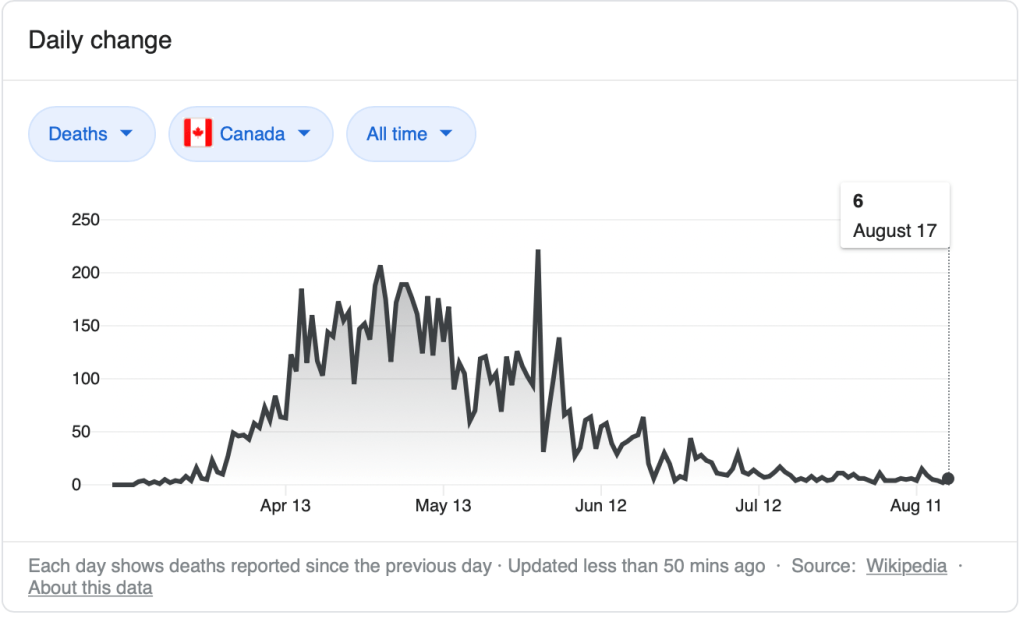
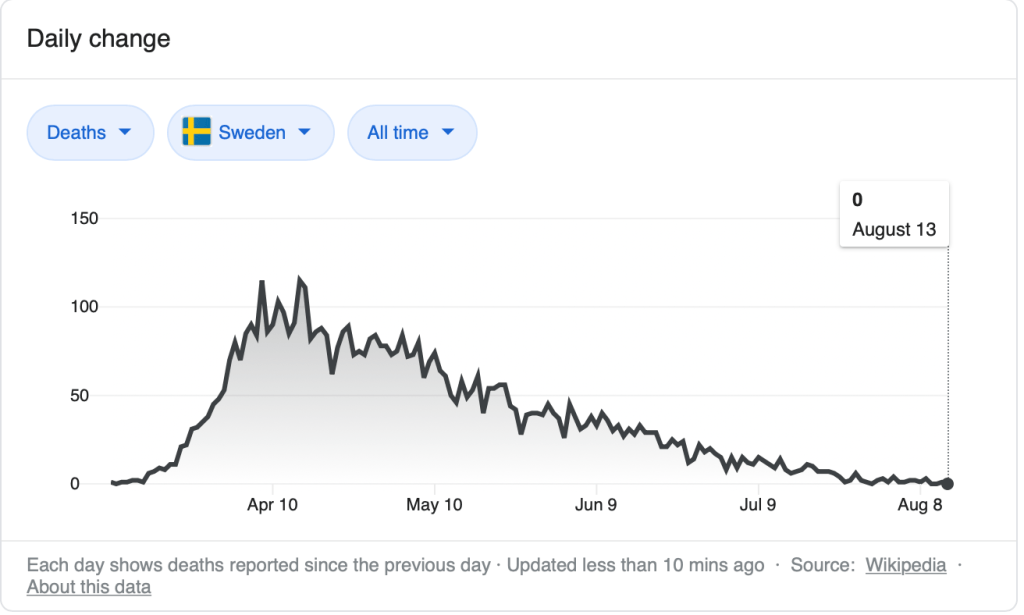
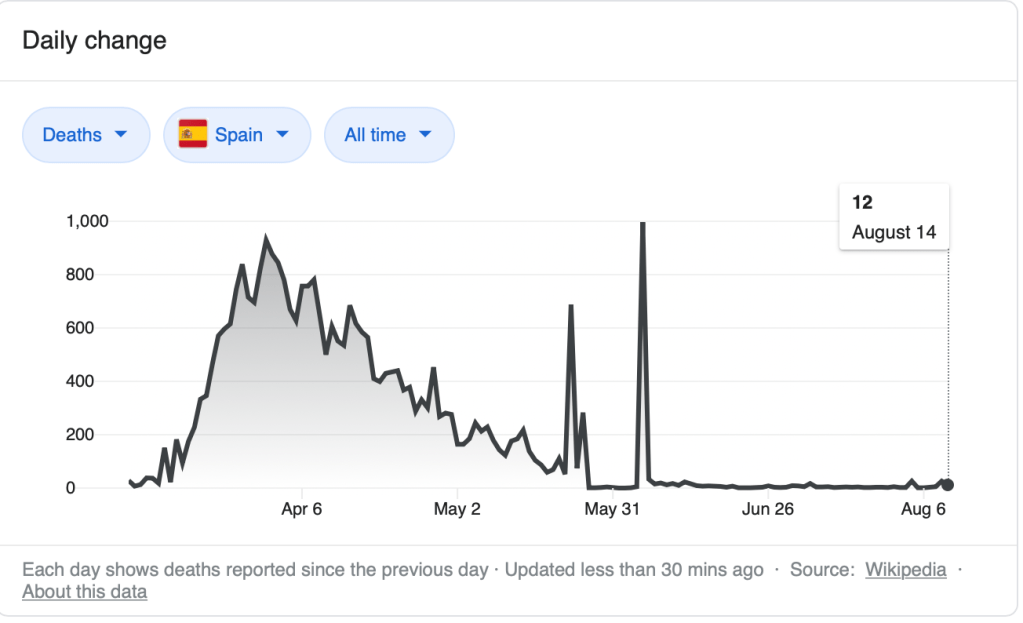
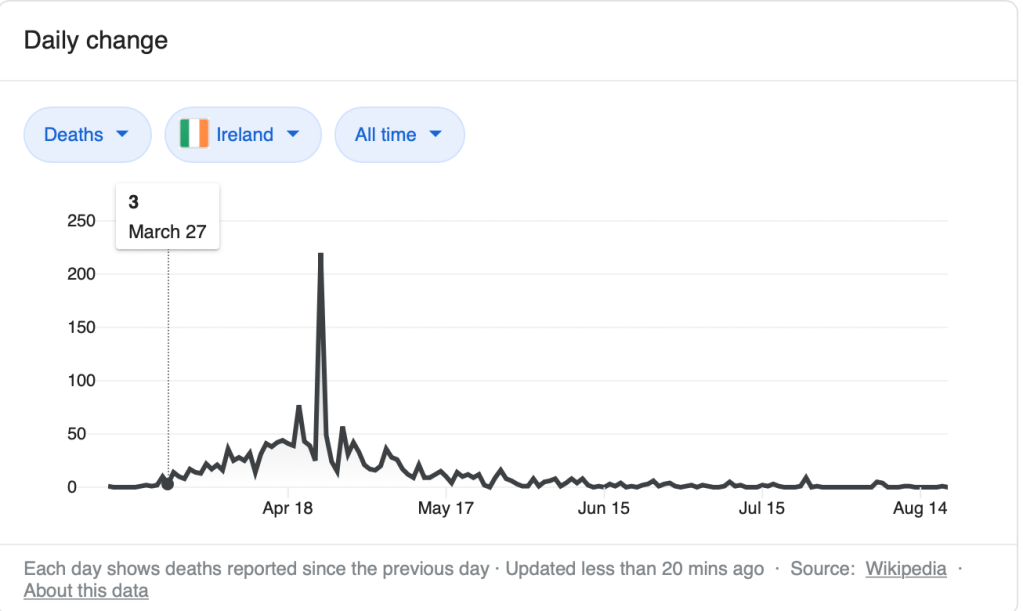
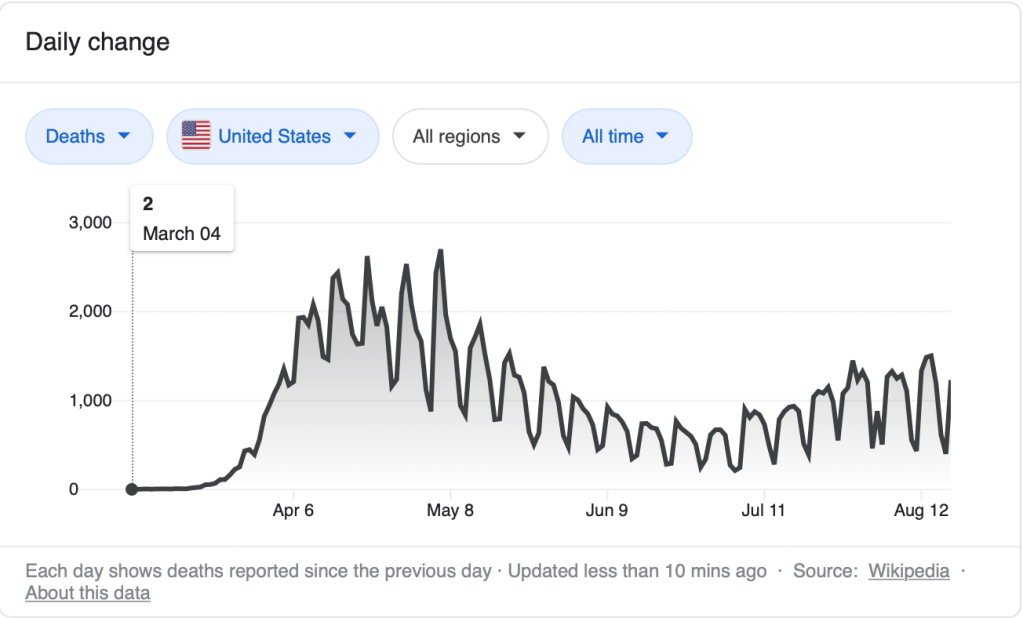




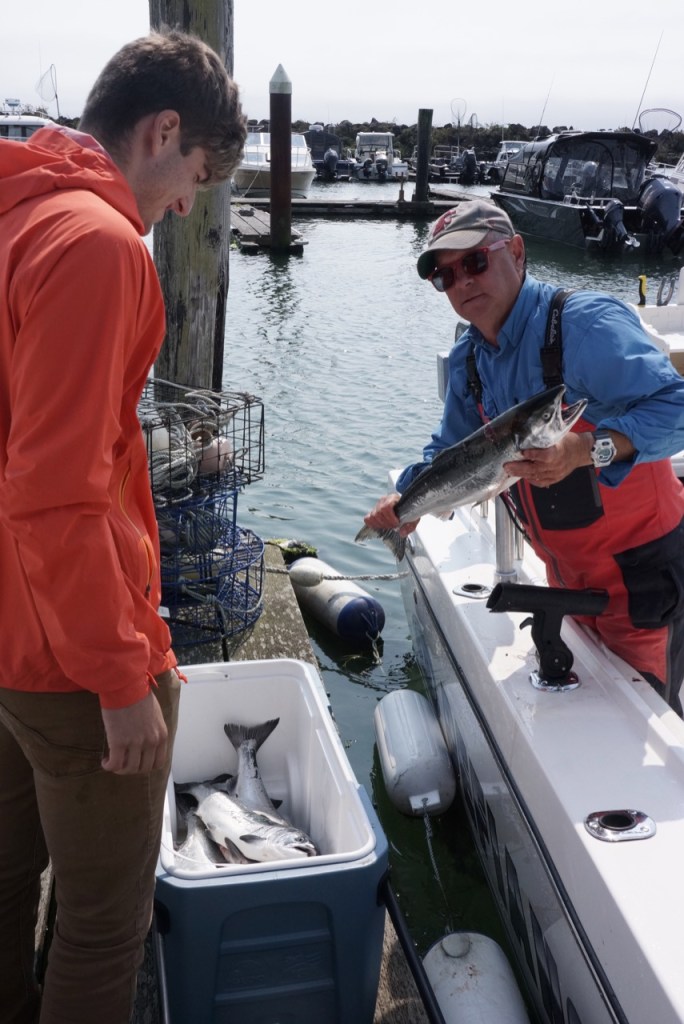
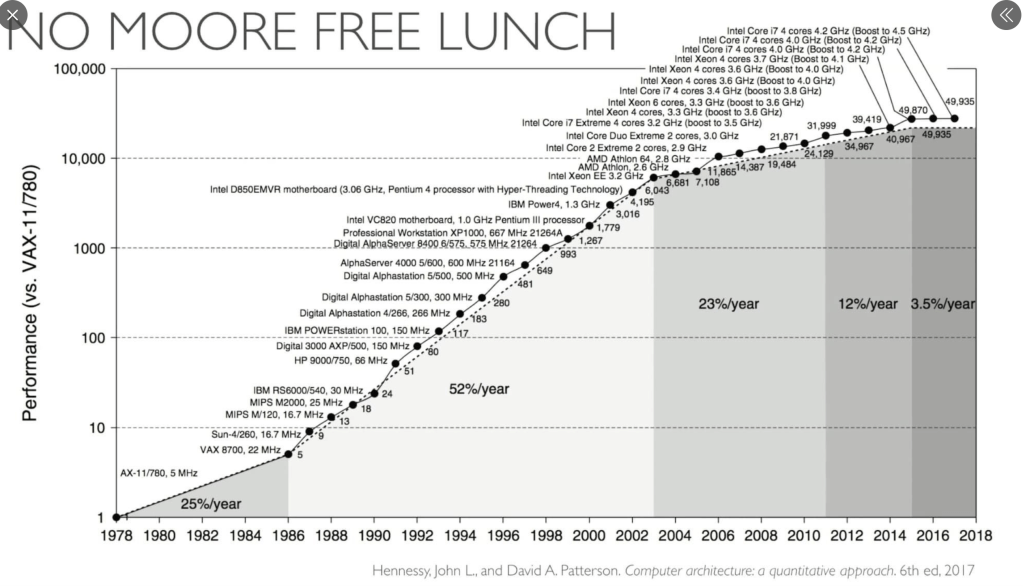
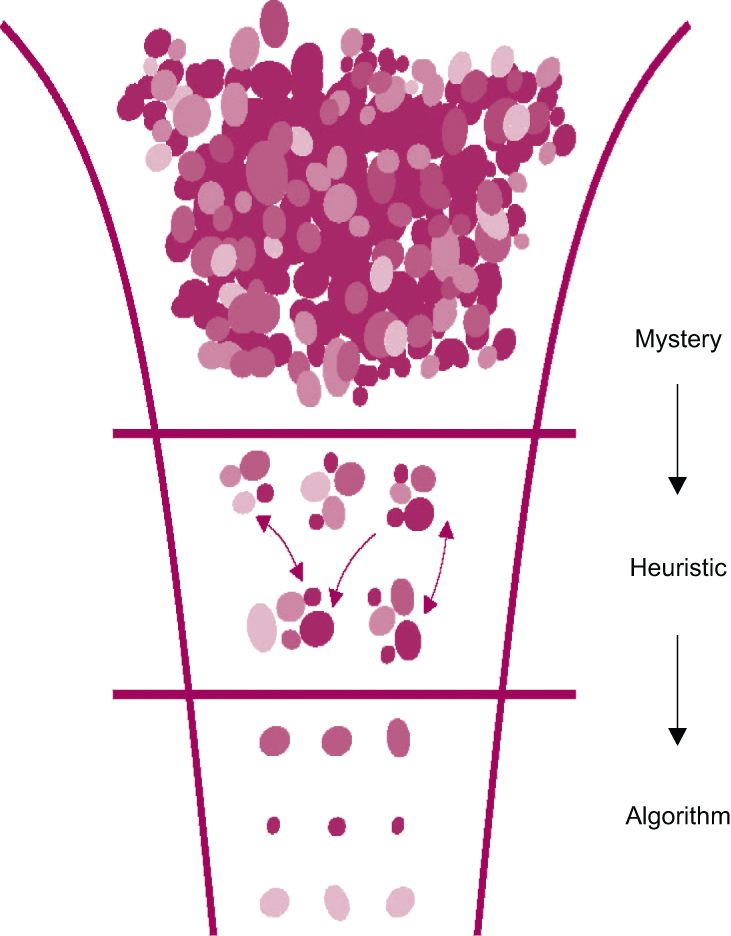
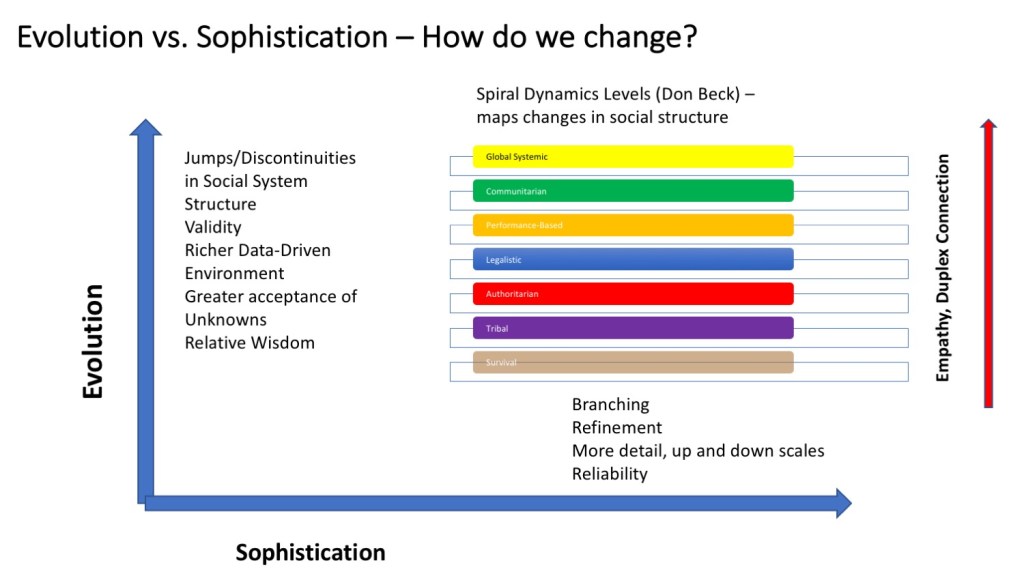
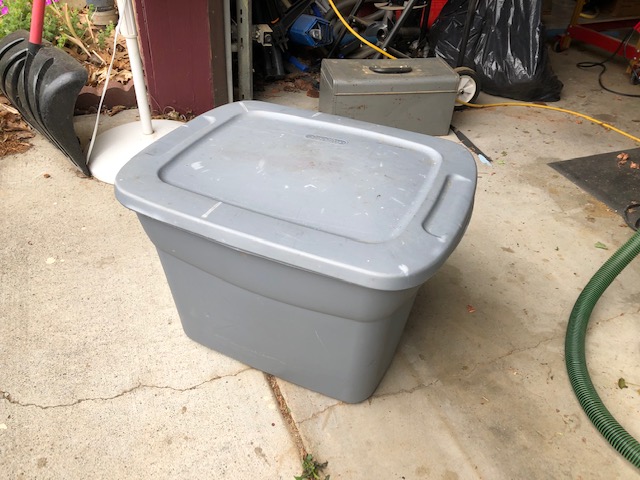
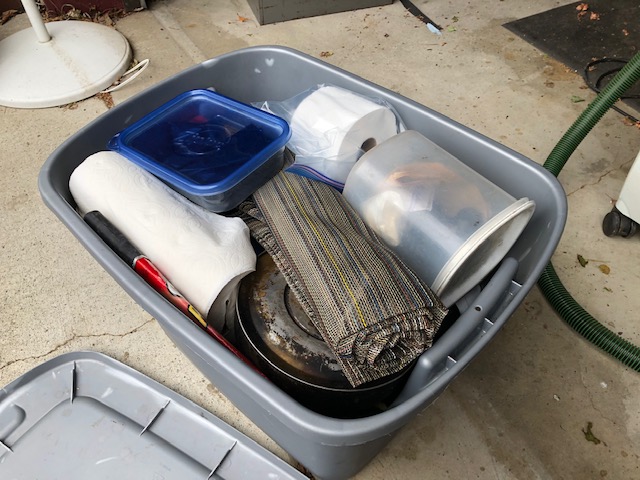
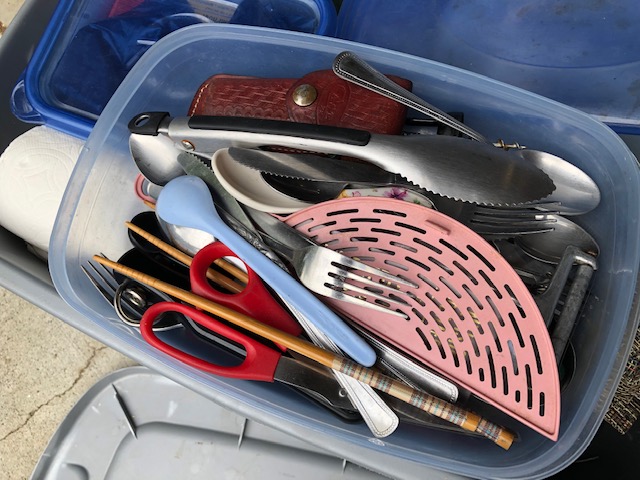

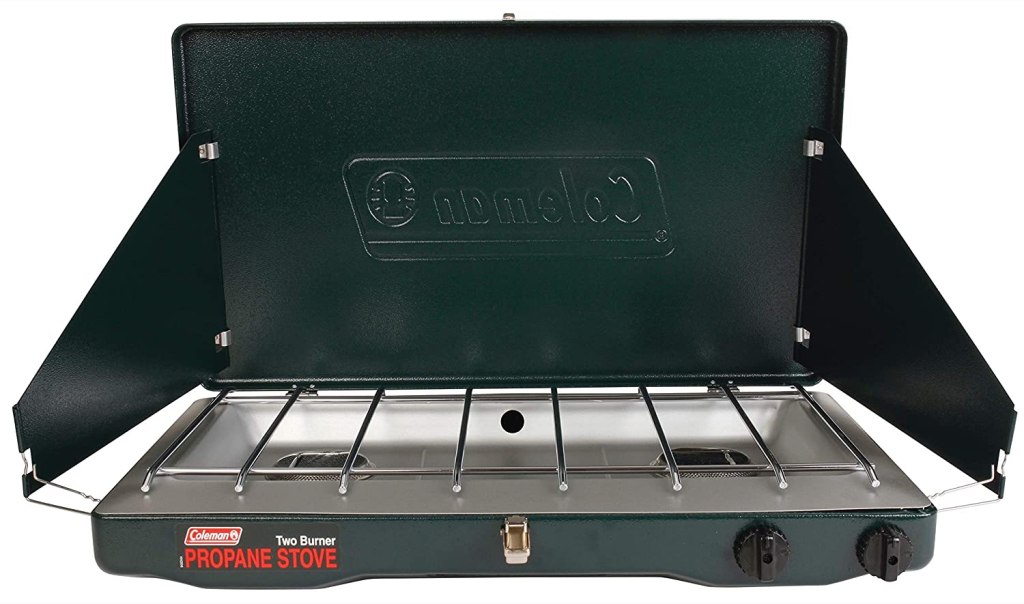



 It's About Empathy - Connection Ties Us Together