Donald Trump and Modern Authoritarian Systems

MOMA Bus

Just get on the bus — Museum of Modern Art, New York City, 2017

There’s so much to unpack on modern authoritarianism.  I’m listing a couple of links below that may help you understand some of the larger dynamics.  Since the demand has been so high for understanding them, I’ve made a podcast that integrates many of these ideas that I’ve discussed earlier.  As usual, I don’t dwell so much on particular issues, but work on understanding the larger social dynamics and information flow that underlay how these systems operate.

Go here —


And here are some links:

What To Do (or Meta-Do) About Trump

David Byrne, Nokia, and how Self-Referential Systems are Doomed for Collapse

New Year’s Reflection — Dunning-Kruger and Confirmation Bias

Quickie Post — Bill Nye, and The Perils of Responding to High Conflict Systems

Introducing The Dark Side — What Happens with a Lack of Empathy?

Mapping Rogers’ Theory of Diffusion of Innovations to Empathetic Development


Donald Trump and Alternate Facts

Times Square

Times Square, New York City, February, 2017

Well, I’ll be honest — I did the webinar, and it just really isn’t my thing.  Part of doing a webinar is breaking stuff up into fragments, which is hard, because this blog is about, if nothing else, integration of thought.

So, to lick my wounds, I did something that suits me far better — a monologue about Donald Trump’s Alternate Facts.  Click below to listen and let me know what you think.  Folks have been after me to make podcasts forever.  OK — now you have to listen to them!

What’s the takeaway?  Your own v-Meme, which is keyed to your dominant social structure, will profoundly affect how you understand and filter Donald Trump.  And that’s likely to cause conflict with someone you know.  Which is exactly what he wants.

Piece about Donald Trump and Knowledge Fragments


Empathetic Evolution — What’s So Hard, Really?

Metropolitan Papua New Guinea

Austronesian Art exhibit — Metropolitan Museum of Art, New York City, February, 2017

In advance of my first webinar tomorrow, I thought I might shed some light on what I perceive think are some of the largest perceptive hurdles in understanding my Theory of Empathetic Evolution.  Here goes!

Empathy is NOT Sympathy

This is a big one.  Sympathy is an emotional response to someone else’s suffering, where connection does not play a large role.  You can have sympathy for the drowned refugee infant, laying on the beach.  Sympathy is a route to compassion, and is an important part of the human experience.  But it is not empathy.

Empathy, as used in this blog, implies a duplex connection between at least two individuals, or as I would say, sentient agents.  This is well-established in the peer-reviewed, scientific literature, and is the bedrock of my work.  Not everyone, even in the scientific community, views empathy this way, but the vast majority of empathy researchers do.  So it’s kind of like global warming.  The consensus is that empathy is about connection, just like the consensus of scientists regard climate change as real.

The model of empathy used in my work is an augmentation of the scaffolded version put forward put forward by Frans de Waal, that maps empathy to the three primary brain activity areas, that, of course, are all linked together.  They’re all part of the brain, and no part of the brain does something that is completely isolated from all the other parts.

Empathy is NOT Mind-Reading

One of the interesting observations I’ve had explaining empathy to people is the idea that somehow empathy is mind-reading.  It’s not, though someone who is highly empathetic on all the various levels can definitely appear to be! Empathy is fundamentally statistical, or really probabilistic in how it works.  We take in signals from others, and send signals back in the context of any exchange.  These signals are language, sounds, facial expressions, hand gestures and so on, and interpretations our own minds make of various information we receive.

Understanding this, and truly internalizing it into our thinking process, is a big deal.  Our brains like to work immediately and transactionally.  Lots of famous people have documented this, like Daniel Kahneman, who won the Nobel Prize for studying this kind of thing. Our brains don’t like statistics so much, or holding the idea of a probabilistic exchange.  The reasons for that are laid out in what I write about (how your v-Meme helps you construct knowing) but as you read through the posts, you might put a self-check on your own thinking and understanding.  On this blog, one of the biggest points I make is that empathy creates information coherence between people exchanging information.  Think about the difference in information quantity between a phone conversation and a face-to-face meeting.  Which one is easier to convey nuance?  Which one is easier to make sure you both understand the same thing?  There is really little definitive work that I’ve found (though there are dominant mental models!) on the ratio to verbal and non-verbal communication.  The standard comes from the work of Albert Mehrabian, who came up with the 7%-38%-55% Rule (Words/Tone of Voice/Body Language).  But it’s obviously highly contextual.

If you think that when you tell someone something, without any feedback or verbal cues, they understand, take it from someone who has taught for 30+ years.  I find that students regularly walk with about 20% of the information you present in any given class.  Or ask the parent of a teenager!

What business does a professor of engineering have writing about empathy?

I’ve found when I talk about empathy to academic audiences, the worst actors in attempting to understand my argument and theory are sociologists.  Why that’s true is what I write about on my blog!  It’s not 100%, but these individuals can’t get past what I am, to consider what I write. They are classic authority-based thinkers (entrenched deep in the Authoritarian v-Meme), and to them, a Ph.D. in sociology is the only gateway to being able to discuss many of the ideas presented in this blog.

Titles have purposes, and we cover that extensively on this blog.  You don’t wander down the street asking strangers for diagnostic help if your liver hurts.  You go to a doctor.  That said, if you need some title validation, part of the reason we get a Ph.D. in general is that it gives the well-schooled the set of skills to investigate new areas of research.  No one’s Ph.D. can completely educate them in their own discipline, in this day and age.  There is simply too much knowledge out there.  My Ph.D. in Mechanical Engineering from Duke, and the tutelage from my advisor, still profoundly helps me decipher all sorts of information, both engineering-related and not.  I owe my schooling a great debt.  But if your advisor does a good job, they school you in general inquiry as well.

If you decide to read my blog, and you’re getting stuck on the idea of me as a mechanical engineer, here are a couple of thoughts to help you get over your reticence.

  1. My background is in a form of mathematics known as complex system theory, as well as design theory. The first I trained formally during my graduate study.  What the math gives is a variety of paradigms — ways of thinking about patterns that help match to physical phenomena. The second is lots of practice watching people (my students and sponsors) design stuff.  This gives me lots of experiential patterns that I then can map to the empathy literature, which I read extensively.
  2. One of the things about empathy is that it’s largely a developed ability.  And if you ask me personally, I think the best way to develop it is to meet people who are profoundly different from you, and figure out how they think.  I’ve traveled to about 37 different countries, and speak a variety of languages poorly 🙂 .  I’ve also had a pretty wild life, both good and bad, that’s given me a lot to reflect on.  When scaffolded with the empathy literature and the stuff up above, it’s proven to be very useful in concepts, experiences, and enough self-doubt to keep down the confirmation bias!  Like Mark Twain said, “never let school get in the way of getting an education.”

Empathy is NOT always an explicit moment/thought/action in time – it’s an encompassing dynamic

One of the interesting things I’ve observed about the empathy discussion is that most people having it want to isolate empathy, which is fundamentally about connection, onto its own little piece of intellectual real estate, that doesn’t affect the perceived model of constant, fundamental separation from other human beings.

That kind of thinking has its purpose.  By isolating empathy, It can lead to some useful insights and techniques for practicing empathy. My empathy buddy Edwin Rutsch and others work on refining such techniques as Empathy Circles.  These are great things, especially when you might be called into a company that is having problems from a lack of empathy, to daylight problems that are getting in the way of your company/society making progress.

At the same time, when you draw a circle around empathy in that manner, there is a very real risk that you miss the boat on what empathy is all about.  Empathy is a constant dynamic that pervades our entire existence. When you walk into a room, and someone yawns, you don’t suddenly think “Mirroring Behavior — time to yawn!”  It’s automatic.  You just do it. And here’s a big secret.  If you practice, empathy at the higher levels (or the lack of it!) becomes ingratiated into your fundamental Way of Being and becomes a core part of your cognitive and limbic processing.

Here’s an example. I was asked on this NPR show, To the Best of Our Knowledge, about why a professor of design would be interested in empathy.  I gave a standard answer, expounding on the differences in design (which I also write about) — algorithmic and heuristic.  The first, involving improving the performance of a rocket engine by about 5%, is more non-empathetic.  The expert knows, and you listen to them.  The second, involving coming up with a new concept for a cell phone, like the iPhone, is decidedly more explicitly empathetic.  You go out, talk to customers, empathize with them and their actual uses, and then come back and create a whole new paradigm of how people will use phones.  This likely appeals to you, my reader, and makes sense.

But what is missed in this discussion is that even with engineers working on designing a 5% improvement in rocket engine performance, the ability for empathetic exchange profoundly enhances the progress of development of that rocket engine, because it increases the information coherence in all information exchanges required.  

This is a huge point, and one easily overlooked.  Empathy is embedded, in a self-similar fashion — sometimes automatic, sometimes not automatic — in all our transactions with others.  As well as ourselves.  It’s nice when we can point to it in the context of product design.  But we swim in a sea of empathy, whether we realize it or not.  It’s time to move empathy off of Intellectual Flatland.

What are you really doing on this blog?

I don’t want to downplay my role on this blog as far as original ideas.  There are a few.  But mostly what I’m doing here is connecting the dots — drawing supportable, reasoned linkages between lots of different fields of study.  How I do this is I operate under a dominant assumption — that nature does things with simple dynamics, that can generate all sorts of beautiful and complex patterns.  I think some of this ability/line of thinking comes from my study of fractals — complex geometric patterns based on typically a very simple underlying dynamic.

The other thing that I’m doing is working on understanding how people understand, and boiling that down to first principles, which from thermodynamics has to be time, space and energetics.  It’s likely an odd way for most people to think about what we consider a complex emotional and cognitive phenomenon.  But Albert Einstein said it best (paraphrasing) — of all our thought processes, it’s all got to come down to thermo.

And who am I to speak against the genius of the age?

Hope this helps!


Quickie Post — More Lower v-Meme Additive Aircraft Manufacture in China

Conor Prosciutto

Di Palo’s Deli, Manhattan, February 2017

An interesting piece came flying across my news feed this morning, about how Boeing is now going to ship a good hunk of Chinese delivery aircraft to a new completion center in Zhejiang Province, China.  I suspect that you’ll have to sign up in order to read this on the Aviation Week website, but the short version is that the folks in Zhejiang will be the ones putting the finishing touches on 737s and 787s for China’s rapidly growing internal market segment — in particular, Loong Airlines.

Putting the finishing touches on aircraft isn’t the same as building them from scratch.  And Airbus has been doing this for a while in its fulfillment center for the Chinese market.

Regardless, about Boeing, from the article:

“Boeing is seen as having an advantage over Airbus in securing a sale of widebody aircraft to Loong. It agreed to set up a 737 completion facility in the eastern province of Zhejiang in 2016. The plant carries out work such as cabin fitting and painting before delivering the aircraft to Chinese customers. Loong is based in Hangzhou, the capital of Zhejiang province, and is backed by the provincial government. Its aircraft orders, therefore, can be used in support of provincial economic policies. Those policies extend to building up an aeronautics industrial zone around the Boeing facility. The government wants major industry suppliers to set up there. Loong, meanwhile, hopes to establish a large aircraft maintenance facility.”

Zhejiang is an interesting province in that it deliberately fosters entrepreneurship, and has a rapidly rising wage scale.  But even with 8% growth, that wage scale is somewhere between $3K in the countryside, to $7K in urban centers.  Getting aircraft jobs matters to Zhejiang.  And that’s happening.  Aircraft orders are these myriad complex deals that negotiate everything into a package, from overflight rights to actual construction and jobs.  But the upshot is simple — geographically unbound, lower v-Meme jobs are going to flow to lower v-Meme countries/provinces.  Because those jobs can’t create the productivity to justify higher salaries.

It’s an interesting way to look at job migration.  Actual information coherence content.  Which then leads to the level of empathetic development.  Gotta love it!

Back to Basics — Mirror Neurons

Conor Moma Mural

Conor at the Museum of Modern Art, New York City, February 2017

One of the most cognitively challenging concepts in understanding empathy is understanding that empathy is really about connection, and connection between two humans (let’s let the sentient being beast lie for now) isn’t some magic hocus-pocus deal. It’s real, and deeply embedded across our entire nervous system.  Humans are biologically wired together through the distributed network of neural pathways in their own bodies — consult Stephen Porges’ work on his Polyvagal Theory for more details.  The short version is we’ve got a bunch of nervous pathways across our body, mostly in our stomach and intestines, that wire up to our face so that other humans can look at the various expressions and take a mental stat-check on any other human with amazing accuracy.  Handy, of course, when hunting mammoths and you want to check on the health of your fellow spear-wielder.

But it’s more complex than that.  Lots of research on mirror neurons in the last twenty years have shed light on just how instantaneous empathy, especially mirroring behavior, at the bottom of our empathy pyramid, is.  The answer?  Pretty instantaneous.

Here’s the interesting thing.  I’ve spent a lot of time pondering why there is this resistance to the idea of humans as connected beings.  I get the individuality of things like American culture, as well as the lower v-Meme predilection toward creating fragmented social structures, which basically imply that real connections between people can’t exist.  The ‘Notorious in Empathy Circles’ Paul Bloom, and his recent book, Against Empathy, are in this camp.  But reading through some of the literature before writing this post, there’s another mental model out there that’s pretty powerful.  And that’s mind reading.

Mind reading is a subset of performance art, otherwise known as Mentalism, which has been a performance art for just about forever.  I don’t want to get sidetracked here, but a good mentalist likely uses a fair amount of Conscious Empathy in their performance, reading cues that help the audience believe that they can actually read minds.  There are some honest ones out there — the one I remember most from my childhood was The Amazing Kreskin.  You can check out his Wikipedia post for more details.

But back to Mirror Neurons.  Mirror neurons are, interestingly enough, scattered across the brain, and research has shown that there’s a 1:1 correspondence between parts of the brain embedded with mirror neurons of the ‘sender’ and ‘receiver’ lighting up at the same time. How can we understand this as connection? Here’s the direct analogy — a fiber optic send/receive unit, otherwise known as a transceiver.  These are the things that run the internet, folks — we just happen to have a more sophisticated version in our brains that multiplexes tons of different frequencies through our own head and sends far more information per second the possible with a single, blinking laser.

And they give a little more transparent understanding how humans, with complex light sensors, otherwise known as ‘eyes’ hooked to our visual cortex, would connect and pattern-match, as well as then duplex transmit complex information back to another human, all while being augmented by our aural channel, centered around language!

The paper I referenced above (and here so you don’t have to click back up) spends a lot of time talking about the use of mirror neurons in learning language.  Fair enough. But I propose (and I’m sure someone else has beat me to it!) that mirror neurons, and the imitation they allow between humans, also work on much higher knowledge structures than just pure speech formation.  I think that the research will show that because of their obvious geographic spread inside the brain, mirror neurons are wrapped up in tons of broadcasted functioning throughout our systems.  Karate teachers teach by demonstrating.  And even university professors use mirroring during lectures. Basically every engineering professor I know does problems on the board, dumping complex algorithmic thought on top of their willing subjects.  Students sit in seats, lapping it up, their brains believing that they’re getting all of it.  But the minute the students walk out the door, they core-dump almost all of it.  They have to go home and do that hippocampus-integrative processing that places it in the right side of the brain before they can use it.

If our theory of how people learn (explicit learning on the left -> hippocampus -> holistic integration on the right) then most, or all of the primary mirroring sites in the brain would be on the left.  And, as amazing as it may seem — they are!  I’d love to have a neuroscientist confirm this, but I dumped the brain part names into Wikipedia and sure enough — they all were on the left!

What this means is that we can have people imitate all sorts of complex behavior, because of the spread of mirror neurons across the brain, and they might be able to reproduce it if they do a little integrative practice on their own.  Which maps to lots of learning environments that we’re familiar with.  AND explains why tests can be such wonderful, integrative experiences.  You practice until you get up to the edge of test-time, and then you have that Survival v-Meme-level neuroplastic moment where you integrate your understanding and have an epiphany!  Or, well, you fail and go out and get drunk.

As I’ve said regarding just about everything I write, there’s nothing new under the sun.  Confucius said:

To gain enlightenment through meditation is noblest

Through imitation is easiest

Through experience is bitterest

That Confucius — knowing about mirror neurons far before modern brain science!  Who’d a thunk?

Note to doubters — there’s tons of papers out there on mirror neurons.  Go get you some Google Scholar!  And any neuroscientist that wants to help — please help!

Footnote:  There really is a lot of fun out there with mirror neurons.  It’s not some made-up thing.  Here’s an interesting paper about monkeys and some kind of oddly expressed doubts — that mirror neurons aren’t what makes us ‘human’.  I really don’t have any idea what that means, since I’ve come pretty firmly down on the side on ‘sentience is something that’s a function of brain function, and how it manifests is a direct result of the structure of the processor.’  Finally, this post in Scientific American is awesome because it has a.) some interesting information, and b.) it really shows the absolutistic nature of the scientific mind.  Why does it always have to be ‘mirror neurons do it all’ or ‘mirror neurons don’t matter’ ?  Oh yeah — its that social structure v-Meme thing I’m always droning on about… 😉

Webinar on Sunday, March 19, 11:00 AM PDT!

A somewhat short interview…

On the urging of my wife, I’ve decided to do a webinar around the primary topics of my book I’m writing.  As per the way these things work, you have to sign up.  Feel free to spread the word.  I think the biggest points of disconnection — the parts of this blog that folks have the hardest time wrapping their heads around is the big-picture neural structure <=> social structure <=> design structure <=> empathetic development piece.

Who should sign up?  Folks wanting a deeper understanding of my work, and are willing to think of empathy as a real connection (it is, and is increasing heavily supported by the scientific literature.)  Who shouldn’t?  The Infinite Fragmentation Folks.

Here’s the Brass Ring — once you understand the concepts I’ll present on, you can move forward with balancing Design Groups inside your organization appropriately, far more assured of particular incremental or breakthrough outcomes.  And hopefully, you’ll also understand how the choices you’ve made as a manager or a designer reflect themselves in both the customer relationship and the final design structure outcome.  Here’s the link:

Sign up for Zoom Webinar

And here’s the invite my dear wife is sending out:

Hi there,

You are invited to a Zoom webinar.
When: Mar 19, 2017 11:00 AM Pacific Time (US and Canada)
Topic: Design Thinking & the Social Network – How we are organized determines what we create

The dominant paradigm for design and creativity in society today remains the idea of a spark of genius arising mysteriously in the head of the individuals. Yet society is full of designs, created not by individuals, but by groups of people and large corporations that serve practically every need.  In this webinar, Dr. Pezeshki explains how these various designs, and the creativity inside them, come to be, and how we can structure our organizations to recreate success in design dependent on the demands of the product space.

Who can benefit:  Designers, engineers and engineering managers, people managing larger creative projects, anyone interested in collective intelligence.
Please register at:
https://zoom.us/webinar/register/2e43d13f8ca0f5847510d14dfea9e911

After registering, you will receive a confirmation email containing information about joining the webinar.

One more thing — I’d be happy to do one of these at another time to reach my Asia-Pacific friends.  I need to know, however, if there is interest.  Not surprisingly, most of my readers are in the U.S. and Canada, but once you remove the U.S. from my sample, it’s pretty fascinating at how my blog hits map to English language proficiency.  So let me know.

Guiding Principle Thinking vs. Systems Thinking — an Example — African-American, Urban Mothers, and the Crisis in Infant Mortality

father-manifest

Passenger manifest from the SS Ile de France, for my father when he immigrated on June 9, 1956

A friend of mine who works in improving prenatal care services in New York City posted this article about African-American infant mortality last week.  Titled What’s Killing America’s Black Infantsand published in The Nation, it’s one of the best examples of what I’d call Guiding Principle thinking I’ve read in a long time.

What is Guiding Principle Thinking?  It’s not just an attempt by me to ‘brain squirrel out’ on my readers by inventing a new term.  I’ve been pondering for quite a while how to explain the difference between the more commonly used term Systems Thinking and encourage my readers to move up a couple of notches to really consider the larger picture .  Peter Senge still gives the best start to Systems Thinking in his book, The Fifth Discipline.  Yet we’ve talked about the commonly inferred structure of that kind of thinking, which says use data and algorithms to boot your brain out of guessing intuitive answers based loosely on your own arbitrary authority.  Guiding Principle Thinking is structured around using all those lower data structures, like collected demographic data.  But it adds on to the if-then algorithmic rule sets and categories, by coupling this with independent agency-driven heuristics and larger narratives that intentionally look at longer timelines and more insightful stories.  The piece above does this beautifully.

The subtitle on the piece, however, does not.  If you don’t read past that (the subhead is “Racism is fueling a national health crisis”) you’re not going to get the beauty of this piece.  In fact, that subhead, which initially suggests non-differentiated racism, is EXACTLY the kind of simplistic mental model that creates division and hurts understanding of the larger, connected problem, which the whole piece describes so eloquently.  So — it’s Sunday.  Read the whole thing.

What points do the authors make about the plight of black, urban, and both poor and middle-class women that causes a cascade of negative consequences that end up in premature infant death or miscarriage that DO NOT affect, for example, foreign born, black, middle class women?  The answer is the combined stressors in their lives elevate the level of cortisol, a stress hormone, in these women’s bodies, which then manifests itself in premature infant death.  So even though Guiding Principle Thinking may appear to be a label for a complex of conditions that result in a so-called “wicked problem” — a problem with many causes that intertwine together in larger society — it can actually be simplified to a particular Guiding Principle — long-term, historical, multi-factor racism creates a measurable health condition (increased stress) on black women that causes babies to die. And it leads to a series of achievable solution paths — reduce stress on pregnant African-American women through construction of a individually tailored, empathetic support network.

Classic systems thinking alone is only a part of understanding the problem.  One can implement a series of algorithmic processes (like giving all women appropriate prenatal vitamins and folic acid — “If you’re pregnant, we’re going to supplement your diet”)  but it’s not going to fix this problem. But Guiding Principle thinking can give us a big picture that we can use to attack this problem, and make a difference on the spatial and temporal scale so that any person who wants can choose to work on this problem.

And what is recommended in the article?  From the article itself:

At one of those places, Ebeneezer Church of God in Christ, I met Julia Means, a nurse with a striking track record with Milwaukee’s infants. By her own count, Means has worked with 360 families in the last 12 years, through a program called Blanket of Love. Every single baby whose parents came to her group meetings lived to its first birthday, she told me. Her method is to “wrap the pregnant woman up in love.” Sometimes that’s meant finding a home for them, and furniture to fill it; or role-playing, to help them feel confident speaking to doctors; or educating them on safe sleeping conditions; or, in a few cases, helping women escape abusive partners in the middle of the night. Another way to put it is that she does what she can to reduce the stress in these women’s lives.

From a v-Meme perspective, this is heavily Performance/Goal-based, the goal being to insure both mother and child make it through the first year.  It’s Communitarian in nature in that involves identifying the larger support system the woman as a unique individual needs inside her larger social space, where otherwise she may get lost. It involves more than just algorithms applied to a class — not just ‘every pregnant woman gets this.’  It’s more like ‘every individual woman gets what they need to thrive.’ So even though the problem is large and societal (racism + deep cultural roots = increased infant mortality) Guiding Principle Thinking helps us shape a larger strategy aimed at reducing one biological indicator, cortisol, inside birth mothers’ bodies, so they can thrive.  And anyone can be empowered to help.

Of course, it all is constructed on empathy at multiple levels.  Mirroring behavior, of happy mothers with their babies sharing baby group helps the expectant mother look forward to the transition of birth.  Emotional empathy and support form accessible connections for love toward the mother.  And the rational place-takers can also participate, by looking outward inside the community for opportunities to help solve the expectant or new mother’s challenges she will face during that first year. Conscious empathy can be provided by any people in the system, but training social workers to understand deeply also helps.  And finally, if we have just a little global empathy, making the new mother feel that she is bringing a gift into the world, instead of applying negative racial stereotypes, that has to drop the stress level.

For those of us who want to believe that we operate in those higher levels, I’d encourage even larger thinking.  I can remember a visit back to my family in northern Indiana, a site of industrial collapse that now none can deny, reading an article in the local paper that said 90% of African-American women bring babies into the world alone. The focus was very racial.  But if you read a little further down, it said that this was in comparison to 31% of all babies of any racial demographic being born without a father.  Clearly, there were, and are larger structural issues that are not race-based.

And why should you care?  While I care deeply about the mothers’ trauma and the fallout to the community from having a mother who has lost an infant, it cannot go unrecognized that the children raised in such traumatic circumstances will also be traumatized, with the incumbent cognitive disadvantage of that trauma. Guiding Principle Thinking says that a society that regularly produces traumatized citizens will have a much harder time empathetically evolving than one with healthy individuals.  And this effect will be seen for generations, through epigenetics. By working to adaptively fix the problems of individuals subject to a larger societal force, we are actually helping all of us, and all our children as well.  For real.  Because, like it or not, we are all connected.


HOW Facts Change Minds

primary-hall

Ellis Island, Main Hall — where my father walked back in June, 1956, into this country for the first time

I don’t have much time to write this morning.  But two coincident news articles — one from the New Yorker, and another from my friend and environmental author, Ted Williams, came flying across my Internet news feed.  One is titled Why Facts Don’t Change Our Mindsby noted science author and New Yorker contributor Elizabeth Kolbert.  The second is titled Recovery: Bats with your Tequila on the Nature website, by Ted.

There’s a lot to unpack with the first piece, and I’ll write it up later.  But the headline basically tells the story the author wants to pitch.  Facts don’t change minds, because reason is rare, and if you believe the researchers in the piece, it comes out of some kind of socialization force in humans  back when we were running around the African savannah a million or so years ago.  Huh.  Wonder what THAT could be?

The second, about the recovery of the endangered lesser long-nosed bat, is a more hopeful story about how this particular bat was on the way out because of all sorts of stupid reasons, including habitat loss, loss of food source because agave producers (agave is the plant that produces the fruit used in tequila production) wouldn’t allow any blooming for the bats to feed on, as well as the magical thinking-chupacabra scare.  What happened is an intrepid scientist, Dr. Rodrigo Medellín and his students at the National Autonomous University of Mexico, went out to the tequila producers and told them facts.  And they didn’t listen.  He told them that bats pollinated the agave plants, and that they created natural diversity by doing so.  Turns out that agave can also spread by roots, and allowing a bloom decreases the size of the pina — the fruit of the agave plant.  So the producers didn’t listen.  So far, score one for the thesis of Kolbert in the first piece.

So then they told them that the lack of diversity — root spread alone does not create diversity, even if it creates more agave plants — was setting them up for a catastrophe.  They had sampled the genetics of the agave plants and found that classical genetic narrowing had limited the agave down to only two genotypes.  When agave spreads through the roots, the genes come down to direct descendants of the father plants.  Sounds pretty Authoritarian v-Memeish!

But when you throw in bats, well, they mix things up.  Bats are independent operators, and as such, fly around, pollinating willy-nilly, spreading ideas, uh, I mean pollen around in all sorts of unpredictable ways.  Diversity is increased in the agave population, and as such, the whole population benefits through increased resilience.

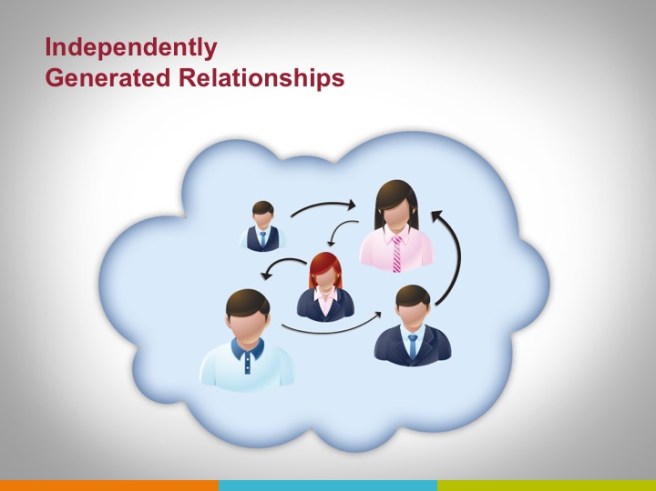
Can we map our ‘externally defined relationships vs. independently generated relationships’ meta- meme here?

But back to the growers. Medellín had still explained all this to them — told them facts, but they still didn’t listen.  Huh.  Score two for Kolbert.

What happened next? From the article:

“More than 20 years ago I went to the growers and told them they owed this wonderful tequila to the bats because of pollination and the least they could do was give a little back by letting a few agaves flower,” Medellín continued. “They sent me packing, not even a thank you. Then ten years ago I went back and gave them this paper that showed 160 million agaves are clones of only two plants. ‘You are playing with fire,’ I said. ‘Genetic diversity is essentially zero. All it takes is for one disease to hit one plant and all are sick.’

“‘Very interesting Dr. Medellín. Very nice paper. But don’t call us; we’ll call you.’ So six years ago the disease shows up and hits the agave fields hard. I swear that I did not put it in. Then they came to me, very interested, and said: ‘What was that thing about the bats and disease?’ I made a plan: ‘All you need to do is allow just five percent of your agaves to flower, and in one hectare you will be feeding 90 bats per night.’”

I could go on.  But this is such a great example of how humans learn, which I cover in this piece on The Neurobiology of Education and Critical Thinking Talking about ‘facts’, at some level, is kind of meaningless.  What we need to explore is how our brains work, and then set up the situation to optimize that emergent behavior.  And for those that haven’t read that piece, here’s the short version.

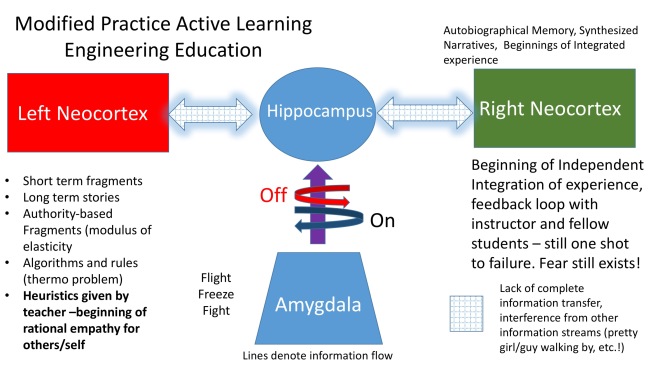
Explicit information gets dumped into the LEFT side of the brain.  But if we want people to ACT on that explicit information (change their mind!) then it has to be processed through the hippocampus (limbic system) to create a holistic/autobiographical narrative on the RIGHT side of the brain.

Modified Practice Active Learning

Here’s the slide from that post that discusses this in more detail.

With the growers, Medellín told them what most of you would consider FACTS.  But it wasn’t until they had their own holistic, autobiographical experience that they would create a strategy that ended up saving both bats and their agave plants.

What can we learn here?  Facts DO matter.  If we don’t have good stuff on the left side, we’re never going to have correct holistic representations on the right side.  But without experience, processed through the hippocampus, we’re likely not to see a change in behavior.  You can bet that the growers had a pretty emotional/limbic experience when their agave plants started dying.

What’s the big takeaway?  When attempting to change people’s minds, there are multiple places on the slide above to stake your claim.  You can be someone generating the information on the left side, banking on latency for the appropriate experience to trigger integration to come along.  You plant that information in the explicit memory.  And then wait.

You can be someone either turning up, or turning down the fear/emotions running through the amygdala that throttle the hippocampus.  You can help in creation and interpretation of experience on the right side.  It’s your decision.  But understand that the whole process has to happen before people change.

And that’s what a functional representation of education and critical thinking gives you!

Why You’ve Just Gotta Dig — or how just considering topical information is the death of meaning

moma-conor-boredom

Conor in the NY Museum of Modern Art, February 2017

One of the more curious things about understanding empathy is the desire for many researchers, or just general commentators, to apply the ’empathy’ label to actions, or even desires and thoughts, without context.

I’ll start out by saying that it can be done — but it’s perilous, and difficult to do correctly.  The reason is that empathy is even at its most basic a dynamic between two people.  Take mirroring behavior — it takes two to mirror.  One to yawn, and the other to, well, yawn.

Event the most basic of acts that might be recommended in the job arena need some level of consideration.  Take a straightforward behavior like learning names.  For me, as a long-time teacher, and a teacher mentor, I recommend to all my young faculty members to learn as many of the students’ names as they can in the classroom.  The reasons break out along pretty straightforward lines, as you might assume.

  • Performance-based thinking/v-Meme — knowing each student’s name allows me to focus in on helping each student improve, through establishing a direct mentor-student link.
  • Communitarian-based thinking/v-Meme — knowing each student’s name, and using it in the context of classroom discussions.
  • Global Systemic thinking/v-Meme — knowing all the students’ names allows for optimal group formation, along with figuring out how the slackers are and distributing them.

And so on.  Right?  OK, now if I had to just guess the v-Meme that most readers of this blog would assign to this behavior, it would likely be ‘Communitarian’.  And I’d also likely assume that most of you would consider it a good example of empathetic behavior.  How can you establish a connection with someone if you don’t know who they are?

But what if you were a relational disruptor?  What about these interpretations?

  • Authoritarian — knowing each students’ name gives you an opportunity to be invasive with personal boundaries — if a given student screws up, or attempts to collaborate with another student, you can call them out.  They can run, but they can’t hide.
  • Legalistic/Absolutistic — knowing each student’s name allows you to map each one into a seat for predetermined performance.  We want the A students up front, the B students in the middle, and the C students toward the back, since we already know who’s going to do well in the class anyway.

Context and dynamic matter.  I’d be willing to bet that professors that know students’ names are more empathetic.  But it would be an interesting quick survey to understand the operative reasons.


Comparing Engineers’ and Artists’ Brains — or Brains is Brains — sort of!

umbrellacar with students.jpg

Sena Clara Creston, WSU-Tri-cities Art Faculty, sitting in her creation, designed and constructed by my students, 2015 — the Umbrella Ship

This week, I’m off to New York City to share a presentation with a collaborator at the College Art Association, on combining engineering and art.  Sena Clara Creston, faculty in the School of Fine Arts, and I teamed up with my other fellow traveler, Jake Leachman, to pair students and an artist (that would be Sena!) in order to gain some insight into collaboration and thinking styles.  My thesis was (and mostly remains) brains is brains is brains.  But there’s no question that backgrounds definitely matter, and understanding these were one of the key elements of our little research project.

I’ve always maintained that creativity isn’t inherent to any given discipline.  Individual creativity is that egocentric Authoritarian v-Meme triggering residing in one person’s brain, and is poorly understood.  It’s some function of limbic threshold response that brings the thoughts in one’s head to a point, where something new gets created.  And when it comes to systemic creativity, I’ve already written a bunch on that.  Systemic creativity is directly related to the meta-nonlinear dynamics created by the back-and-forth, empathetic exchange between the participants. When you set up a group of people and give them a task to get done (a goal), some degree of personal agency, and some Legalistic v-Meme Protocols and some multi-solution heuristics (like negotiating skills,) cool stuff will appear.  You won’t necessarily know what it is a priori, but it will happen.

The presentation in New York City is mostly Sena’s baby, but I get a couple of slides, and it does raise some big questions.  Brains may be brains may be brains, but there’s no question that people, and disciplines do think differently.  A better way to think about it might be to chase down the ‘hardware/firmware/software’ paradigm and see if we can’t get some understanding there.

With regards to hardware and the brain, there seems to be some general consensus on things like IQ tests and other pattern recognition testing on the brain.  Fair enough.  That’s a process-based thing, though, and doesn’t map well to the idea that topical content is hardwired into your brain.

However, there are a few examples of topical behavior that jump out at people! (Pun intended.)  We know that humans are naturally afraid of snakes, and some people have this thing about spiders.  This would seem to be both topical, and hardware-based, though even that’s not clear.  If we discount the people having deliberate Survival v-Meme trauma with our spidery or snake-y cousins, then I think we can settle on this as heritable topical knowledge.  There’s got to be other stuff — like yellows and reds being fruity flavored.  At the same time, I think it’s fair to say that most of the human brain is not topically hardware-oriented. Getting to the problem at hand, you might be able to do a survey and sort out engineers and artists to figure out if a disposition to hating snakes and spiders had to do with one or the other. Whatever!

Next on the list is firmware — epigenetics.  I’ve talked about epigenetics before, how basically experiences of your ancestors (mostly trauma) can alter your genetic code, and give you certain physical predilections to certain behaviors, such as aggressiveness or paranoia.  While epigenetics seem very likely to pass along certain process behavior, it also seems extremely unlikely to pass along any topical information.  One or two bad generations of genes don’t seem likely enough to construct a fear of ferris wheels, for example.  You just can’t lock in the geometric structure with a fear of intergenerational beatings.

So I’m going to go out on a limb(ic) system, and argue that epigenetics doesn’t pass on topical information — only dispositions, emotional tendencies, and various potentials for sensory heightening (like hyper vigilance.)

That means that for the most part, our brains are deeply coded with the Siegel Brain model for processing topical information.  For those that have forgotten what that looks like, the picture is below:

Modified Siegel Brain

What this means is that information from our various systems gets dumped on the Left side of the brain in the form of explicit knowledge.  This might be stuff we learn in school, the information from an ad flyer about what’s on sale, and various books and such.  In order for us to use this, it has to get processed into a holistic, autobiographical form on the Right side of our brain.

How can we understand this with our Theory of Empathetic Evolution?  Information from the lower v-Memes, things like situations, algorithms, and knowledge fragments get placed into the Left side.  Mapping back to our Artists and Engineers comparison, those lower v-Meme knowledge structures are going to be pretty different.  Assuming that people’s primary and high school experiences are somewhat the same (yeah, I know they’re not, but humor me!) the engineers are likely to learn more algorithms, take more math, and maybe even a drafting class or two, which is very structured.  Artists are going to be learning the basics of sculpture, 3-D visualization, painting, etc. They’re also likely to be goosed by their instructors to practice things like free association, and other forms of impulsive creativity.  And if they had good teachers, those art teachers probably also asked the students to engage in reflective activity about their own life experience, that they had to represent with art.  The idea here would likely be “reflect on your life experience and construct art that could convey to an audience a given emotion that you felt.”  Note that this kind of practice, with some guidance, is directly related to empathy development.  How?  First, you have to empathize and connect with yourself.  Then you have to empathize and connect with an audience.

In certain ways, it’s much less likely to happen in any kind of engineering education, especially at the lower levels.  Much more emphasis is going to be placed on mastering the explicit skills of engineering — conducting that statics analysis, figuring out the circuit diagram voltages, or learning the laws of physics. Prospective engineering students may indeed work on a project where they apply their skills to building some contraption, and that creates a holistic/autobiographical experience unto itself.  FIRST Robotics is big on this. But building a basketball shooting robot isn’t as likely to fill in the reflective part of the empathy development profile. Though there’s no question that the teamwork and goal-setting aspects would definitely fill the bill.

With those thoughts, let’s look at a modified Siegel picture for understanding the artist’s and engineer’s brain:

caa-final

This is a fun one about one of my favorite artists, Isabel Samaras.  Isabel combines classical art with pop themes and excellent classical execution.  It’s obvious that Isabel has some algorithmic scaffolding, in her sophisticated use of color, as well as precision of brush strokes.  But much of what drives Samaras’ art is fuzzy sexualized re-conceptions of  relational dynamics behind pop icons.  You can’t predict what she’s going to paint next.  Her painting (shown in the picture) The Abduction of the Simian Women pulls from both Ruben’s The Rape of the Daughters of Leucippus and the Planet of the Apes series.  A more stratified mind likely couldn’t link those two themes.  Yet Samaras, pop/classical surrealist that she is, does so seamlessly.  And Samaras is no amateur — her work is also another re-integrative step beyond, pulling integrated experiences back from her childhood as part of her Left-Brain explicit palette, to be re-integrated again.  And again.

Here’s a figure of my engineering students, and their brains:

engineer-brain

Heavily scaffolded, of course, with guiding principles hanging in the background.  But there are some floating conceptualizations there, too.  Many of my students don’t want to just learn algorithms.  There are aspirations in there, and some level of reflection that some of the stuff they are learning will actually have to be used if they want to work at Blue Origin or SpaceX.

What’s the bottom line?  Both sides can use each other — especially if the art is supposed to spring off the page.  In the case of Sena Clara’s Umbrellaship, she had to relocate multiple parts of the display so that the whole contraption wouldn’t tip over.  The students got multiple spankings on aesthetics — I’d repeat over and over “this thing is a work of art — it has to LOOK good!”  And it was a whole lot more fun than making another round of mousetrap cars.

So are there differences between engineering brains and artist brains?  Well, sort of.  But the fundamental drivers and dynamics of empathetic evolution are the same.  And the key to remembering when sharing work between any set of diverse constituencies.