Conor and Braden getting after it, Silver Mountain, 2013 and 2011
Below is a fascinating video of people who are pursuing the ‘custom made ski’ movement in a truly novel way. Michael Lish and Kristin Broumas pursue their craft in a custom, rolling workshop, giving lessons along the way on how to make skis to high school kids, and even the occasional wedding party. If you subscribe to the lessons of this blog — that building an empathetic relationship with yourself, through performance and mastery, jump-starts empathetic relationships with others, then you’ll like the idea. If you then believe that shared experience in contemplative environments gives you the space to reflect on your own development, then Community Skis could be one of the best showcases of empathetic ladders I’ve found.
Fog in the crags, Yellow Mountain (Huangshan), Anhui Province, China, 2013
I had the pleasure to spend the last week with my friend, Dr. Hesam Ostad, who directs a workgroup for a large engineering firm, Ferchau Engineering, in Stuttgart that partners with Mercedes-Benz. Hesam and I had taught a creativity and innovation summer course in Vienna about four years ago. In the course of our trip, we visited another one of my collaborators, Dr. Michael Richey, an Associate Fellow in Learning, Training and Development at the Boeing Company. Mike and I were partners on his innovative program called the Boeing AerosPACE initiative, where professors from a range of institutions collaborate to deliver a coordinated program utilizing both on-line education and practice-oriented, problem-based learning in building a fixed-wing UAV. Below is a picture taken from the fly-off last spring.
Blaine and Kyle with the plane, Boeing AerosPACE flyoff, April 2016
If you ask Mike what puzzle he’s attempting to crack, he’d be happy to tell you that he’s working to find ways to evolve a hierarchy into what he calls a ‘networked hierarchy’ — which is the challenge he faces immediately at Boeing. His perspective originates from his own bottom-to-top job evolution, as he started at Boeing making wings some years ago, and then moved up into education. The AerosPACE program, which involved Boeing employees, as well as professors from WSU, Georgia Tech, Purdue, Tuskegee, BYU and others, had as its stated cornerstone mission in developing virtual work techniques and teaming for students. But there was another, unstated, and far more complex mission — getting professors from different universities to work together to pull off a synergistic program. The design process used for the UAV was classic transitional gated design, which allowed the professors opportunities to teach technical information and fulfill class requirements, meeting expectations of rigor at the beginning of the process. After that, the larger focus was on building the UAV. And though it was close, at our fly-off, all the UAVs flew!
Hesam and I met Mike at the Everett factory for a tour of the Boeing 777, 787, and old 747 line. Immediately adjacent loomed the new 777x wing facility, still locked down and hidden from any prying eyes. We all got to climb up in a 787 ready to ship, and toured the flight deck, which looked more like the interior of a comfortable new car crossed with the command center of a futuristic spaceship than the old-style military fittings, with lines and lines of switches.
Boeing 787 Flight Deck, from Airliners.net
Another view, without the seats — Boeing.com
Mike is one of the pioneers in using Big Data in understanding personalized learning, and he’d be the first to admit that he’s at the beginning of a long journey. But he’s stepped out and written about it, with other collaborators, on the purpose of educational research and analysis. If we’re doing all this work, demanding educational researchers do more and more extensive data analysis, to uncover trends in how people learn, how, exactly, is this improving the educational experience? Mike will tell you that Google uses data real-time to improve performance of the user experience. Why can’t the educational system do the same thing?
Diligent readers of this blog will already know the answer. Academic systems, mired deep in the Authoritarian/Legalistic v-Meme, don’t care much about evolving the student experience. Masters of explicit knowledge acquisition, aggregation, and reproduction, they are going to struggle with the concept of importance of how students actually integrate and process information (they’re supposed to learn the way the professors teach!) which requires higher degrees of rational place-taking empathy. The purpose of most of that data acquisition and research in engineering education is to publish papers in journals — not adapt a Performance v-Meme perspective and attempt to improve what is done. Further, the Absolutistic strain in academic communities will almost always say that not enough research has been done to draw definitive conclusions, and as such, it’s back to “that’s the way I learned it — it’s good enough.”
This leads to the larger question — how do we effect transformational change inside our lower v-Meme institutions? As a large, hierarchical institution, Boeing still needs to innovate to survive. The cockpit of the 787 shows some empathetic evolution. Improved ergonomics for the pilot and co-pilot, including luggage storage space and cupholders — are small indicators of the empathetic pressures percolating back to cockpit design. There are likely other factors. In long history, most of the pilots came from military backgrounds. Now, they’re civilians, and likely have different expectations and norms. I have no idea if the airlines ask pilots what plane they’d like to buy. But Boeing certainly does as they design aircraft. Improved situational awareness improves performance — an issue we’ve covered in the past.
Education faces large pressures for evolution as well. It’s no surprise that Mike and I share similar perspectives, even though we come from separate worlds. Though his roots are in the world of commercial aerospace, and I’ve been a university educator, we’re both interested in performance-based learning. Companies like Boeing, regardless of their social structure, don’t care much about things like grades. They want their employees to acquire new skills that they can use to make money. One of the things that definitely drove me, when I started the Industrial Design Clinic, was guilt over taking money and not providing value. So I modified what I did to create goal-based behavior in my students — which really came down to justifying the value proposition. There’s no question. Money is a great coherence generator. And guilt? Performance/Goal-Based behavior requires a reflective attitude towards one’s performance. Maybe the two aren’t that far separated after all!
Can we learn anything about how to evolve historic power structures and hierarchies from all this? One lesson that comes out of Boeing AerosPACE is that a great place to start, when it comes to information flow, is to establish peer-to-peer empathetic links across organizations. In AerosPACE, those peer-to-peer links were primarily in the student teams assembled virtually across the different universities. There was still a professorial emphasis on named (externally defined) roles, and various technical leads (aerodynamics, weights and balances, controls, and such.) But because the students, in the end, wanted the plane to fly, they had to develop their own relationships in exchanging the necessary information to get the UAV off the ground.
Similar dynamics happened with the organizers. Professors, through academic culture, tend to maintain ‘collegial’ relationships with other professors from other universities that share the same discipline. This was stretched even further by the need to extend relational status to the corporate class that was sponsoring the work, and even listening to each other and modifying curriculum and ways-of-being. Some of this was to improve performance, and some of it was to keep a positive work culture. But it still worked well.
And most of the social dislocation was barely noticeable. Student teams in AerosPACE were composed of selected numbers of students from different institutions, forced to work together virtually. Faculty advisors were only one per group. What did that mean? If there was a problem with a student from another institution, that student was responsible to their faculty advisor — not the more accessible faculty member from their home institution. Classical in-group/out-group dynamics between institutions were dismantled, by using academic culture and collegiality to promote empathy development, and more of a case-by-case basis of handling student issues.
While touring the 787 line, Mike remarked “these planes have really moved past the point where any of us have a complete handle on everything in the airplane. They are the product of a collective.” And he’s right. It’s easy to be impressed standing next to a 787 — as someone whose experiences with planes are mostly confined to the interior, and walking through a skyway, it’s easy to forget how big these things are — and that they fly incomprehensible distances. Standing down next to the landing gear, and looking up at the complex of cables, wires and actuators, it’s easy to see how this thing really is bigger than any one individual. The plane is actually a large Information Commons, where the different disciplines intersect. How they intersect is not in some futuristic bundle of merged parts. In order for an airliner to be maintained, there has to be some separation between different subsystems like electrical components, hydraulic components, and structural components. Without this, when something breaks, it turns into a spaghetti unraveling problem to figure out exactly where the problem is.
Because of this need for maintainability, creating an airliner as a meta-linear construction of knowledge, which flows naturally out of the Boeing social structure, makes sense. Without self awareness that this is what you’re doing, it does constrain innovation. For the next ten years, we’re likely still to fly on planes that are tubes with wings. But it’s also a way that Boeing maintains configuration control, and maintainability and fleet interoperability.
Connecting information specialists at the bottom of the social structure also makes sense. And as we’ve discussed in the past, Boeing has a whole department dedicated to this, called Liaison (pronounced Lie- a-zon) Engineers. With a system as complex as a 787, there’s no way to get rid of unintended meta-nonlinear synergies. The 787 Lithium-Ion battery fire issue is a great example of that. But for the most part, the information and design structure will conform to the more traditional, hierarchical social structure.
We can take the lesson from aircraft construction and use it for starting the process of disciplinary integration in engineering, or really any multi-disciplinary educational experience. Instead of mixing a bunch of professors together in a stew, and waiting for them to come up with a grand plan, it would be far more evolutionary to declare a goal-based scenario, like recovering a community after a hurricane, and asking how each discipline might like to participate with a lesson over the course of a weekend. Such lessons might be building a bridge over a washed out section (civil engineering) to get to a health care clinic (pre-med students) while sharing information about the situation quickly (software engineering for mobile phones).
The next step might be to create an situation-awareness bulletin board, shared by all disciplines in managing the crisis. This Information Commons, much like the airplane, would be accessible to all students participating, with both formal meetings between disciplinary leaders over the course of the scenario, and encouragement to students who are not designated leaders, to reach across compartments to other students with given tasks and specialties to fix their own part of the world. Thus, Dr. Richey’s networked hierarchy is born. Students would be prepped for the scenario by learning disciplinary skills, as well as having all students educated in negotiation and information sharing. Using the concepts explored in the Neurobiology of Education post, the scenario provides an integrative, autobiographical experience that dramatically advances student learning and information retention, while making professors happy by ensuring their syllabus topics are covered.
And this kind of thing might not be that hard to pull off. Anyone living adjacent to a college campus can testify the level of organizational complexity behind pulling off a successful Homecoming weekend. Why not use the same principles for a scenario weekend for education? Give the professors the sharply divided pie of information that they feel is important, and let our neuroplastically advantaged students do the synergies. It’s a win-win. Below is a figure that shows the concept.
Information structure for starting the evolution of the Information Commons through scenario play
It should come as no surprise that I am an airplane geek. Two of my hobbies are reading about aviation news and trends in general, and deconstructing design decisions for particular historical aircraft. I preach to my students that they should look to WWII for examples of rapid design innovation on both sides of that war, as they show how far, how fast one can come (the war started slightly post-biplane, and ended with the jet age) with a given Authority-based expert structure.
But anyone that works in the industry knows that in this day and age, the airplane itself is the tip of the iceberg. Commercial aircraft components are sourced across the globe, with the Big Two — Boeing and Airbus — serving primarily as system integrators. Fuselages come from Italy, electronics from France, and even engine parts come from China. There’s ongoing debate inside the industry, especially in the aftermath of the Boeing 787, how much critical technology should be kept in-house for maximum profitability and predictability in production, as aircraft orders from the airlines go out ten years or further for a particular model.
Inevitably, once we back away from the romance of particular aircraft configurations (blended, flying wings anyone?) aircraft are basically a system of moving people from Point A to Point B. And as the industry evolves, it will be forced to confront what others in heavy industry are starting to move towards. More evolution is coming. And the future is in what are called Product Service Systems. What is a Product Service System? In a nutshell, it’s buying a service — or really an experience, like getting from Point A to Point B, from a company, or network of integrated companies, instead of a particular item.
I learned about Product Service Systems (PSS) about eight years ago from my colleague Tim McAloone, a professor of sustainability at the DTU — the Technical University of Denmark. Tim was doing research in PSS mostly because of the sustainability aspects. It’s very difficult to manage lifecycle of all the various parts of a given product without essentially popping up another level above the product you make and asking ‘what exactly is this product providing to a customer as far as larger utility?’
An easy example might be instead of supplying a copier to an office, what one might do is provide a reproduction service. Everyone needs copies, be they digital, paper or otherwise. In the case of paper copies, a PSS that worked providing this service would then be in charge of where the paper came from, how it was processed into copies, as well as the final recycling/disposal of the copies used by the organization. This allows entire lifecycle modification for hitting environmental/sustainability goals, instead of optimizing only one aspect of an operation.
But this concept doesn’t come easy, especially to Authoritarian and Legalistic hierarchies, and their fragmented thinking models. Just as a local example, I attempted to get our local middle school to adopt such a model regarding photo copies for their own operation, and have it managed by a student club in order to teach about sustainability. I was met by utter puzzlement from the local teachers who wanted to teach kids about the environment. Though well-meaning, the only thing they could comprehend was having kids who cared about the environment don latex gloves and sort garbage for recycling. No wonder we have problems with disempowerment amongst our young people for innovative solutions to environmental issues!
The advantages of PSS regarding sustainability have been well-documented. But there’s another thing that’s happening in the world. And that’s the effect of broad-scale digital connection and Big Data. Both these things offer new insights into how to provide end-result services and experiences.
One can see this happen on your own computer, with travel websites. Expedia offers the ability to book everything from traditional hotels, flights and such to vacation rentals. There’s a natural expansion to every branch of your travel experience. John Deere is rapidly moving into Smart/Connected/Whatever! Farming, where the service being sold is plowed ground that you participate in. Though the idea may have started in an academic venue, centered around sustainability, it is spreading out in the commercial sector even without sustainability as the explicitly stated goal.
As I mentioned before, when it comes to air travel, the tip of the iceberg is the airplane. Air travel itself is a complex, interconnected PSS involved with getting any given person from where they are to where they want to go. As these services become more digitally linked, driven by the emergent dynamics of the need, they become a de facto system that drives profits across the network. It makes this article in Aviation Week and Space Technology, titled ‘Getting Positioned for Digital Disruption’, by aerospace analyst Michael Goldberg of the Bain Group particularly timely. Whether one is prepared or not, these elements of systems integration are becoming naturally emergent, as we evolve through the availability of greater and greater amounts of information. And as that information becomes available, lower-level firms are seizing the opportunities provided to connect the dots, often just between two components or classes of information.
Goldberg makes this point endorsing PSS in the context of another hot-button term of the day — digital disruption. As he says it, “The confluence of connectivity, big data and leaps in computing and software capabilities are disrupting old business models and enabling digital-savvy startups and other competitors to push into new markets.” That’s PSS.
For those that don’t want to give Aviation Week the click-through and sign up, Goldberg asks four questions regarding digital disruption that I’ve turned these into themes from my blog below. Since I’m all about not stealing content directly, you can go there if you want his language specifically– Aviation Week is worth the e-mail.
Summarized, these directly relate to the PSS explanation above.
Is the customer no longer in love with the product, and in love with the service?
Can someone outside provide part of your PSS?
How do we retrain employees to utilize information from across the relational space?
Goldberg then offers four strategies. Placed in the language of Empathetic Evolution, these turn into descriptors for firms adapting to this change in the information landscape:
They focus on information flow in their companies, and have a profound understanding of that information flow.
They explore what they don’t know, and actively develop metacognition to know what they don’t know, and become aware of unknown unknowns.
And because I couldn’t say it better myself, here’s the final takeaway: “They recruit digital thinkers and create a culture of risk acceptance. New talent is required to compete in a digitized world. Top innovators will attract and hire new talent in part by creating a more open, collaborative and risk-taking culture.”
Goldberg couches it in terms of the technology, leaning heavily on the particular digital modality. It is an Aerospace virtual rag, after all. But those familiar with the Principles of Empathetic Evolution realize that it’s not just about computers or data. That’s been around for a long time.
It’s really about social structure inside, and across, a set of companies. It requires outcome-oriented, Performance-based Communities at a minimum. None of this can happen in the traditional Authoritarian/Legalistic social structure. Let’s pull Goldberg’s points apart individually so we can understand this more deeply.
In a typical Authoritarian/Legalistic social structure, information is only supposed to flow either down through commands from the hierarchy, or up, because the knowledge workers at the bottom create something that the decision makers above them are supposed to aggregate. Without empathetic networks and duplex information flow, though, no one knows how many of the orders were understood, or received. And the individual fragmented knowledge creators at the bottom haven’t talked even to peer users of their discoveries, and have no idea whether the people above them even understood their conclusions.
As we’ve discussed before, Authoritarians don’t like being told they don’t know stuff. It hurts their status, and this actively discourages metacognition. We can’t know what we don’t know, and need to learn, if we are fundamentally incurious.
When it comes to expanding relational networks, in the eyes of the Legalistic Authoritarians, the only people worth talking to are the ones from perceived superior institutions, with fancier titles. That chokes off all the folks out there potentially swimming in seas of new ideas, as well as potential collaborators with whom discussions would generate truly disruptive creativity. Why pay attention to someone who doesn’t have a Nobel Prize? Why would the lunch lady have anything useful to say?
Legalistic Authoritarians don’t believe in having worker bees talk to each other. We all know that given the opportunity, those worker bees are a bunch of shirkers and prone to talk about their kids’ last soccer tournament — not the thing they spend most of their lives doing and being educated to do!
All sarcasm aside, as an educator, this piece is a clarion call for what employees in the future are going to be required to do — and it’s all about sharing information across traditional and non-traditional boundaries. And if you want your company to survive in the long-term, it’s the same deep truth — except it takes time to develop and enshrine as your corporate culture.
What happens if your company doesn’t change? The emergent dynamics of information flow are already on the loose, and the change will happen anyway. It’s just that your company or institution won’t be a part of it. While spreading information used to require a more profound focus from the folks at the top, the Internet has changed the game. Information will flow in all directions, regardless of the wishes of the elite. And that will create the emergent behavior that leads, in the end, to PSS. Stay tuned.
Takeaway: Though it’s been around for a while, we’re on the cusp of seeing Product Service Systems, either loosely connected, or tightly connected, move to the fore. There’s no time like the present for evolving your own corporate, or academic social structure to deal with these inevitable changes. If you don’t, don’t be surprised if you’re left by the roadside of history.
“A law is more impressive the greater the simplicity of its premises, the more different are the kinds of things it relates, and the more extended its range of applicability. (Thermodynamics) It is the only physical theory of universal content, which I am convinced, that within the framework of applicability of its basic concepts will never be overthrown.” Albert Einstein
My friend and colleague Jake Leachman has a paradigm-creating post on mapping thermodynamic entropy to empathy here. It’s not for the casual reader, but it’s worth stumbling over regardless of background. Here’s the killer quote, that maps directly to our understanding of diversity of viewpoints as driving creativity in groups:
“The entropy of mixing is defined in thermodynamics as the increase in total entropy observed when initially separate fluids in equilibrium mix without chemical reaction. The entropy goes up because a considerable amount of work would be required to separate the fluids again, work that you can only return a small fraction of. The entropy of mixing always leads to an entropy higher for the mixture than the pure components alone, and the maximum entropy of mixing likely occurs near an equal parts mixture.”
There are two punchlines that are really important — if entropy quantizes the number of paths one can take from one given thermodynamic state to another, then entropy maps well to empathy. That one’s out of Jake’s head. The second is my observation that if social structure maps to physics, culture, as a more expansive, up-and-down-the-v-Meme scale, maps to chemistry, just as the variety of elements possess many diverse properties. One can now characterize multiple world culture/structure dynamics by understanding the dynamics of how fluids mix. That opens up multiple strategic directions for prediction of how organizations will react to larger societal change, as well as each other.
We’re going to continue to think on this, needless to say. We’d invite you to do so as well. Read Jake’s post.
“All of our work begins with an exploration of the customers’ world— using social science tools to understand how people experience their reality and, in turn, offering businesses a “reality check” on what is meaningful to people.”
This statement alone should be resonant with readers of this blog. Using the terms I like to use, I could shorten this to “We specialize in empathetic connection to our customers, as well as helping with assuring validity of their perspective regarding their customers.”
The piece in Foreign Affairs goes on to discuss a couple of topics. The first is a discovery, published in the Proceedings of the National Academy that showed one error in fMRI software used for brain scans that decalibrated approximately 70% of all research from the past 15 years. This puts in doubt over 40,000 articles on brain function in the published literature. With this discovery, the reliability of a huge hunk of neuroscience, which has gone to finer and finer scales, claiming this part of the brain, or that part, performs this particular function, because of certain environmental influences that cause the particular area to glow (or not) on an fMRI scan, is in doubt. That in itself is interesting.
But the whole science behind fMRIs in the first place — not the elaborate construction of machines, nor the refinement of techniques to create those pictures — is based on a principle that, as the authors say clearly, something that would give pause if people understood it. From the piece above:
“And indeed, it is easy to embrace claims from such studies uncritically. They are brain scans, after all. And they are alluringly simple: it takes neither a rocket- nor a neuro-scientist to discern that in two side-by-side photos of brains, the one labeled “when in love” looks brighter and different. Meanwhile, the underlying science is impenetrably complex enough to make it impossible for mere mortals without years of experience to challenge it. Invoking the authority of neuroscience allows you to easily win any argument. “
Except it’s not that complex. fMRIs show brain activity in terms of increased blood flow in the center under study. The generalized thesis is that increased blood flow means the neurons in that part are more active, and thus more processing is being done. It’s better than phrenology, for sure. But it’s also not a whole lot more advanced than “we looked at a circuit, and when the resistors heated up, we determined that was where the action was.”
And how about validity? The idea that a particular part of the brain is solely responsible for particular thoughts belies the entire emergent, evolutionary, and massively connected nature of the organ. Our brains are not organs that appeared overnight. They appeared over literally hundreds of millions of years. And all the parts, while certainly having some level of differentiation, are all wired together.
Where does our understanding of the fragmented brain — or rather, that the brain is a mostly fragmented organ, composed of starkly differentiated pieces — come from? It comes from the fragmented social structures present in institutions that study brains. Why? Because the social structure really doesn’t have a good way of generating knowledge except fragmented parts, due to research questions of smaller and smaller scope that can result in the status-based leveling of paper publication. Holistic functioning, especially at this time in technological development of fMRIs, is almost impossible to study. So, if you want to write papers on brains, you better have tools that allow finer and finer scales of whatever it is that you’re trying to measure. In the case of fMRIs, that’s blood flows, and that can be localized to 2-3mm of the spot on the brain with the activity.
How can we surmise that brains actually work? A better, less crude (but still crude!) approximation might be a circuit analogy. Parts of the brain are wired together with lots of neuronal pathways, that have the ability to change dependent on the circumstances. We also know that this is true. Due to neuroplasticity, people injured in certain parts of the brain often recover fully as the brain re-wires itself around the damaged part. This model, which I use extensively in this blog, allows building on some of the knowledge and long-term understanding of brain function using reason. Most of the stuff I discuss starts from an understanding of function of a particular part, then thinks through how those units would function together to give a particular action. That’s the basis of my whole Neurobiology of Education post.
When coupled and informed with results from fMRIs, I’d argue that my method is much higher on the validity scale. You can understand how, for example, the amygdala, which is in charge of fear (or confirm that it is active during fear using an fMRI,) shuts down the hippocampus, which is in charge of integrating information, during times of stress. But actually proving this completely with something like an fMRI — or perhaps better said, creating a reliable, duplicable experiment, when a person has their head shoved inside an fMRI machine, is almost impossible. How do you trigger a person to feel fear (or any other emotion) consistently, while learning a task, in such an environment?
fMRI machine — Creative Commons
The authors don’t stop there. The point they’re really trying to make is below:
“It also points to a more general scientism that increasingly pervades academic, public, and even business discourse. In all fields, there is an implicit but increasingly strong belief that the only things that matter are those that are measureable and that the only way to make sense of the world is through the hard sciences and quantifiable, objective data.”
The authors go on to make a case for research in the humanities as a way to get at integrated, connected experience, hitting people where they know it will hurt — or convince. How do you quantify love? That’s been a stumper forever, because attachment is a multi-faceted thing. The authors invoke what I’d like to call the ‘messiness’ principle, which is how folks deal with stuff where they don’t have a good model of how information is created. But they are doing better than most in getting to the heart of one of the problems that our Theory of Empathetic Evolution addresses — namely how to disagree with someone who’s full-on ‘sciencing’ you when what they say quite obviously doesn’t match what you can see and hear with your own eyes. It’s an argument aimed at confronting the reliability stick being beat over your head, when the data that you’re collecting from direct experience — the validity helmet — is being walloped in an attempt to assert power and control over your own thoughts. ‘Sciencing’ someone can be just another form of gaslighting, and a tool of yet another collapsed-egocentric Authoritarian with an empathy disorder.
I went to the authors’ web page and read about their consulting firm. They’re sophisticated thinkers, and believe in both the power of reason, and the great works of philosophers (they’re big on Heidegger, for example.) It’s a method of understanding that is necessarily complex and anthropologically centered, which is all well and good. But it still suffers from the meta-structures of knowledge present in it, and over time, sticking with the 2-D knowledge meta-structure that comprises all of academia, where it’s a choice between eitherreliability or validity. Even when you give yourself the ability to take little hops off Flatland and make connections, you can only get you so far. The authors have come down pretty hard on the side of validity, or as they might say it, Truth. But the minute that you do this, without confronting the necessary temporal, spatial and energetic scales — that fundamental thermodynamics thing — you’re setting up a dichotomy. If things are True, then there is the implication that its opposite must be False. And those time-invariant concepts are still going to require modification in an ever-changing world.
Reading the authors’ paper leads to as strong an argument that one could make for our knowledge structure-based Theory of Empathetic Evolution. Instead of a Flatland 2-D knowledge meta-structure, where laid out on the same playing field is scientific thinking, tribal knowledge, authority-based assertions, personal experience AND collected personal experience, we can understand that these are more or less complete evolutions of the social structures beneath them. Empathetic Evolution allows us to go 3-D.
The big, connected, cross-referenced picture of empathy, neural function, and Spiral Dynamics
How does that work? Science, mostly constrained to the Legalistic v-Meme mode, absent the occasional Guiding Principle flash, can mostly only establish testable, repeatable hypotheses. But it can establish a baseline for data collection that says you have to go out and find facts that can be validated. That leads to supporting both individual and group heuristics (Performance and Communitarian v-Meme) higher up on the Spiral, as well as empathetic development, that then lead to larger, more integrated perspectives and truths that very likely are time- or spatially-dependent. What works in one situation, may or may not work in another, dependent on when it happened and where.
When we cap it off with understanding our own biases and perspectives as researchers, we’re in Spiral Dynamics Second Tier land, and then that couples with a much more developed sense of rational AND conscious empathy. As our temporal and spatial scales expand, it’s hard to know exactly where we’ll end up. You’ve got the famous Butterfly Effect from chaos theory, which says small changes (like a butterfly flapping its wings) can lead to large changes (like a hurricane) in other locations, due to sensitivity of initial conditions. At the same time, the power of an evolved empathy gives one the ability to expand their social network across diverse individuals, cultures, and consciousnesses. The implication? The butterfly may flap its wings, and maybe that has the potential to lead to a hurricane. But through our expanded empathetic network, we may also be able to detect change in time, and turn on a fan that blows our butterfly back on to another patch of posies, and the hurricane is prevented.
And maybe we can’t figure out how to stop that butterfly. The evolved wisdom that we might have from Empathetic Evolution will equip us with the ability to know what we can’t know. And that self-knowledge will direct strategy that can accurately assess and compensate for alternate outcomes — like building a seawall to stop the hurricane’s storm surge — before they happen. Consider both the aggregate knowledge and wisdom in the Dutch Oosterscheldekering. It is both flood wall and movable barrier to keep out the North Sea during storms, while having large movable sections so that sea life can move in and out of the protected area when a storm isn’t active. And that feature was incorporated because of large, public (read collective intelligence) outcry over closing off the estuaries on the Dutch Coast to natural interactions with the North Sea — an action that the Dutch populace were uncomfortable enough with unknown outcomes (like mass extinction, or pollution, or whatever) that they made parts of the barrier movable and more naturally adaptive. They knew that they didn’t know, and they also likely surmised that there was stuff they didn’t know that they didn’t know.
The movable gates of the Oosterscheiderkering, Vladimir Siman photo, Creative Commons Wikipedia
Here they are in action — from the Dutch Infrastructure Ministry
And that kind of self-awareness is only possible in a society as empathetic as the Dutch. It doesn’t typically happen, because most cultures are just not that evolved. Around the world, we see the the lower v-Meme level- kind of disconnected thinking being used — from China with its Three Gorges Dam project, to Brazil, with its Belo Monte project. Large, prestige-based projects, with very little thought to long-term consequences. And all these were patterned after our own large scale failures in the U.S. Problems in the Mississippi Delta from excessive dam construction on the upper Mississippi much? How much longer does New Orleans really have, considering that the barrier islands are receding so rapidly?
If there’s a dominant insight in all of this, it’s that the best thinkers in the commercial sector are starting to confront lack of strategic performance in ways that both embody empathetic thinking, and are accessible to people in power. That’s a great thing. Here’s a shout-out to them that they’re on the right track. As well as a reminder to them that the path is actually an evolutionary one. We’ll see if they get in touch when I write them. It’s time to realize that the knowledge space of what humans can collectively know isn’t flat, and accreted real estate. It’s a Spiral, nesting larger and more comprehensive understandings inside itself, using the tools from the lower v-Memes to connect and buttress the validity of the higher understandings, bending upward out of sight.
I recently was turned on to Audible.com and audiobooks by a couple of friends — notably Ryan and Zach, both entrepreneurs and educators. Audiobooks are a great way to fill in the hours of a drive for a society filled with individuals, like myself, who don’t have the time to just sit down and read a book. They’re also great for filling in the blanks in your brain with business books, and secondary titles that you’re never going to read. It was with that spirit that I approached one of Zach’s recommendations — Tribe: On Homecoming and Belonging, by Sebastian Junger. Junger, who also authored the book The Perfect Storm, as well as numerous essays, a movie, and a book on war and its effects on the people involved, doesn’t romanticize the bonding that happens in soldiers during combat. He presents compelling portraits of the ambivalence of emotion that accompanies individuals in extreme situations — the horror and fear, as well as the love, bonding and empathy that such individuals share.
In Tribe, which was originally expanded into a book from a piece in Vanity Fair, Junger looks mostly at the issues of returning veterans from war and makes the compelling argument that what veterans really want when returning to the United States after an extended deployment is not boarding first rights on aircraft, or salutes at ball games. What they crave is a feeling that they are part of a group that shared the sacrifice that they made — not set them up separately to take a burden that others in the society were unwilling to share.
He maps the PTSD space fairly well — the problem that individuals have when there is no group to re-integrate with, which veterans encounter all too often. An interesting insight I had while listening was comments my psychologist wife, who used to work in a university counseling center, about rape victims and their path to recovery. When, for example, a sorority sister was raped, the victim almost always recovered rapidly from the trauma when the sorority directly confronted the incident, and the other group sheltering the rapist. Extended trauma almost always only happened when the in-group of the person being raped attempted to rationalize the trauma to maintain social relations with the out-group.
Junger goes on to extoll the virtues of tribal societies — their fundamental egalitarianism, their swiftness of retribution, bonding ceremonies, and their emphasis on functional identification of their members. You are what you do, in large part, in a tribal community. He also discusses in-depth the prevention of large gaps in wealth and well-being in nomadic and semi-nomadic societies, and how that preserves the social order. There can only be so large a gap in material possessions, because there’s only so much you can haul on your horse.
There’s extensive coverage of how Authoritarian v-Meme societies chronically disparage the underclass and their behavior in crisis. Before the Battle of Britain, for example, the British elite were convinced that the common folk would pillage in the streets after German bombers launched the first wave of attacks. Instead, what happened was a group cohesion that settled in that was key in surviving The Blitz and defeating the Nazis. It should come as no surprise to followers of this blog that this was the case. Boot people back down the Spiral to the Survival/Tribal v-Meme, and they will find a way to overcome their differences rapidly. Authoritarian/Legalistic societies depend on depressing populations to make them easier to control, and so the attitudes pre-Blitz by the English elite also should surprise no one. As well as behavior of British society in the aftermath of the war, that led to rapid Communitarian empathetic evolution and establishment of institutions like the National Health Service.
Junger also makes the case that robust, adaptive solutions to larger problems like climate change depend, potentially, on tribal behavior. Global warming is going to drive numerous crises with different characteristics in different ecosystems — drought in one area might need one set of solutions, while flooding in another area may require different manifestations of group cohesion. All of this is true, of course.
But where Junger falls short in his analysis is in his lack of understanding the different levels of empathetic connection, and the ramifications of more simplistic In-group/Out-group social organization in complex societies. The bonding of the British during the Blitz led not to restrained behavior toward the Nazis and German society at the end of the war. It led to Arthur “Bomber” Harris and the fire bombing and leveling of virtually every German city, of which Dresden was only the most famous. And any solution for global warming is going to require not just the fine-scale networks for customized, local action. It will also depend on a global sensor network to understand, for example, larger effects to oceans, and fisheries. And as Conway’s Law informs, that will require a spatial awareness and empathetic connections that span the planet.
Junger’s analysis that we live in a fragmented, alienated society is spot-on. But where it falls apart is in the main thesis of Tribe contrasts only of the Tribal v-Meme benefits of closeness against the Authoritarian need for status assertion, control and depression of populations. Contemporary societies are more complex than this, and without understanding that ever-important concept of scaffolding. What does that mean? We have to fold in the strong national identities based on perhaps nothing other than geographic residence, with higher v-Memes allowing for individual choice and preference, and even on up to a reflective, Second Tier nature that allows question of why we’re setting up our In-groups/Out-groups the way that we are. If we don’t, we will not as a society avoid the violent excesses of Tribal societies in the past. It’s not in the social physics cards.
Still, Junger does yeoman work in nailing the key factors that are preventing unity in our current condition, through examples from veterans not being able to find work, to Wall Street bankers and their unpunished piracy. It’s well worth the 2.5 hour listen to give you a description of the base of inclusion that we must build on in order to not only save our veterans, but ourselves. As long as you remember that the book, as even Junger alludes to, is a start. Because there is no real alternative except larger empathetic evolution.
Worth watching: There’s a evolving story on tribal coalescence that’s happening on the Standing Rock Indian Reservation in southern North Dakota, involving protesting an oil pipeline being built built by the Dallas-based firm, Energy Transfer Partners. Non-affiliated individuals, as well as enrolled tribal members from across the United States have traveled to the site to protest the pipeline, which tribal members view as a threat to their clean water supply. The video below shows a recent confrontation between construction workers and protestors.
There are interesting explorations of Spiral Dynamics 2nd Tier/self-aware evolution of the Tribal v-Meme, as this gathering of the tribes attempts to merge diverse cultural perspectives while maintaining unity among groups that have had difficulty achieving consensus in the past. See this BBC piece for perspective.
As of this posting, there has been violence. My prediction is that there will be much more violence, and potentially protester death, before this is all over. especially if there is no injunction from the courts for further environmental/archaeological study. The Tribal v-Meme does not back down, unlike typical, more mainstream U.S. protests.
Into the Drink — Lochsa River, 2012, Photo Credit Lochsa Photography
Lately, I’ve been thinking a lot about relating my developed Theory of Empathetic Evolution on to actual change maps inside organizations. How do we know change can happen, and how do we know it will stick? Many organizations will tell you stories about becoming 6 Sigma organizations, or TQM, and how it didn’t change anything — it just gave a new oppressive tool to already oppressive management.
In that spirit, can we create guidelines from our Theory of Empathetic Evolution that can help us in our change processes? Here are a few:
The ideal pathway for change is always to evolve your people first, and then let emergent solutions come from the people themselves.
This principle is easier said than done, especially down in the lower v-Memes (Tribal/Authoritarian space.) The reason this is so hard is because the way these lower v-Memes handle conflict usually involves decapitation! It’s very hard to get managers who are receiving status-based (and often monetary!) benefits to change a system that they perceive diminishes their status. And since such ‘power and control’ systems have had little interest in actually increasing performance, they usually have cultural sidebars around manners or etiquette that prevent real change management discussions from happening. Real change and growth is often an uncomfortable process, and there are people involved who have staked their ‘face’ on doing things incompetently.
The reality is, though, that higher evolved practices require changes in the organizational chart, agency, and importantly, timing and synchronicity. You can’t run a Lean/Agile organization where the boss dictates all aspects of the timeline. Successful Lean/Agile or higher modes depend on goal-oriented behavior in a relationally rich environment.
Team building and kaizen events can help. Letting leadership know that this is a priority and starting a conscious process of understanding information flow in your organization is also key. Ideas are welcome here — don’t be afraid to comment!
2. There’s nothing to say that you can’t evolve the people and the organization at the same time. But you have to consciously emphasize empathetic practice.
I’ve discussed empathetic laddersbefore on this blog. The idea is straightforward. You start by giving a command/idea, or structuring an environment at a lower empathetic level, that creates opportunities for development of an individual to a higher level of empathy. One of the techniques I use with my 22 year old design students, who (trust me!) are extremely egocentric, is I order the use of empathetic tools. Active listening, pairing on tasks, realistic timeline reviews and customer visits with scripted engineering mentor partners (all the clients the kids work with are given coaching on how they’re not supposed to tell the students any answers they come up with, for example) are all authority (me!) -ordered work practice at the beginning of my class. There’s no allowance of much hierarchy, either — everyone working on the project is an engineer, and specialization is allowed to develop naturally.
I’m also acutely aware that my class is a rarefied environment. As a professor with a profound legacy, students come into my class knowing what to expect. They’re mostly mid-20s in age, and so neuroplasticity is high. I’ve repeated the change process many times, to the point I suffer reverse Dunning-Kruger effects (not knowing exactly what I do that creates the change process.)
Still, you, as a manager have to start somewhere. Giving training in empathetic modes, while offering experiences where they will be utilized, follows the Neurobiology of Education format we laid out earlier. Explicit knowledge => Autobiographical Understanding, a la Daniel Siegel, is the pathway.
3. Sometimes, you have to just fire one of your anti-empathetic managers to start the process.
There’s not an organization in existence today that doesn’t have empathy-disordered people working in it. They’re just too prevalent. The NIH says something like 12-14% of the population is a High Conflict Personality, so that means that the odds of your company escaping such behavior, once your numbers are greater than 20, fall dramatically.
And you can’t fire all the relational disruptors all at once. Often, if such people have been running the show for a long time, you’ll have no bench. Fire one, and who will you replace that person with? And like it or not, stable disruptors can have administrative skills you need. They know the scaffolding.
At the same time the situation may seem hopeless, understanding empathetic evolution can give pathways toward success. If the bottom level of the empathy pyramid, Mirroring Behavior, is all you have, then that’s what you have to use. “Be the change you want to see in the world,” said a paraphrased Gandhi. It strikes at the core. Be a Servant Leader 2.0. At the same time, whacking one of your most deviant and anti-empathetic managers also sends a message out through the anti-empathetic network. Once you boot that bunch down to the Survival v-Meme, they’ll snap to attention pretty quickly.
How do you pick? Look for environments inside your organization where fragmentation and relational disruption are most intense. The person at the top, or one of their primary influencers/controllers, should be your target.
A good friend of mine, Mike Johnson, called this ‘freeing the hostages.’ You don’t really know how much creativity you have at your fingertips until you figure out who the hostage taker is and remove them from your organization. But once that person is removed, you can start to find out. And the other hostage takers will take note.
4. For a high performance organization, agency has to be consciously developed.
When you’ve got an underperforming organization that’s made the classic Authoritarian v-Meme deal — “Employees do what the boss says to do in trade for passivity and lack of responsibility” — you have to ease off the Authority as part of an explicit plan.
Here’s an example. Often, the people below the bosses will have lots of great ideas how to improve their work environments. But instead of just installing a suggestion box, demand that your managers produce a certain number of organizational change directives that come from the bottom, with ways of measuring their success, and a plan for modification if things don’t reach the goals initially set. Exploration encouraged, and no punishment allowed. Have people discuss amongst themselves, and develop a real implementation plan. Grade high for positive motivation, low for penalties inside any plan. At the start, there will always be a subset of employees who have been punished that will attempt to establish another In-group/Out-group dynamic, where they get to punish the bosses for past failures. Don’t let it happen.
People working in their jobs for a long time will know what works, and what doesn’t, about the tasks they do. Require that they address their own boredom, and their own fulfillment — that injects their value of meaning in their life. Ask them how the relational web will look after they fix the problems they perceive. Will they like the people they work with more? Will they be less fearful?
That starts the real process of empathetic evolution — giving action that leads to meaning and happiness to duplex, empathetic communication in the workplace.
5. Conflict arising from v-Meme separation, between the v-Meme intent of the practice, and the empathetic evolution/v-Meme level of the people, has to be addressed.
On this blog, I’ve written a whole section on v-Meme conflict, that shows how the different value sets will have conflicts on solutions. I’m not going to re-write all that here. But here’s the basics. Authoritarians and Communitarians, for example, are going to see things differently. Or Legalists and Performance-based Thinkers. A great example can be taken from my lab.
It won’t surprise you (I hope!) to find I keep a pretty open-door lab policy. I want all the different disciplines to mix and mingle, and if they bring their liberal arts boyfriend/girlfriend along to get some free printing, all the better. I think most college students are fine people, and the interaction that may happen over a pizza is the way people grow and change. Over the years, I’ve had virtually nothing stolen from my facility, which is largely open 24/7. Three graphics cards, a mouse, a laptop camera, that’s about it. Students watch out for their resources — since it’s a shared responsibility space, they are the best theft-prevention system I could hope for.
Needless to say, the Authoritarians/Legalists don’t like this. No control over who goes in and out? Aren’t resources for our own students? And so on. Conflict could easily arise between myself and those parties, and our goals of relational development are profoundly at loggerheads. Or really — the Authoritarians can’t understand what I’m really trying to do. I did give in and allow one ID card reader installation. But I still maintain my policy.
As it is with people, so is it with preferred practice and its intended v-Meme levels. If you have an Authoritarian organization, with Performance-based (or intended) Lean/Agile practice, things aren’t going to go very well. Allowing people inside the process to decide scrums, sprints, and whatnot goes against the ‘Father knows best’ mentality. Likewise, we all know how Authoritarians can subvert Communitarian practice — everyone gets their say at a meeting, but nothing fundamentally changes except what the boss wants. On and on.
How do we tell if our practice is following what we preach, as well as our social organization? It gets back to core understanding of information flow inside our systems. Are people given strategies that match information requirements? Do titles dictate treatment in all venues? Are all important timescales external, yet people are given practice that requires agency? Understanding this big question is the real insight into mismatch — and the key to understanding large-scale change.
There’s more — I’d ask my readers to leave their ideas below.
Shout-out: To my friend, counselor and mentor, Steve Kallick, who taught me about #3. Steve is the ‘winningest’ wilderness advocate in Western history, having been responsible for facilitating the set aside of more protected areas than any human. I asked him what to do, one time, about assholes in an organization. His answer was simple, for a fundamentally Communitarian guy. “I don’t put up with that shit.”
Some kind of Muscovy Duck — the closest picture I have to a Black Swan! The Pantanal, Brazil, 2006
One of the interesting concepts in understanding metacognition is the idea of a ‘Black Swan’ — symbol ofa theory developed by Nassim Nicholas Taleb, that describes a Black Swan event as (from Wikipedia) an occurrence or design that comes as a surprise, has a major effect, and is often inappropriately rationalized after the fact with the benefit of hindsight. The rise of the Internet is considered a prime example. Black Swan events come from the notion of the ‘unknown unknown’ part of metacognition. Ostensibly, you don’t know they’re out there, and you wouldn’t necessarily know what you were looking for it, even if you were looking.
Taleb’s a smart guy, and it’s a great idea. He is not only a professor,but a financial guru who has been a trader himself, and so has developed a whole theory around Black Swans, which he’s written about in an eponymous book. Taleb’s theories revolve mostly around probabilistic representations of Black Swans, and probability is a good way to understand them — especially when they come from the outside. Yet any Black Swan has to be, at some level, a created object — designed, so to speak — and the dynamics of how something is created that one has little knowledge of, as we’ve covered in this blog, can be very complex. But it can be understood.
There’s also a way of understanding Black Swans in the empathetic evolution space, though. I’ve already talked about Chris Voss’ excellent book, Never Split the Difference, on negotiating. In his world, a Black Swan is a idea or insight inside a negotiation that leads to paradigm-changing advantage and resolution of a problem, coming from Voss’ notion of Tactical Empathy. Regardless, here’s the takeaway — it’s still a designed solution, and as such, has to follow the rules I’m going to lay out below.
So let’s start with a definition that utilizes what we know about empathy, and empathetic relational modes. A Black Swan is a manifestation of a design solution that was not considered or known about inside a larger, general solution space that profoundly changes our mental models regarding those families of solutions. That means that Black Swans have the potential to be major empathy ladders, as they disrupt belief systems and force organizations to modify their social structures, create more duplex information paths, and become more data driven.
In order to give some kind of graphical representation to all of this, let’s consider how different social structures cover design spaces, and then we’ll have some idea of how Black Swans work. Below is a plot of solution spaces for a very siloed company.
Let’s say this is a company staffed by Mechanical Engineers (MEs), represented by the X axis, and Electrical Engineers (EEs), represented by the Y axis.
The MEs in this company typically generate a range of solutions with paradigms that they’re educated with — namely things like heat, mechanical motion, fluid motion, and so on. (Thermodynamics, Dynamics, Fluid Dynamics, etc.) EEs have a different set of tricks up their sleeve — electricity, magnetism, microprocessors, integrated circuits (ICs). On and on. A customer approaches this company for a solution, and either it’s ‘All ME, all the time’ or ‘All EE, all the time.’
The best that such a company can provide is an additive solution — a EE control system laid on top of an ME primary solution, for example. This was the state of the world when I became an engineer back in 1982 in the steel mills of Cleveland. We had an ME solution — a rolling mill with handscrews at the top. And we worked with an outside firm using computers to run the electric motors to turn the handscrews. The mill itself was old — probably 20 to 30 years old, and had originally had people turning handscrews on the top. The consulting company’s job was to retrofit those drives (which had by that time already been replaced with electric motors) with computer control.
Obviously, this is a pretty non-empathetic paradigm. There’s no desire, with this kind of organizational structure, for MEs and EEs to trade information. There are strong In-group/Out-group dynamics, and that’s decided by your title and degree. Any completed system will be, at best, an additive manifestation of an EE and an ME part– what I call functionally ‘meta-linear’. But just because the EEs and MEs don’t talk, it doesn’t mean there aren’t buried, unplanned-for synergies inside the final design. And these effects may be potentially negative. Perhaps the material selected by the MEs messes magnetically with the ICs picked by the EEs. Those synergies are also potentially nonlinear, and will only be discovered by running the solution in its environment, through a range of operating conditions. And when we have those buried synergies, what can pop up? A Black Swan! Something that, upon failure of the system, people will look in hindsight and say “boy, we should have anticipated that!”
On top of that, we have a whole big hunk of design space that, because of the limited awareness of our potential solutions, remains uncharted. We can’t even know what’s out there because we have no people helping us peer around and tell us. That’s a giant lake for a Black Swan that might be spawned by a competitor. So we have two avenues for the genesis of such a bird: the first are the potentially negative, likely nonlinear synergies coming from meta-nonlinear actions inside our design space, driven by lack of awareness; and second, the probabilistic actions from companies and phenomena outside our design space. Not good.
Let’s modify our company a little, and give some overlap in knowledge between our EEs and MEs. This is functionally equivalent to what we do now in engineering education — have students take classes where they get both a smidgen of information and insight into other disciplines. We call this type of experience ‘multidisciplinary’, which, at some level, it is. But it is not particularly well-integrated.
Now our MEs know something about EE world, and the EEs also know something about the constraints faced by MEs. While far from perfect, this has the advantage of eliminating at least some of the negative synergies that plague the design space above. Hopefully, because of explicit knowledge declaration, the MEs know not to build certain things out of magnetic materials that might mess up the EEs’ circuits. And the EEs have an understanding of how MEs might make things so that they don’t ground a circuit on something where it might be designed to break so that one doesn’t see catastrophic failure. We’re still not seeing any particular positive synergies in design, because the MEs and EEs are only peripherally talking to each other. We still have meta-linear designs, because we still have an Authoritarian/Legalistic social structure — our MEs and EEs are all hanging off the General Manager’s primary node. Any integration is going to happen by the person at the top of the org. chart.
We still have our large and empty Design Solution lake that external Black Swans are swimming in. They’re out there, and we’re blissfully unaware that the big quacker might be coming to bite us in the butt. Until he does, of course.
Now let’s introduce some higher-level rational empathy into our social structure, between our MEs and EEs. That yields a design space map that looks like this:
With our Big Blue Empathy Arrow, we’ve added duplex interchange between our EEs and MEs. Information is now flowing freely back and forth between both parties in the organization. This duplex information is not constrained to just a one-off back-and-forth. Instead, we end up with a system that generates shared coherences between the two groups — but not so much on a predictable timescale. We have transients of indeterminate length to arrive at shared solutions. The engineers talk back and forth until they agree — that’s the standard. Not once, not twice, but enough to reach the goal of information coherence. In the process, both sides become much more educated on consequences of the others’ actions. And through mapping of paradigms from one group to another, we have the potential for a truly nonlinear breakthrough — our very own Black Swan design. A Black Swan design may be a budding-off of an old paradigm, or an entirely new jump in performance.
With empathy, and its indeterminate transients and changing social structure not only composed of a formal hierarchy, but also independently generated relationships between actors in our organization, we have now created a meta-nonlinear system. Right off the mark, our organization is creating organizational conditions for multi-solution, blended designs.
This meta-nonlinear system’s behavior can be understood with what mathematicians call bifurcation theory. In the case of budding, it’s the potential result of a pitchfork bifurcation. In the case of a performance jump, it’s a Hopf bifurcation. No longer just in the realm of probability theory, we have a deterministic map that gives insights into how our Black Swan came into being. It’s still very difficult to predict — even with simple nonlinear equations, mathematicians still struggle with coming up with useful estimations of when these phenomena occur. But these mental models can facilitate understanding exactly how multi-solution, breakthrough thinking manifests itself.
Well-known examples of the first of the two types might be the iPod. Look at the family diversity involved in that exercise. And a jump in performance? How about the Tesla, firing all wheels with their own motors. By eliminating the heavy drivetrain and engine inside the vehicle, you get performance that looks like the video below:
We’re still not out of the woods with those probabilistic Black Swans on the outside. They’re still swimming around in the big white Design Solution lake that our own, empathetic, integrated team may start to be aware of. But we’ve got a start, because now our company is starting to populate the Unknown Unknown part of the design space with our own ideas, claiming the space and making it known.
How do we manage the external Black Swan part of the lake? Let’s take one larger step into interconnected networks.
We still primarily staff our company with EEs and MEs. There’s some overlap in training between our two specialties. But what we’ve added is now an assortment of constituencies that also fill the Design Space. It’s hard to convey on a 2-D plot, but we don’t even need our other parts of the network to be engineers. In fact, we’d like it if they weren’t. It might be nice if they understood the laws of physics. But that’s not even necessary. The laws of physics constrain the larger space for all designs (the Laws of Physics, after all, are The LAW!!) but any design engineer will tell you that it’s often not the case that a successful (or unsuccessful) design was constrained by the Second Law of Thermodynamics. It might be that you were trying to sell an item with a color that was out of style. Or you named your car ‘Nova’ (no va) in a Spanish-speaking market.
If we populate that space with specialists up and down the Spiral, we add cognitive diversity to our expanded network. And as far as guiding ourselves in how we pick constituent groups for our expanded network, it’s all about appropriate scaffolding. Topical information, delivered by subject matter experts, matters, of course. But there also needs to be a focus on picking different thinking modes. Government regulators might supply some legalistic V-meme information. Non-profit groups might give insight into potential rising concerns inside that community, as well as lifecycle pathways to future sustainability challenges. Style mavens might fill in the arbitrary Authoritarian niche, identifying trend-setting celebrities and give some insight into whether straight lines or curves are going to be de rigueur in the next design season. Customers, through direct interviews, focus groups, and beta testing, are going to give us valuable feedback on actual use.
Slowly but surely, our Design Space fills up. And the robustness of that ‘filling in the lake’ is directly related to the level of empathetic evolution and its direct consequence –appropriate trust –given each of the constituencies. If we evolve our own company to be self-aware, (like Clint Eastwood said, “a man’s got to know his limitations,”) we know how much those networks know, and the level of certainty that they know stuff. Through that network, we can now come to terms with our “known knowns”, and count on them for our “known unknowns.” It’s impossible to ever completely map out our “unknown unknowns” out of existence, which is where those potentially negative probabilistic Black Swans reside. But with our complex network that fills the Design Solution space, we’re definitely denying them habitat.
The organization we’ve described has also been talked about before — the Wise Organization. By creating a large, empathetically connected, duplex network of diverse stakeholders, with a core of self-aware professionals, we continue to hone what we know, and what we don’t know. And over time, that creates the basis for your organization to create its own breakthrough designs.
Takeaway: Black Swans are avoided with robust, interconnected design communities that focus on diversity of all kinds. The added benefit is that such communities are much more likely to generate breakthrough designs themselves, creating Black Swans with negative consequences for their competitors!
Fox on the Beach, Salmon River, 2016 — Photo Braden Pezeshki
Note: a couple of very minor plot spoilers below!
If there’s a must-watch v-Meme Movie-of-the-Year, it has to be Look Who’s Back, an insightful blacker-than-black comedy about what might happen if Hitler showed up in modern-day Germany. The movie is actually an assemblage of standard, scripted scenes shot to tell the story, as well as inserted clips taken while they drove the actor, Oliver Masucci, dressed as Hitler around contemporary Germany. The movie inserts this footage with the typical device of anonymity, the black bar over the eyes. I had originally thought that this, too was a plot device for the movie. But it’s not. The people crowding Hitler at the Brandenburg Gate for a selfie really want one.
The basic plot is brilliant in illustrating empathetic comparison between time periods. Hitler reappears in a cloud of smoke on top of his old bunker in Berlin, with no memory of anything between 1945 and the present. He is homeless and disheveled. He makes his way to a newspaper stand, where he is taken in by the owner, and starts reviewing all the papers, making requests at the same time for periodicals from his time — most of which do not exist. He is discovered by an down-and-out freelancer filming a series on inner city kids’ soccer, and then the film is off to the races, with the freelancer hauling Hitler all over Germany, and placing him in a variety of venues, often for real individuals to riff off of.
In the movie, Hitler is portrayed as a real person, or really, rather as a cunning, highly intelligent, histrionic charismatic psychopath — not an iconic ideologue. As such, it serves as an interesting piece to watch exactly how such a personality might work and gain popularity. When people don’t act with the level of respect that Der Fuhrer thinks he deserves, he doesn’t get mad. Instead, he pivots, connects, and empathizes with whoever the target is. And while there is little doubt that Hitler is well, Hitler, what’s fascinating is watching how in the movie, Hitler has a pan- v-Meme message that connects across his audience. From Tribal — Hitler attributes Wikipedia as a Viking creation — to Legalistic/Absolutistic — Hitler talks about food, the environment, purity, and rightness, to Communitarian — Hitler talks about health and elder care across German society — he forms a powerful, convincing message. As long as you’re in the In-group. The Out-group here? Immigrants. Initially, Hitler can’t even conceive of the Muslim immigration situation in Germany, attributing Turkish newspapers to a potential alliance with Nazi Germany that won the war.
One of the plot vehicles in the movie is for Hitler to participate in a low-brow comedy show as part of his trajectory back to popularity. Yet, instead of reading jokes insulting all sorts of constituencies in German society– the screenwriters’ attempts to be racy and controversial — he delivers monologues about modern society (and the cooking shows that dominate cable television) that emerge effortlessly from his psyche. The movie captures the deliberate self-referential behavior of Hitler, and the persuasive power of such a personality when the message delivered is consistent and coherent, but ungrounded. To the answer of whether Hitler and those he’s connected with believe this stuff, well, yes.
Compilation of the movie’s trailers
One of the more fascinating twists of Hitler’s final identification as the real thing comes from a trauma survivor. I won’t say more, but you couldn’t ask for a more psychologically correct state from someone frozen in the past from the horrors she personally witnessed.
Personally, I laughed through about 3/4 of it. And then in a flash, it started getting too real. In the current United States’ political season, some of this no laughing matter.
Adding a level — the Introduction of Conscious Empathy
I’ve been listening to a great audiobook that corresponds to my last blog post — Chris Voss’ negotiation text, Never Split the Difference: Negotiating As If Your Life Depended On It. Voss, a former FBI chief hostage negotiator, tells the story of his path to becoming a master negotiator from a very heuristically based, how-to perspective — how he learned explicit knowledge from the FBI negotiation school, and integrated this from his experience, a process we talked about extensively in our Neurobiology of Education post. As a hostage negotiator, stakes were the highest they could be. If he or his team made a mistake, innocent people died.
What did that mean for someone like Voss? It meant that he couldn’t just rely on training or opinions of lead negotiation experts in all the various prestige outlets, like Harvard or MIT — bastions of low-empathy negotiating styles, with the typical Authoritarian/Legalistic structures of universities. Voss talks about the predictable complex algorithms generated by these experts, that essentially worked poorly, if at all. Voss needed adaptive, heuristic thinking. You can run, but you can’t hide from Conway’s Law!
Which takes us back to the primary content of this blog — he couldn’t sacrifice validity for reliability in his efforts to improve his performance. Maybe standard negotiation techniques would reliably release 50% of the hostages, or solve the problem 50% of the time. Bu this simply wasn’t OK for only one of two hostages to get killed. In any given situation, all the people had to live. He could not, as he says, ‘split the difference’.
And what was his path to becoming that ultimate negotiator? He had to learn how to connect with whatever sociopath was across from him in a locked down building, as well as master his own emotions and brainstem functions along the way. Interestingly enough, he had to not focus on status and control — taking over his adversary’s brain through dominance. These motivators of typical Authoritarian and Legalistic v-Memes would not get to the Performance-based v-Meme goal — all hostages released. He had to connect to them so profoundly that their rational faculties started creating shared solutions to the impasse that would allow the target to agree to surrender, and their hostages to go free. As we know from past posts, multiple solutions are far more likely to be emergent from independently generated, trust-based, data-driven relationships — hence the need for self-aware, conscious empathetic connection with the person on the other side of the negotiation. Even if they’re taking hostages inside a bank.
What evolved out of those very goal-based constraints was a practice of real-world empathetic skills that literally climbs up the empathy pyramid I’ve already developed. It starts by taking an extraordinarily high-stress situation — negotiating over someone’s life when they have a gun to their head — and walking up the empathy ladder, one emergent level at a time, to build a conscious, strong, self-aware bond with whatever person, with whatever problem.
I highly recommend getting the book or listening to the audiobook. The chapter titles clearly correspond to the different levels of my modified Empathy Pyramid. Remember that all empathy levels in the pyramid are nested — lower levels are manifested in the upper levels, and included for use and expression as one goes up. Emotional Empathy has both the emotional aspects, and mirroring behavior. And so on up the pyramid.
Be A Mirror (Mirroring Behavior with an emphasis on Active Listening)
Don’t Feel Their Pain — Label It (Emotional Empathy, directed as part of Conscious Empathy.)
Beware ‘Yes’ — Master ‘No’ (Rational Empathy through establishment of agency in the empathetic target. I often talk about this in the context of the personal differentiation and self-separation necessary to act independently in establishing a relationship.)
Trigger the Two Words that Transform Any Negotiation (in the book, these two words are “That’s Right”, as opposed to “You’re Right”. This creates the referential grounding between the negotiator and the target that allows synergies to happen.)
Bend Their Reality (Re-grounding their Authority in a shared sense.)
Create the Illusion of Control (once a profound empathetic connection is established, relate to them with the Authoritarian/Egocentric v-Memes that dominate their thinking.)
Guarantee Execution (using an appeal to reliability to execute what they expect — no surprises to boot them back into a Survival v-Meme mindset.)
Bargain Hard (use their connection to you, along with your knowledge of their true needs to develop solutions that satisfy all parties.)
Find the Black Swan (use discovery and metacognition to expand the solution space from its original boundaries.)
I haven’t started the last chapter, Find the Black Swan, yet, but will write on this again. The beauty of understanding empathetic evolution is that you can predict what the author will say. 🙂
What’s fascinating for me personally is listening to the book made me realize I missed a very important part of independent empathetic development that was staring at me from Spiral Dynamics. This core concept is ‘what part of our brain/society is in charge’ and how we can understand our own empathetic evolution in the context of all of this. With the introduction of Conscious Empathy (Voss calls this Tactical Empathy) , we now have an individual Spiral Second Tier Thinking concept for self-awareness, a true Buddhist Third Eye paradigm where we can watch ourselves evolve a connection with a fellow human being through using developed empathetic techniques. Note in the figure below, the brain stem is not circled. For the fully Conscious Empathetic mind, our evolved consciousness is running the show — not flight, fright, fight or freeze.
Though Voss doesn’t reference it in the audiobook, he advocates for the well-known empathetic connectors of active listening as mirroring behavior, as well as prosodic voice — what Voss calls his ‘late night radio DJ voice’. Prosody, the process of using varying rhythms and melodies to convey emotional affect and cement emotional empathy in the voice, has been heavily studied by pioneering empathy researcher Stephen Porges, professor of psychiatry at the University of North Carolina and groundbreaking author of The Polyvagal Theory, that maps the connections of emotional empathy to the vagus system in our intestines and beyond. His “That’s Right” as opposed to “You’re Right” response from the person one is negotiating with is the key signal that an independently generated, data-driven, trust-based relationship based on rational empathy is in place. By reassuring the target that you get their position, you establish the authenticity for novel problem solving to occur.
All of this now leads to a more complete, 3-D version of our Empathy Pyramid, mapped across to both Spiral Dynamics and the Triune Brain. The unification looks like this:
Cross-Referencing Graphic for Neural Function, Empathetic Evolution and Spiral Dynamics
Throughout the book, there are more empathetic gems. One of my favorites was “Don’t make assumptions. Make hypotheses.” By constantly emphasizing data driven thinking, data-driven rational empathetic relationships, and encouraging the negotiators to prove their beliefs, Voss tills fertile ground for rational thinking in venues such as negotiation and beyond.
And that leads to the Five Level Empathy Pyramid! From here forward, that’s what I’ll be using in this blog. For those that subscribe, you can imagine how that might reaffirm much of the Design Thinking work I’ve done on this blog. In particular, those upper-level systems of Design Thinking are going to require conscious empathy on the part of the designers.
Footnote — credit where credit is due: Lou Agosta, of the Chicago Empathy Project, pointed out to me that using the matryoshka analogy for empathy didn’t start with me. Franz De Waal, in his seminal text, The Age of Empathy, he has equivalent mapping in the bottom three levels of his empathy model, and rightly deserves credit for being first to talk about the nested characteristic of the bottom three levels of my Empathy Pyramid.



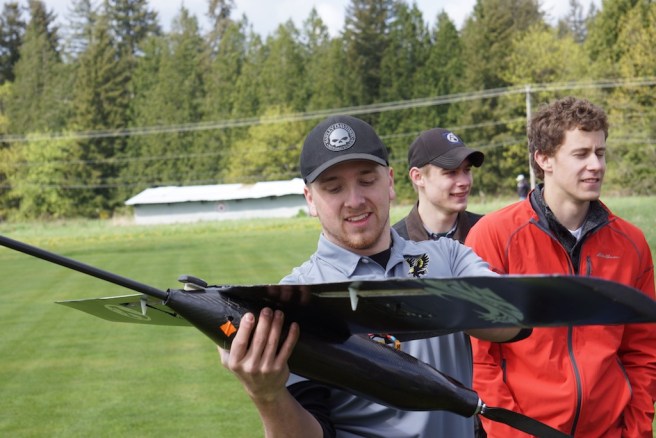

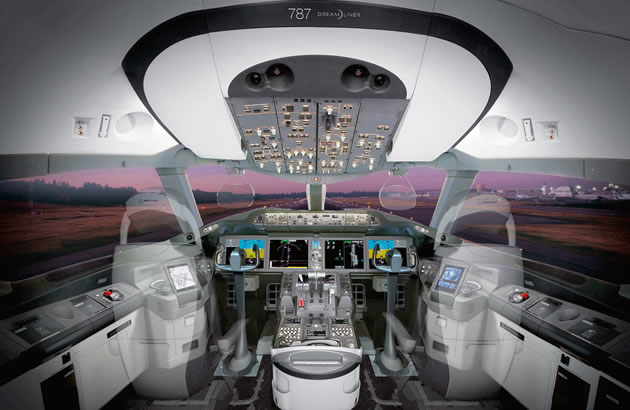
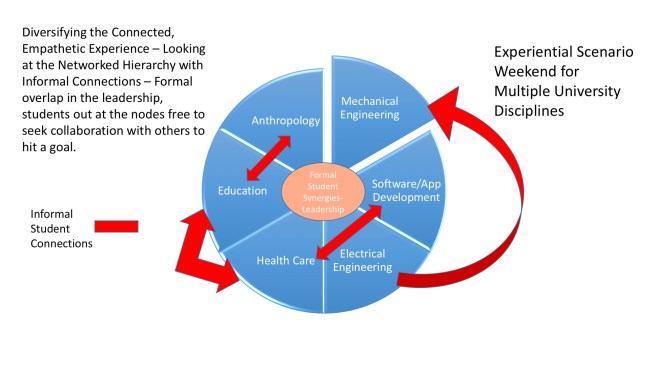



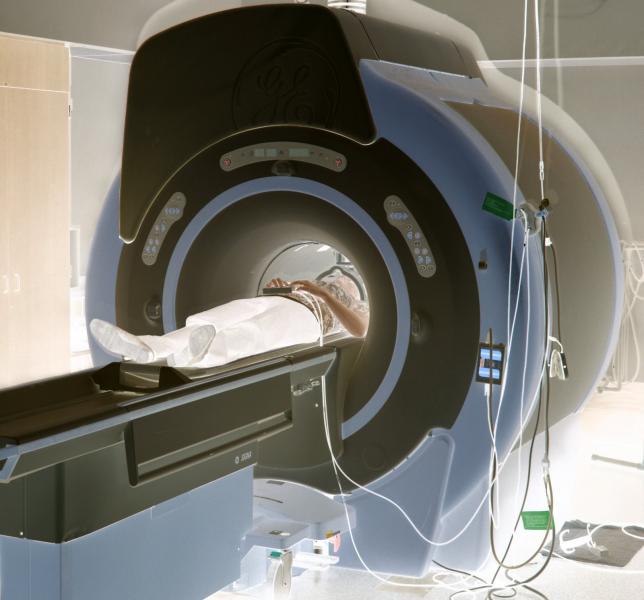
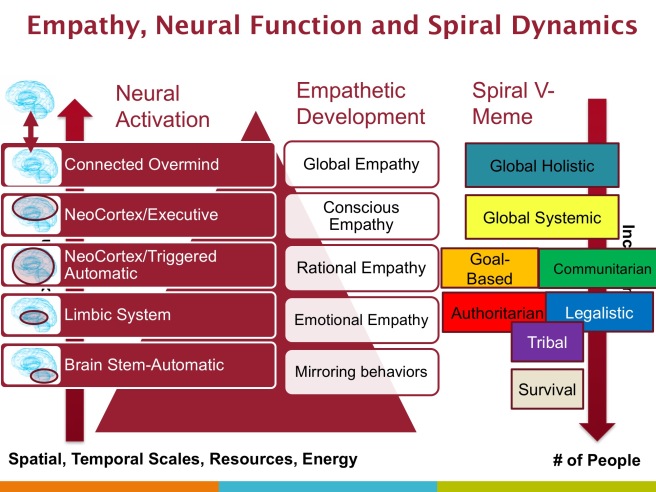


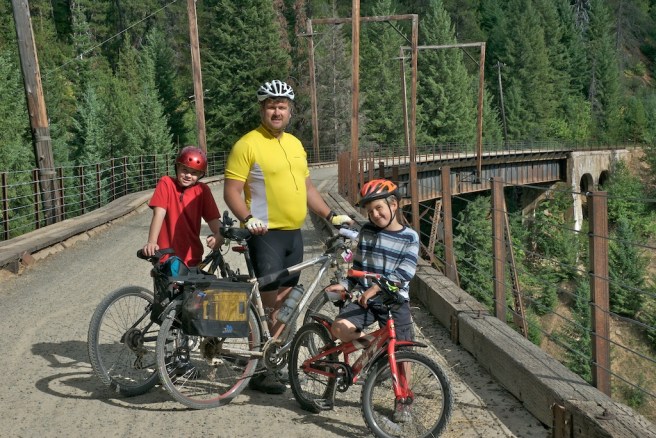



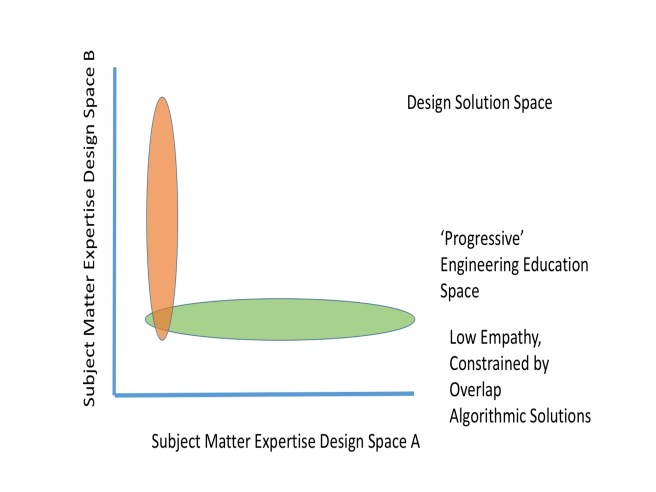




 It's About Empathy - Connection Ties Us Together